Joshua 20
Wycliffe's Bible with Modern Spelling (Enhanced) · Tap a verse to see its cross-references.
Six Cities of Refuge
1And the Lord spake to Joshua, and said,
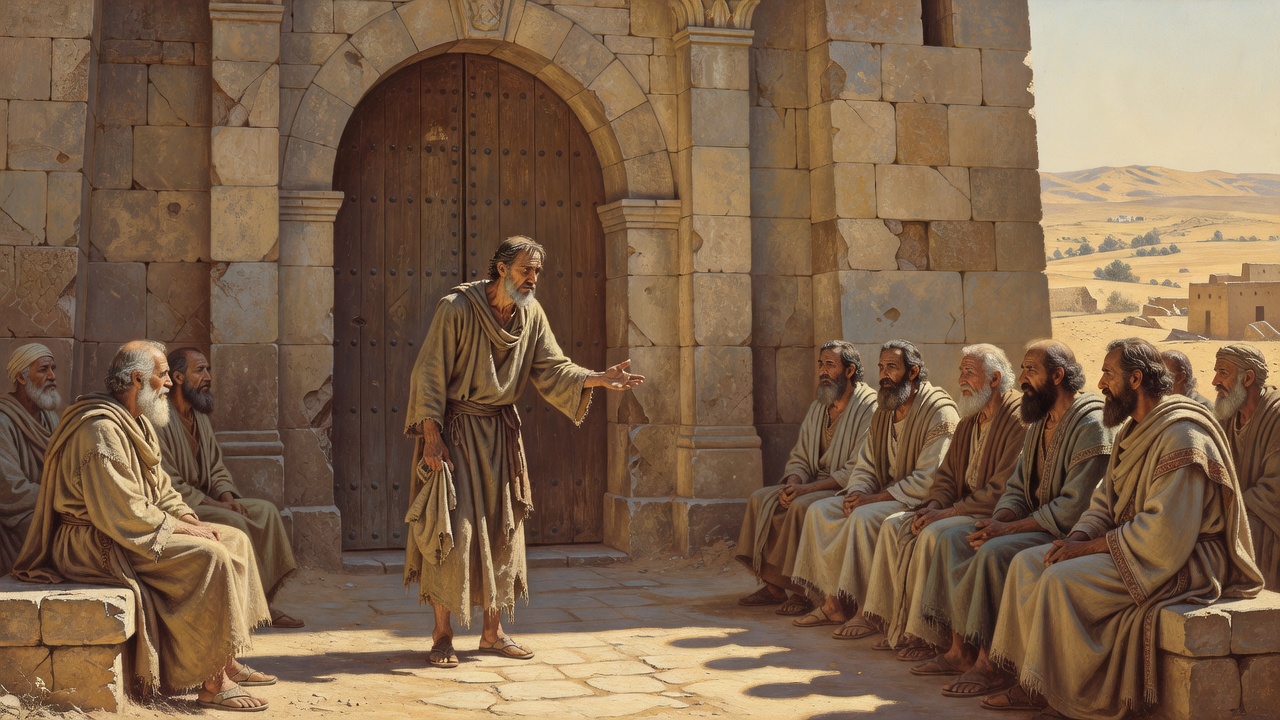
2Speak thou to the sons of Israel, and say thou to them, Separate ye (out) the cities of fugitives, either of men exiled for (the) unwillful shedding of blood, of which cities I spake to you by the hand of Moses, (Speak thou to the Israelites, and say thou to them, Ordain ye the cities of refuge for those who be exiled for the unwillful, or the unintentional, shedding of blood, of which cities I spoke to you by Moses,)
3that whoever slayeth unwittingly a man, flee to those cities; that when he hath fled to one of those cities, he may escape the ire of the neighbour, which is venger of blood. (so that whoever unwittingly killeth someone, can flee to those cities; so that when he hath fled to one of these cities, he can escape the anger of the neighbour, who avengeth the blood.)
4And he shall stand before the gates of the city, and he shall speak to the elder men of that city those things that shall prove him (self) innocent; and so they shall receive him, and they shall give to him a place to dwell in.
5And when the venger of blood pursueth him, they of that city shall not betake him into the hands of the venger; for unwittingly he killed his neighbour (or for he killed his neighbour unwittingly, or unintentionally), and he is not proved (to be) his enemy before the second day either the third day.
6And he shall dwell in that city, till he stand before the doom, and yield, or show, the cause of his deed. And he that killed a man, dwell in that city, till the great priest die, which is in that time; then the manslayer shall turn again, and he shall enter into his city, and house, from which he fled. (And he shall remain in that city, until he stand before the judge, and show the reason for his deed. And he who killed someone, shall stay in that city, until the High Priest die, who is in office at that time; then the man-killer shall return, and he shall enter into his city, and into his house, from which he fled.)
7And they ordained Kedesh in Galilee, of the hill of Naphtali, and Shechem in the hill of Ephraim, and Kiriatharba, that is Hebron, in the hill of Judah. (And they ordained Kedesh in Galilee, in the hill country of Naphtali, and Shechem in the hill country of Ephraim, and Kiriatharba, that is Hebron, in the hill country of Judah.)
8And beyond (the) Jordan, against the east coast of Jericho, (or And on the eastern side of the Jordan River, east of Jericho), they ordained Bezer, that is set in the field wilderness of the lineage of Reuben, and Ramoth in Gilead, of the lineage of Gad, and Golan in Bashan, of the lineage of Manasseh.
9These cities were ordained to all the sons of Israel, and to the comelings that dwell among them, that he that killed unwittingly a man, should flee to those cities; and he should not die in the hand of the neighbour, coveting to venge the blood shed out, till he stood before the people, to declare his cause. (These cities were ordained to all the Israelites, and to the newcomers who live among them, so that he who unwittingly killed someone, could flee to them; and so that he would not die at the hand of the neighbour, coveting to avenge the blood shed out, until he first had stood before the people to declare his case.)
Did you know?
The Cities of Refuge
- The cities of refuge provided sanctuary for anyone who caused an accidental death, protecting them from retaliation by the victim's avenger of blood. A fugitive had to present their case to the elders at the city gate and could remain safely inside until standing trial before the assembly and until the death of the serving high priest.Sources: the Bible text itself
- Six cities were designated across the land, divided evenly with three on each side of the Jordan River. Kedesh, Shechem, and Hebron served the hill country west of the Jordan, while Bezer, Ramoth in Gilead, and Golan in Bashan served the eastern tribes.Sources: the Bible text itself · Hebron · Shechem · Kedesh
- The legal protection provided by the cities of refuge applied equally to native Israelites and to foreigners residing among them.Sources: the Bible text itself
Notes written with AI assistance from open sources (Theographic Bible Metadata, CC BY-SA 4.0; Easton’s Bible Dictionary, public domain) and reviewed before publishing.
Places in this chapter
- Galilee · 32.760, 35.527 · verse 7
- Hebron · Today: Tel Rumeida · 31.525, 35.102 · verse 7
- Kedesh · Today: Tel Kedesh · 33.112, 35.530 · verse 7
- Shechem · Today: Tell Balatah · 32.214, 35.282 · verse 7
- Bashan · 32.781, 35.935 · verse 8
- Gilead · Today: Gilead 1 · 32.187, 35.692 · verse 8
- Jericho · Today: Tell es Sultan · 31.872, 35.445 · verse 8
- Jordan · Today: Jordan River · 31.761, 35.558 · verse 8
- Ramoth · Today: Tall er Rumeith · 32.500, 36.015 · verse 8
Only places identified with high confidence are shown (90% or more according to the scholarly sources compiled by OpenBible). Period map: DARE (Digital Atlas of the Roman Empire), CC BY 4.0; modern map: © OpenStreetMap contributors; places: OpenBible.info (CC BY 4.0).
Credits and license for this translation
Wycliffe's Bible with Modern Spelling (Enhanced)
English: Wycliffe's Bible Modern Spelling (Enhanced) (with Deuterocanon)
Copyright © 2001,2010,2011,2012,2013,2015 Terry Noble
Language: English
Dialect: Archaic
Translation by: Terry Noble
Wycliffe's Bible with Modern Spelling (Enhanced)
Wycliffe’s Bible with Modern Spelling (Enhanced) is a composite of my Wycliffe’s Bible, a modern-spelling version of the 14th century Middle English translation, consisting of Wycliffe’s Old Testament and Wycliffe’s New Testament, and my modern-spelling version of Wycliffe’s Apocrypha. These books contain literally tens of thousands of rewritten verses, presented in parentheses “( ) “, to provide help in comprehending the 14th century Middle English vocabulary and grammar. Wycliffe’s Apocrypha also includes the books of the Apocrypha from the 1st edition of the King James Version of the Bible.
This translation is made available to you under the terms of the
Creative Commons Attribution-Noncommercial-No Derivatives license 4.0.
You may share and redistribute this Bible translation or extracts from it in any format, provided that:
You include the above copyright and source information.
You do not sell this work for a profit.
You do not change any of the words or punctuation of the Scriptures.
Pictures included with Scriptures and other documents on this site are licensed just for use with those Scriptures and documents.
For other uses, please contact the respective copyright owners.
2019-09-25
Section headings adapted from the Berean Standard Bible (public domain); they are not part of this translation’s text.
Source: http://ebible.org/engwyc2018/ · eBible.org