Psalms 39
Wycliffe's Bible with Modern Spelling · Tap a verse to see its cross-references.
I Will Watch My Ways
1For victory, to Jeduthun, the psalm of David. I said, I shall keep my ways; that I trespass not in my tongue. I setted [or put] keeping to my mouth; when a sinner stood against me.
2I was dumb, and I was meeked full greatly, and was still, even from goods; and my sorrow was renewed.
3Mine heart was hot within me; and fire shall burn out in my thinking. I spake in my tongue;
4Lord, make thou mine end known to me. And the number of my days, what it is; that I know, what faileth to me.
5Lo! thou hast set [or put] my days measurable; and my substance is as nought before thee. Nevertheless all vanity; each man living.
6Nevertheless a man passeth in an image; but also he is troubled vainly. He treasureth; and he know not, to whom he shall gather those things.
7And now which is mine abiding? whether not the Lord? and my substance is at thee.
8Deliver thou me from all my wickednesses; thou hast given me as a shame to the unknowing.
9I was dumb, and opened not my mouth; for thou hast made this happen,
10remove thou thy wounds from me. From the strength of thine hand I failed in blamings;
11for wickedness thou hast chastised [a] man. And thou madest his life to fail as a spider; nevertheless each man is troubled in vain.
12Lord, hear thou my prayer, and my beseeching; perceive thou with ears my tears. Be thou not still, for I am a comeling with thee; and a pilgrim, as all my fathers.
13Forgive thou to me, that I be refreshed, before that I go; and I shall no more be.
Did you know?
The Frailty and Fleeting Nature of Human Life
- The superscription dedicates this composition to the choirmaster and to Jeduthun, attributing the prayer to David.Sources: the Bible text itself · David
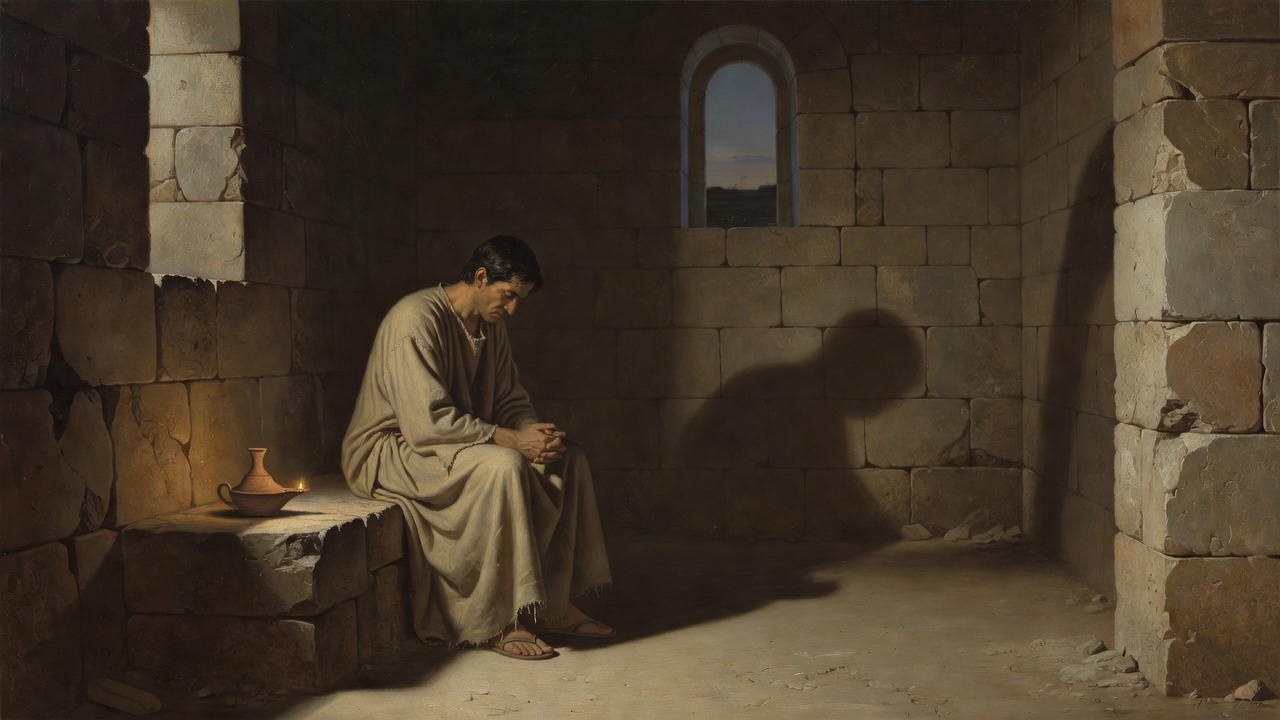
- The psalm illustrates the brevity of human existence by describing human life as merely a handbreadth—an ancient unit of measurement based on the width of the palm—and as a passing breath or shadow.Sources: the Bible text itself
- The speaker identifies as a foreigner and a temporary guest dwelling with God, reflecting an attitude of complete dependence on divine mercy and hospitality.Sources: the Bible text itself
Notes written with AI assistance from open sources (Theographic Bible Metadata, CC BY-SA 4.0; Easton’s Bible Dictionary, public domain) and reviewed before publishing.
Credits and license for this translation
Wycliffe's Bible with Modern Spelling
English: Wycliffe's Bible Modern Spelling (with Deuterocanon)
Copyright © 2001,2010,2011,2012,2013,2015 Terry Noble
Language: English
Dialect: Archaic
Translation by: Terry Noble
Wycliffe’s Bible with Modern Spelling, was made in response to requests from readers who wanted my Wycliffe’s Old and New Testaments and Apocrypha in one volume. Printing limitations dictated the number of pages available to me and the letter size. In my previous books, Wycliffe’s Bible, Wycliffe’s Old Testament, Vols. 1 amp 2, Wycliffe’s New Testament, and Wycliffe’s Apocrypha, I have tens of thousands of rewritten verses, presented in parentheses “( )”, to provide help in comprehending the 14th century Middle English vocabulary and grammar. In this present volume, with space at a premium, those “helps” had to be eliminated, to make room for the text of the Apocrypha.
This translation is made available to you under the terms of the
Creative Commons Attribution-Noncommercial-No Derivatives license 4.0.
You may share and redistribute this Bible translation or extracts from it in any format, provided that:
You include the above copyright and source information.
You do not sell this work for a profit.
You do not change any of the words or punctuation of the Scriptures.
Pictures included with Scriptures and other documents on this site are licensed just for use with those Scriptures and documents.
For other uses, please contact the respective copyright owners.
2019-09-26
Section headings adapted from the Berean Standard Bible (public domain); they are not part of this translation’s text.
Source: http://ebible.org/engwyc2017/ · eBible.org