Proverbs 29
Wycliffe's Bible with Modern Spelling · Tap a verse to see its cross-references.
The Flourishing of the Righteous
1Sudden perishing shall come [up] on that man, that with hard noll, that is, an obstinate soul, despiseth a blamer; and health shall not follow him.
2The commonality shall be glad in the multiplying of just [or rightwise] men; when wicked men have taken princehood, the people shall wail.
3A man that loveth wisdom, maketh glad his father; but he that nourisheth a strumpet, shall lose his chattel [or substance].
4A just king raiseth [up] the land; an avaricious man shall destroy it.
5A man that speaketh by flattering and feigned words to his friend, spreadeth abroad a net to his steps.
6A snare shall wrap a wicked man doing sin; and a just [or rightwise] man shall praise, and make joy.
7A just [or rightwise] man knoweth the cause of poor men; and an unpious man knoweth not knowing.
8Men full of pestilence destroy a city; but wise men turn away strong vengeance.
9If a wise man striveth with a fool, whether he be wroth, or laugh, he shall not find rest.
10Men-quellers hate a simple man; but just [or rightwise] men seek his soul.
11A fool bringeth forth all his spirit; a wise man delayeth, and reserveth into time coming afterward.
12A prince that heareth willfully the words of leasing, shall have all his servants unfaithful.
13A poor man and a lender met themselves; the Lord is [the] lightener of ever either.
14If a king deemeth poor men in truth, his throne shall be made steadfast [into] without end.
15A rod and chastising [or discipline] shall give wisdom; but a child, that is left to his own will, shameth his mother.
16Great trespasses shall be multiplied in the multiplying of wicked men; and just [or rightwise] men shall see the fallings of them.
17Teach thy son, and he shall comfort thee; and he shall give delights to thy soul.
18When prophecy faileth, the people shall be destroyed; but he that keepeth the law, is blessed.
19A servant may not be taught by words; for he understandeth that that thou sayest, and he despiseth to answer.
20Thou hast seen a man swift to speak; folly shall be hoped more than his amending [or folly more is to be hoped for than the correction of him].
21He that nourisheth his servant delicately from childhood, shall find him a rebel [or unobedient] afterward.
22A wrathful man stirreth chidings; and he that is light to have indignation, shall be more inclined to sins.
23Lowness followeth a proud man; and glory shall up-take a meek man of spirit.
24He that taketh part with a thief, hateth his soul; he heareth a man charging greatly, and showeth not.
25He that dreadeth a man, shall fall soon; he that hopeth in the Lord, shall be raised [up].
26Many men seek the face of the prince; and the doom of all men shall go forth of the Lord.
27Just [or Rightwise] men have abomination of a wicked man; and wicked men have abomination of them, that be in a rightful [or the right] way.
Did you know?
Justice, Governance, and Self-Restraint
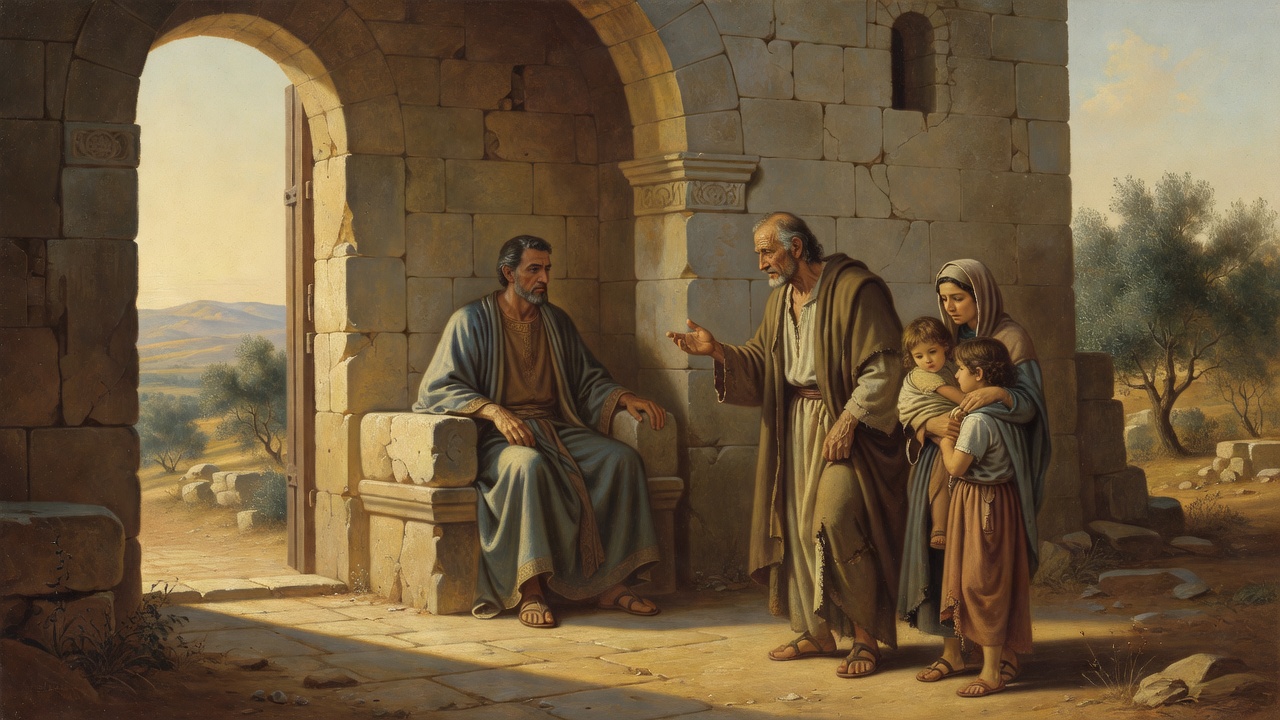
- Proverbs 29 repeatedly links a society's well-being to righteous governance, noting that the people rejoice when the righteous rule but groan under wicked leaders. A king who judges the poor with equity and maintains justice stabilizes the land, while rulers who heed falsehoods corrupt their officials.Sources: the Bible text itself
- The chapter highlights the importance of moral guidance and discipline, observing that without a vision or revelation, people cast off restraint, whereas keeping the Law brings blessing. This principle of instruction and correction is also applied directly to the household and the raising of children.Sources: the Bible text itself
- Self-control in speech and emotion is a central theme: while a fool vents all his rage and speaks in haste, a wise person holds back anger. The text warns that pride brings a person low, but a humble spirit attains honor.Sources: the Bible text itself
Notes written with AI assistance from open sources (Theographic Bible Metadata, CC BY-SA 4.0; Easton’s Bible Dictionary, public domain) and reviewed before publishing.
Credits and license for this translation
Wycliffe's Bible with Modern Spelling
English: Wycliffe's Bible Modern Spelling (with Deuterocanon)
Copyright © 2001,2010,2011,2012,2013,2015 Terry Noble
Language: English
Dialect: Archaic
Translation by: Terry Noble
Wycliffe’s Bible with Modern Spelling, was made in response to requests from readers who wanted my Wycliffe’s Old and New Testaments and Apocrypha in one volume. Printing limitations dictated the number of pages available to me and the letter size. In my previous books, Wycliffe’s Bible, Wycliffe’s Old Testament, Vols. 1 amp 2, Wycliffe’s New Testament, and Wycliffe’s Apocrypha, I have tens of thousands of rewritten verses, presented in parentheses “( )”, to provide help in comprehending the 14th century Middle English vocabulary and grammar. In this present volume, with space at a premium, those “helps” had to be eliminated, to make room for the text of the Apocrypha.
This translation is made available to you under the terms of the
Creative Commons Attribution-Noncommercial-No Derivatives license 4.0.
You may share and redistribute this Bible translation or extracts from it in any format, provided that:
You include the above copyright and source information.
You do not sell this work for a profit.
You do not change any of the words or punctuation of the Scriptures.
Pictures included with Scriptures and other documents on this site are licensed just for use with those Scriptures and documents.
For other uses, please contact the respective copyright owners.
2019-09-26
Section headings adapted from the Berean Standard Bible (public domain); they are not part of this translation’s text.
Source: http://ebible.org/engwyc2017/ · eBible.org