Proverbs 19
Wycliffe's Bible with Modern Spelling · Tap a verse to see its cross-references.
The Man of Integrity
1Better is a poor man, that goeth in his simpleness, than a rich man biting his lips, and unwise.
2Where is not knowing of the soul, there is not good; and he that is hasty, in feet hurteth [or stumbleth].
3The folly of a man deceiveth his steps; and he burneth in his soul against God.
4Riches increase full many friends; forsooth also they be departed from a poor man, which he had.
5A false witness shall not be unpunished; and he that speaketh leasings, shall not escape.
6Many men honour the person of a mighty man; and they be friends of him that dealeth gifts.
7The brethren of a poor man hate him; furthermore and the friends went away far from him. He that pursueth [or followeth] words only, shall have nothing;
8but he that holdeth stably the mind, loveth his soul, and the keeper of prudence shall find goods.
9A false witness shall not be unpunished; and he that speaketh leasings, shall perish.
10Delights become not a fool; neither it becometh a servant to be lord of princes.
11The teaching of a man is known by patience; and his glory is to pass over wicked things.
12As the gnashing of a lion, so and the ire of the king; and as dew on herb, so and the gladness of the king.
13The sorrow of the father is a fond [or foolish] son; and roofs dropping continually is a woman full of chiding.
14Houses and riches be given of father and mother; but a prudent wife is given properly of the Lord.
15Sloth bringeth in sleep; and a negligent soul shall have hunger.
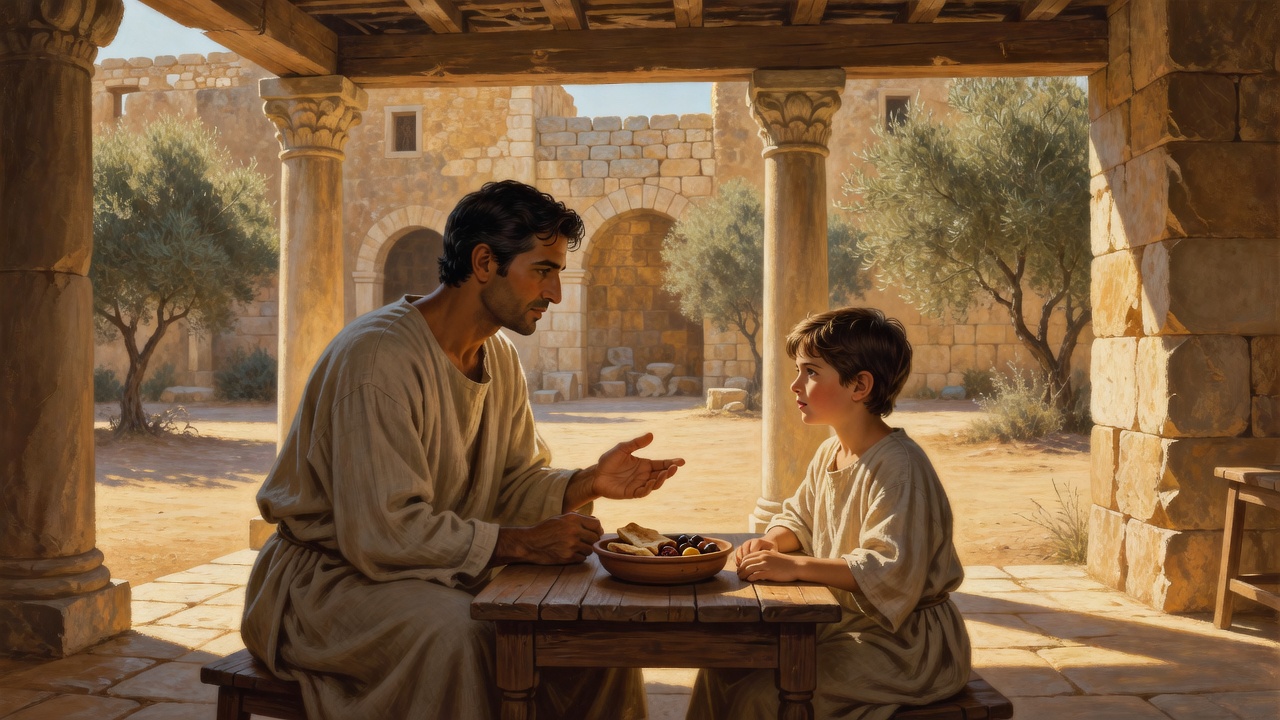
16He that keepeth the commandment of God, keepeth his soul; but he that chargeth not [or despiseth] his way, shall be slain.
17He that hath mercy on a poor man, lendeth to the Lord; and he shall yield his while to him.
18Teach thy son, and despair thou not; but set [or put] thou not thy soul to the slaying of him.
19Forsooth he that is unpatient, shall suffer harm; and when he hath ravished, he shall lay to another thing.
20Hear thou counsel, and take thou doctrine; that thou be wise in thy last things.
21Many thoughts there be in the heart of a man; but the will of the Lord shall dwell.
22A needy man is merciful; and better is a poor just [or rightwise] man, than a man liar.
23Dread of the Lord leadeth to life; and he that dreadeth God shall dwell in plenty, without visiting of the worst or without full evil visiting.
24A slow man hideth his hand under his armpit, and putteth it not to his mouth.
25When a man full of pestilence is beaten, a fool shall be the wiser. If thou blamest a wise man, he shall understand teaching.
26He that tormenteth his father, and fleeth from his mother, shall be full of evil fame, and shall be cursed.
27Son, cease thou not to hear teaching; and know thou the words of knowing.
28A wicked witness scorneth doom; and the mouth of unpious men devoureth wickedness.
29Dooms be made ready to scorners; and hammers smiting be made ready to the bodies of fools.
Did you know?
Wisdom on Wealth, Relationships, and Character
- Proverbs 19 highlights how social status shapes human relationships, noting that wealth attracts many companions while the poor are often abandoned even by their own families. In contrast to this human tendency, kindness shown to the poor is described as a loan made directly to the LORD, who ensures repayment.Sources: the Bible text itself
- The chapter uses vivid natural imagery to describe a ruler's authority, comparing a king's rage to the roar of a lion and his favor to refreshing dew on the grass. In the ancient world, gaining a monarch's goodwill was critical for protection and prosperity.Sources: the Bible text itself
- Everyday domestic realities appear in vivid proverbs, such as describing a contentious spouse as persistent dripping water and caricaturing an extreme sluggard who buries a hand in the communal dish but refuses to lift it back to his mouth.Sources: the Bible text itself
Notes written with AI assistance from open sources (Theographic Bible Metadata, CC BY-SA 4.0; Easton’s Bible Dictionary, public domain) and reviewed before publishing.
Credits and license for this translation
Wycliffe's Bible with Modern Spelling
English: Wycliffe's Bible Modern Spelling (with Deuterocanon)
Copyright © 2001,2010,2011,2012,2013,2015 Terry Noble
Language: English
Dialect: Archaic
Translation by: Terry Noble
Wycliffe’s Bible with Modern Spelling, was made in response to requests from readers who wanted my Wycliffe’s Old and New Testaments and Apocrypha in one volume. Printing limitations dictated the number of pages available to me and the letter size. In my previous books, Wycliffe’s Bible, Wycliffe’s Old Testament, Vols. 1 amp 2, Wycliffe’s New Testament, and Wycliffe’s Apocrypha, I have tens of thousands of rewritten verses, presented in parentheses “( )”, to provide help in comprehending the 14th century Middle English vocabulary and grammar. In this present volume, with space at a premium, those “helps” had to be eliminated, to make room for the text of the Apocrypha.
This translation is made available to you under the terms of the
Creative Commons Attribution-Noncommercial-No Derivatives license 4.0.
You may share and redistribute this Bible translation or extracts from it in any format, provided that:
You include the above copyright and source information.
You do not sell this work for a profit.
You do not change any of the words or punctuation of the Scriptures.
Pictures included with Scriptures and other documents on this site are licensed just for use with those Scriptures and documents.
For other uses, please contact the respective copyright owners.
2019-09-26
Section headings adapted from the Berean Standard Bible (public domain); they are not part of this translation’s text.
Source: http://ebible.org/engwyc2017/ · eBible.org