Proverbs 17
Wycliffe's Bible with Modern Spelling · Tap a verse to see its cross-references.
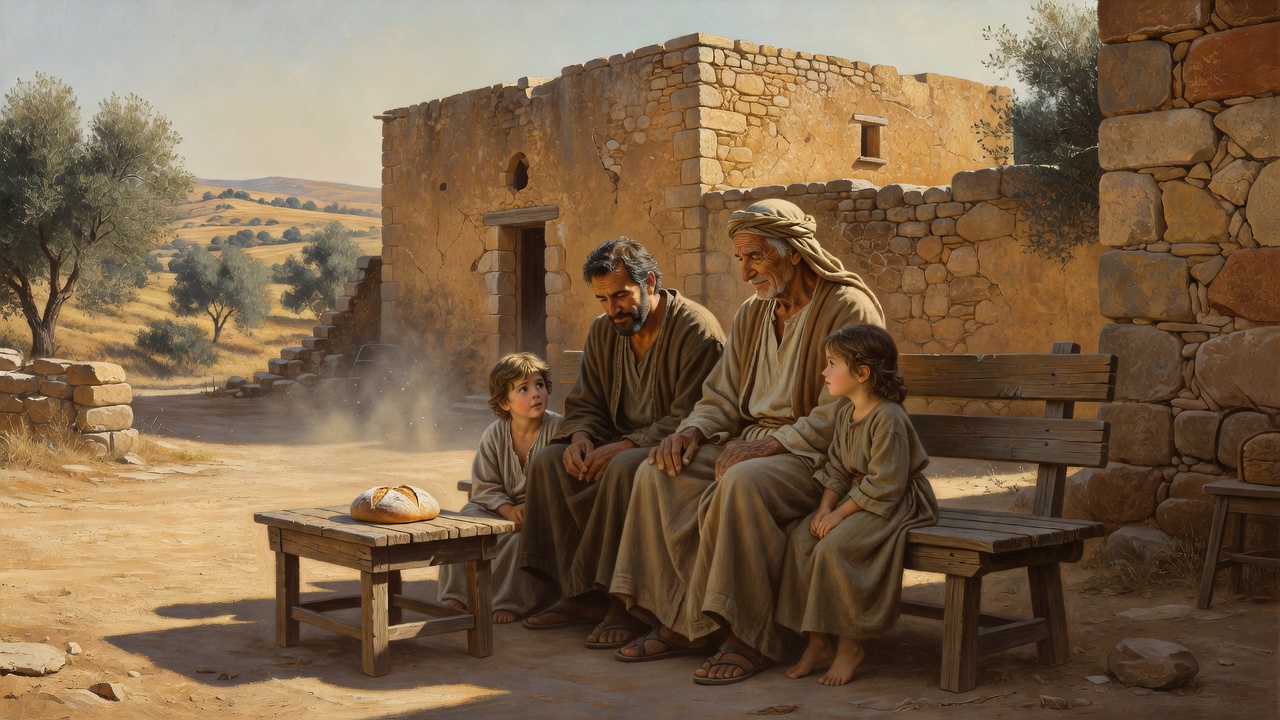
Better a Dry Morsel in Quietness
1Better is a dry morsel with joy, than an house full of sacrifices with chiding.
2A wise servant shall be lord of fond [or foolish] sons; and he shall part heritage among brethren.
3As silver is proved by fire, and gold is proved by a chimney, so the Lord proveth hearts.
4An evil man obeyeth to a wicked tongue; and a false man obeyeth to false lips.
5He that despiseth a poor man, reproveth his maker; and he that is glad in the falling of another man, shall not be unpunished.
6The crown of eld [or old] men is the sons of sons; and the glory of sons is the fathers of them.
7Words well-set together beseem not a fool; and a lying lip becometh not a prince.
8A precious stone most acceptable is the abiding of him that seeketh; whither ever he turneth himself, he understandeth prudently.
9He that covereth trespass, seeketh friendships; he that rehearseth by an high word, separateth them that be knit together in peace.
10A blaming profiteth more at a prudent man, than an hundred wounds at a fool.
11Ever an evil man seeketh strives; forsooth a cruel angel shall be sent against him.
12It speedeth more to meet a female bear, when her whelps be ravished, than a fool trusting to himself in his folly.
13Evil shall not go away from the house of him, that yieldeth evils for goods.
14He that letteth out water, is the head of strives; and before that he suffereth wrong, he forsaketh doom.
15Both he that justifieth a wicked man, and he that condemneth a just [or rightwise] man, ever either is abominable to God.
16What profiteth it to a fool to have riches, since he may not buy wisdom? He that maketh his house high, seeketh falling; and he that escheweth to learn, shall fall into evils.
17He that is a friend, loveth in all time; and a brother is proved in anguishes.
18A fond [or foolish] man shall make joy with hands, when he hath promised for his friend.
19He that bethinketh discords, loveth chidings; and he that enhanceth his mouth, seeketh falling.
20He that is of wayward heart, shall not find good; and he that turneth the tongue, shall fall into evil.
21A fool is born in his shame; but neither the father shall be glad in a fool.
22A joyful soul maketh liking age; a sorrowful spirit maketh dry bones.
23A wicked man taketh gifts from the bosom, to mis-turn the paths of doom.
24Wisdom shineth in the face of a prudent man; the eyes of fools be in the ends of earth.
25A fond [or foolish] son is the ire [or the wrath] of the father, and the sorrow of the mother that bare him.
26It is not good to bring in harm to a just [or rightwise] man; neither to smite the prince that deemeth rightfully.
27He that measureth his words, is wise and prudent; and a learned man is of precious spirit.
28Also a fool, if he is still, shall be guessed a wise man; and, if he presseth together his lips, he is guessed an understanding man.
Did you know?
Wisdom for Relationships, Speech, and the Heart
- Ancient metallurgical techniques used clay crucibles for silver and high-heat furnaces for gold to separate precious metal from dross. The proverb draws on this refining process to illustrate how the Lord examines and tests the deepest motives of the human heart.Sources: the Bible text itself
- The imagery of starting a quarrel as releasing a flood reflects ancient water management and irrigation dykes. A small crack in an earthen dam quickly widens into an uncontrollable rush of water, illustrating why disputes should be stopped before they break out.Sources: the Bible text itself
- In biblical wisdom literature, restraint in speech and maintaining a calm spirit are primary marks of understanding. Proverbs notes that silence is so strongly associated with prudence that even a fool who holds his tongue can be considered discerning.Sources: the Bible text itself
Notes written with AI assistance from open sources (Theographic Bible Metadata, CC BY-SA 4.0; Easton’s Bible Dictionary, public domain) and reviewed before publishing.
Credits and license for this translation
Wycliffe's Bible with Modern Spelling
English: Wycliffe's Bible Modern Spelling (with Deuterocanon)
Copyright © 2001,2010,2011,2012,2013,2015 Terry Noble
Language: English
Dialect: Archaic
Translation by: Terry Noble
Wycliffe’s Bible with Modern Spelling, was made in response to requests from readers who wanted my Wycliffe’s Old and New Testaments and Apocrypha in one volume. Printing limitations dictated the number of pages available to me and the letter size. In my previous books, Wycliffe’s Bible, Wycliffe’s Old Testament, Vols. 1 amp 2, Wycliffe’s New Testament, and Wycliffe’s Apocrypha, I have tens of thousands of rewritten verses, presented in parentheses “( )”, to provide help in comprehending the 14th century Middle English vocabulary and grammar. In this present volume, with space at a premium, those “helps” had to be eliminated, to make room for the text of the Apocrypha.
This translation is made available to you under the terms of the
Creative Commons Attribution-Noncommercial-No Derivatives license 4.0.
You may share and redistribute this Bible translation or extracts from it in any format, provided that:
You include the above copyright and source information.
You do not sell this work for a profit.
You do not change any of the words or punctuation of the Scriptures.
Pictures included with Scriptures and other documents on this site are licensed just for use with those Scriptures and documents.
For other uses, please contact the respective copyright owners.
2019-09-26
Section headings adapted from the Berean Standard Bible (public domain); they are not part of this translation’s text.
Source: http://ebible.org/engwyc2017/ · eBible.org