Isaiah 46
Wycliffe's Bible with Modern Spelling · Tap a verse to see its cross-references.
Babylon’s Idols
1Bel is broken, Nebo is all-broken; their simulacra like to wild beasts and work beasts be broken; your burdens with heavy charge till to weariness were rotten,
2and be all-broken together; those might not save the bearer, and the soul of them shall go into captivity.
3The house of Jacob, and all the residue of the house of Israel, hear ye me, which be borne of my womb, which be borne of my womb.
4Till to eld I myself, and till to hoar hairs, I shall bear; I made, and I shall bear, and I shall save.
5To whom have ye likened me, and made even, and have comparisoned me, and have made like?
6Which bear together gold from the bag, and weigh silver with a balance, and hire a goldsmith to make a god, and they fall down, and worship;
7they bearing bear in shoulders, and setting in his place; and he shall stand, and shall not be moved from his place; but also when they cry to him, he shall not hear, and he shall not save them from tribulation.
8Have ye mind of this, and be ye ashamed; ye trespassers, go again to the heart.
9Bethink ye on the former world, for I am God, no God is over me, neither is like me.
10And I tell from the beginning the last thing, and from the beginning those things that be not made yet; and I say, My counsel shall stand, and all my will shall be done.
11And I call a bird from the east, and the man of my will from a far land; and I spake, and I shall bring that thing; I have made of nought, and I shall make that thing.
12Ye of hard heart, hear me, that be far from rightfulness [or rightwiseness].
13I made nigh mine rightfulness [or rightwiseness], it shall not be drawn afar, and mine health shall not tarry; I shall give health in Zion, and my glory in Israel.
Did you know?
The God Who Carries His People
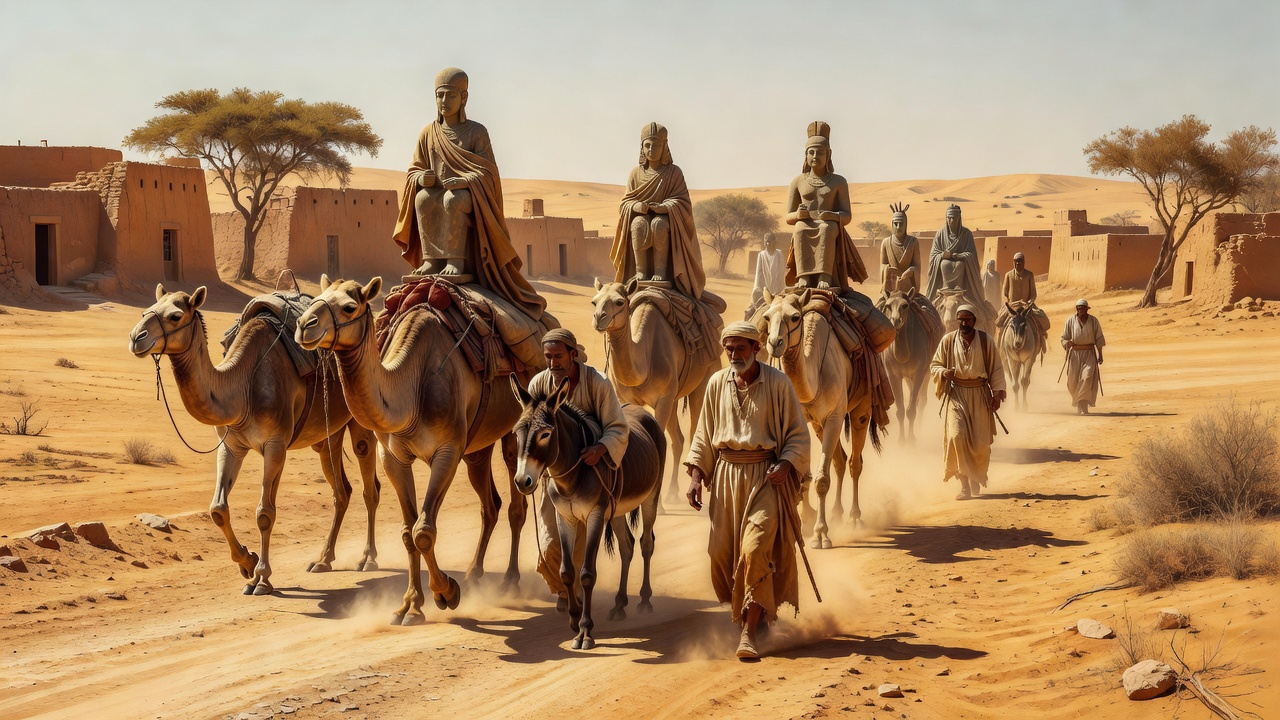
- Isaiah 46 contrasts the Babylonian gods Bel and Nebo with the God of Israel. While manufactured idols are described as dead weight that must be loaded onto weary animals and carried into captivity, God declares that He has carried and sustained the house of Jacob from birth and will continue to do so into old age.Sources: the Bible text itself
- The chapter illustrates the helplessness of idols by highlighting their human origin: people pour out gold and weigh silver to hire a goldsmith to shape a god. Once carried on human shoulders and set in place, the statue remains stationary, unable to move, answer cries, or rescue anyone from distress.Sources: the Bible text itself
- The prophecy closes with God promising to grant salvation to Zion. Zion was the south-eastern hill of Jerusalem that David captured and made into the City of David, often cited in prophetic texts as a focal point for Israel.Sources: the Bible text itself · Zion
Notes written with AI assistance from open sources (Theographic Bible Metadata, CC BY-SA 4.0; Easton’s Bible Dictionary, public domain) and reviewed before publishing.
Places in this chapter
Only places identified with high confidence are shown (90% or more according to the scholarly sources compiled by OpenBible). Period map: DARE (Digital Atlas of the Roman Empire), CC BY 4.0; modern map: © OpenStreetMap contributors; places: OpenBible.info (CC BY 4.0).
Credits and license for this translation
Wycliffe's Bible with Modern Spelling
English: Wycliffe's Bible Modern Spelling (with Deuterocanon)
Copyright © 2001,2010,2011,2012,2013,2015 Terry Noble
Language: English
Dialect: Archaic
Translation by: Terry Noble
Wycliffe’s Bible with Modern Spelling, was made in response to requests from readers who wanted my Wycliffe’s Old and New Testaments and Apocrypha in one volume. Printing limitations dictated the number of pages available to me and the letter size. In my previous books, Wycliffe’s Bible, Wycliffe’s Old Testament, Vols. 1 amp 2, Wycliffe’s New Testament, and Wycliffe’s Apocrypha, I have tens of thousands of rewritten verses, presented in parentheses “( )”, to provide help in comprehending the 14th century Middle English vocabulary and grammar. In this present volume, with space at a premium, those “helps” had to be eliminated, to make room for the text of the Apocrypha.
This translation is made available to you under the terms of the
Creative Commons Attribution-Noncommercial-No Derivatives license 4.0.
You may share and redistribute this Bible translation or extracts from it in any format, provided that:
You include the above copyright and source information.
You do not sell this work for a profit.
You do not change any of the words or punctuation of the Scriptures.
Pictures included with Scriptures and other documents on this site are licensed just for use with those Scriptures and documents.
For other uses, please contact the respective copyright owners.
2019-09-26
Section headings adapted from the Berean Standard Bible (public domain); they are not part of this translation’s text.
Source: http://ebible.org/engwyc2017/ · eBible.org