Ezekiel 18
Wycliffe's Bible with Modern Spelling · Tap a verse to see its cross-references.
The Soul Who Sins Will Die
1And the word of the Lord was made to me, and he said,
2What is it, that ye turn a parable among you into this proverb, in the land of Israel, and say, [The] Fathers ate a bitter grape, and the teeth of sons be on edge, either astonied?
3I live, saith the Lord God, this parable shall no more be into a proverb to you in Israel.
4Lo! all souls be mine; as the soul of the father, so and the soul of the son is mine. That soul that doeth sin, shall die.
5And if a man is just, and doeth doom and rightfulness,
6eateth not in [the] hills, and raiseth not his eyes to the idols of the house of Israel; and defouleth not the wife of his neighbour, and nigheth not to a woman defouled with unclean blood;
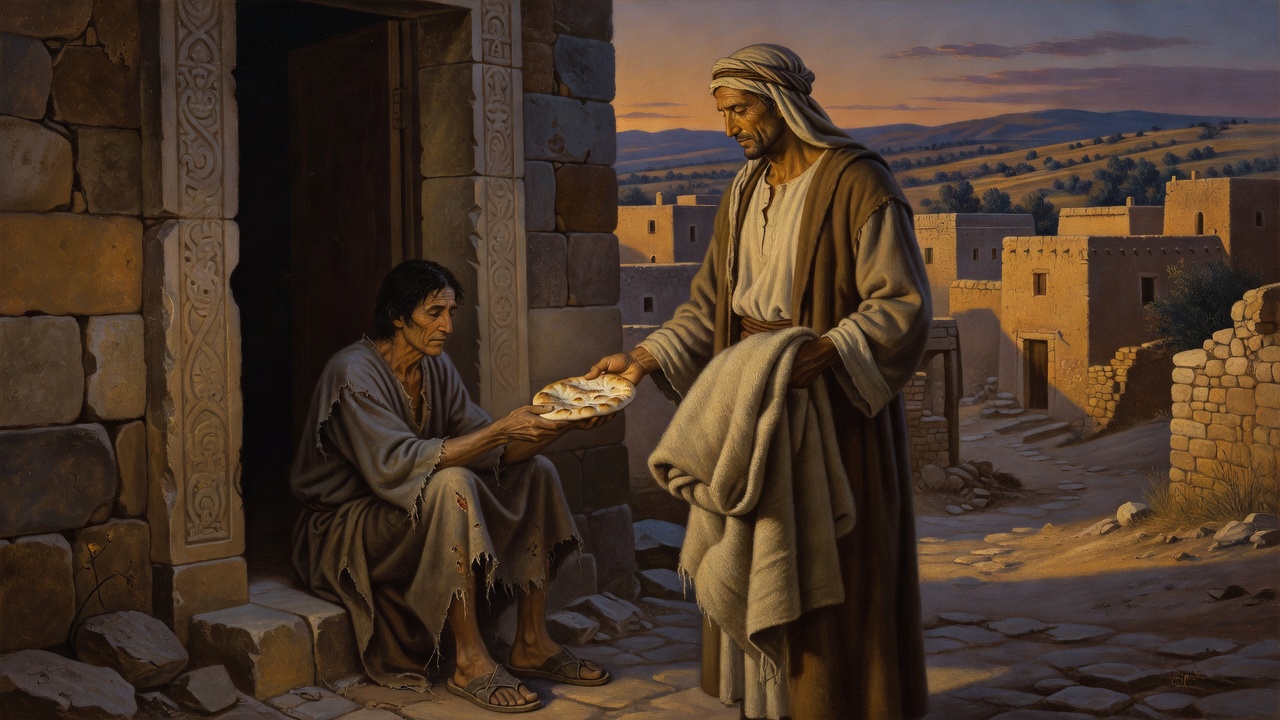
7and maketh not a man sorry, yieldeth the wed to the debtor, ravisheth nothing by violence, giveth his bread to the hungry, and covereth a naked man with a cloth;
8lendeth not to usury, and taketh not more; turneth away his hand from wickedness, and maketh true doom betwixt man and man;
9and goeth in my commandments, and keepeth my dooms, that he do truth; this is a just man, he shall live in life, saith the Lord God.
10That if he engendereth a son, a thief, shedding out blood, and doeth one of these things,
11and soothly not doing all these things, but eating in hills, and defouling the wife of his neighbour;
12making sorrowful a needy man and poor, ravishing ravens, not yielding a wed, raising his eyes to idols, doing abomination;
13giving to usury, and taking more; whether he shall live? he shall not live; when he hath done all these abominable things, he shall die by death, his blood shall be in him.
14That if he begetteth a son, which seeth all the sins of his father, which he did, and dreadeth, and doeth none like those [or them];
15eateth not on hills, and raiseth not his eyes to the idols of the house of Israel; and defouleth not the wife of his neighbour,
16and maketh not sorry a man, withholdeth not a wed, and ravisheth not raven, giveth his bread to the hungry, and covereth the naked with a cloth;
17turneth away his hand from the wrong of a poor man, taketh not usury and overabundance, that is, nothing more than he lent, and doeth my dooms, and goeth in my commandments; this son shall not die in the wickedness of his father, but he shall live in life.
18For his father made false challenge, and did violence to his brother, and wrought evil in the midst of his people, lo! he is dead in his wickedness.
19And ye say, Why beareth not the son the wickedness of the father? That is to say, for the son wrought doom and rightfulness, he kept all my commandments, and did those [or them], he shall live in life.
20That soul that doeth sin, shall die; the son shall not bear the wickedness of the father, and the father shall not bear the wickedness of the son; the rightfulness [or rightwiseness] of a just man shall be on him, and the wicked-ness of a wicked man shall be on him.
21Forsooth if a wicked man doeth penance of all his sins which he wrought, and keepeth all my behests, and doeth doom and rightfulness, he shall live by life, and shall not die.
22I shall not have mind of all his wickednesses which he wrought; he shall live in his rightfulness [or right-wiseness] which he wrought.
23Whether the death of the wicked man is of my will, saith the Lord God, and not that he be converted from his ways, and live?
24Forsooth if a just man turneth away himself from his rightfulness [or rightwiseness], and doeth wickedness by all his abominations, which a wicked man is wont to work, whether he shall live? All his rightfulnesses [or rightwisenesses] which he did, shall not be had in mind; in his trespassing by which he trespassed, and in his sin which he sinned, he shall die in those [or them].
25And ye said, The way of the Lord is not even. Therefore, the house of Israel, hear ye, whether my way is not even, and not more, your ways be shrewd?
26For when a rightful man turneth away himself from his rightfulness [or rightwiseness], and doeth wickedness, he shall die in it; he shall die in the unrightfulness [or unrightwiseness] which he wrought.
27And when a wicked man turneth away himself from his wickedness which he wrought, and doeth doom and rightfulness, he shall quicken his soul.
28For he beholding and turning away himself from all his wicked-nesses which he wrought, [he] shall live in life, and shall not die.
29And the sons of Israel say, The way of the Lord is not even. Whether my ways be not even, ye house of Israel, and not more, your ways be shrewd?
30Therefore, thou house of Israel, I shall deem each man by his ways, saith the Lord God. Turn ye altogether, and do ye penance for all your wickednesses, and wickedness shall not be to you into falling.
31Cast away from you all your trespassings, by which ye trespassed, and make ye a new heart and a new spirit to you, and then why shall ye die, the house of Israel?
32For I desire not the death of him that dieth, saith the Lord God; turn ye again, and live ye.
Did you know?
Individual Responsibility and Repentance
- The popular proverb about fathers eating sour grapes and children's teeth being set on edge expressed a fatalistic belief that the current generation was being punished solely for the sins of their ancestors. The chapter firmly rejects this proverb, establishing the principle that each individual is held accountable for their own moral choices.Sources: the Bible text itself
- To illustrate individual responsibility, the text examines three successive generations: a righteous father, a violent son, and a moral grandson. It emphasizes that righteousness and guilt are not inherited, and that even a wicked person who repents will live, because God takes no pleasure in anyone's death.Sources: the Bible text itself
Notes written with AI assistance from open sources (Theographic Bible Metadata, CC BY-SA 4.0; Easton’s Bible Dictionary, public domain) and reviewed before publishing.
Credits and license for this translation
Wycliffe's Bible with Modern Spelling
English: Wycliffe's Bible Modern Spelling (with Deuterocanon)
Copyright © 2001,2010,2011,2012,2013,2015 Terry Noble
Language: English
Dialect: Archaic
Translation by: Terry Noble
Wycliffe’s Bible with Modern Spelling, was made in response to requests from readers who wanted my Wycliffe’s Old and New Testaments and Apocrypha in one volume. Printing limitations dictated the number of pages available to me and the letter size. In my previous books, Wycliffe’s Bible, Wycliffe’s Old Testament, Vols. 1 amp 2, Wycliffe’s New Testament, and Wycliffe’s Apocrypha, I have tens of thousands of rewritten verses, presented in parentheses “( )”, to provide help in comprehending the 14th century Middle English vocabulary and grammar. In this present volume, with space at a premium, those “helps” had to be eliminated, to make room for the text of the Apocrypha.
This translation is made available to you under the terms of the
Creative Commons Attribution-Noncommercial-No Derivatives license 4.0.
You may share and redistribute this Bible translation or extracts from it in any format, provided that:
You include the above copyright and source information.
You do not sell this work for a profit.
You do not change any of the words or punctuation of the Scriptures.
Pictures included with Scriptures and other documents on this site are licensed just for use with those Scriptures and documents.
For other uses, please contact the respective copyright owners.
2019-09-26
Section headings adapted from the Berean Standard Bible (public domain); they are not part of this translation’s text.
Source: http://ebible.org/engwyc2017/ · eBible.org