Psalms 39
World English Bible Updated · Tap a verse to see its cross-references.
For the Chief Musician. For Jeduthun. A Psalm by David.
I Will Watch My Ways
1I said, “I will watch my ways, so that I don’t sin with my tongue.
I will keep my mouth with a bridle while the wicked is before me.”
2I was mute with silence.
I held my peace, even from good.
My sorrow was stirred.
3My heart was hot within me.
While I meditated, the fire burned.
I spoke with my tongue:
4“LORD, show me my end,
what is the measure of my days.
Let me know how frail I am.
5Behold, you have made my days hand widths.
My lifetime is as nothing before you.
Surely every man stands as a breath.” Selah.
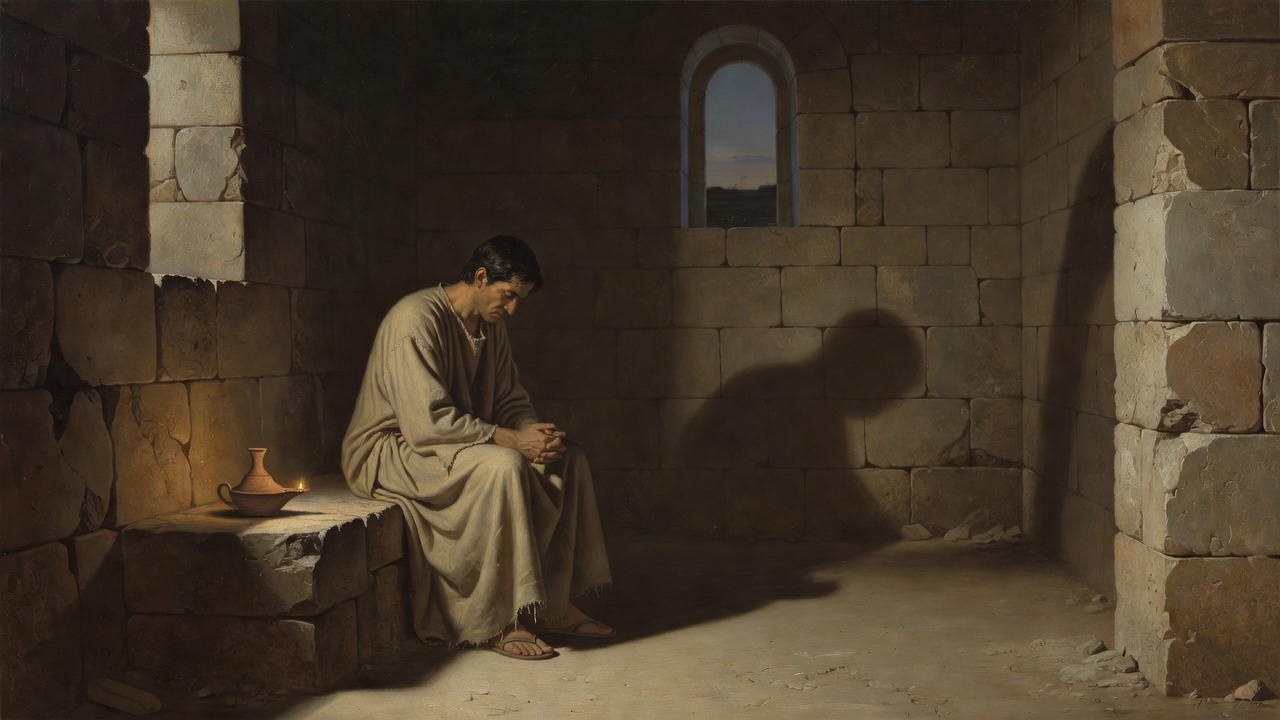
6“Surely every man walks like a shadow.
Surely they busy themselves in vain.
He heaps up, and doesn’t know who shall gather.
7Now, Lord, what do I wait for?
My hope is in you.
8Deliver me from all my transgressions.
Don’t make me the reproach of the foolish.
9I was mute.
I didn’t open my mouth,
because you did it.
10Remove your scourge away from me.
I am overcome by the blow of your hand.
11When you rebuke and correct man for iniquity,
you consume his wealth like a moth.
Surely every man is but a breath.” Selah.
12“Hear my prayer, LORD, and give ear to my cry.
Don’t be silent at my tears.
For I am a stranger with you,
a foreigner, as all my fathers were.
13Oh spare me, that I may recover strength,
before I go away and exist no more.”
Did you know?
The Frailty and Fleeting Nature of Human Life
- The superscription dedicates this composition to the choirmaster and to Jeduthun, attributing the prayer to David.Sources: the Bible text itself · David
- The psalm illustrates the brevity of human existence by describing human life as merely a handbreadth—an ancient unit of measurement based on the width of the palm—and as a passing breath or shadow.Sources: the Bible text itself
- The speaker identifies as a foreigner and a temporary guest dwelling with God, reflecting an attitude of complete dependence on divine mercy and hospitality.Sources: the Bible text itself
Notes written with AI assistance from open sources (Theographic Bible Metadata, CC BY-SA 4.0; Easton’s Bible Dictionary, public domain) and reviewed before publishing.
Credits and license for this translation
The World English Bible
The World English Bible is in the Public Domain. That means that it is not copyrighted. However, "World English Bible" is a Trademark of eBible.org.
You may copy, publish, proclaim, distribute, redistribute, sell, give away, quote, memorize, read publicly, broadcast, transmit, share, back up, post on the Internet, print, reproduce, preach, teach from, and use
the World English Bible as much as you want, and others may also do so. All we ask is that if you CHANGE the actual text of the World English Bible in any way, you not call the result the World English Bible any more.
This is to avoid confusion, not to limit your freedom. The Holy Bible is God's Word. It belongs to God. He gave it to us freely, and we who have worked on this translation freely give it to you by dedicating it to the
Public Domain.
Donations to help with the expenses of this project and thus help others have free access to the Word of God may be made to us, but are not required. Please see
https://MLJohnson.org/partner/ if you are interested in helping to fund this work.
This is the "updated" version of the World English Bible which uses "LORD" or "GOD" in place of "Yahweh" or "Yah" in the Old Testament. Typo corrections and updates, if any, will be posted on https://eBible.org/engwebu/ and at https://WorldEnglish.Bible .
Section headings adapted from the Berean Standard Bible (public domain); they are not part of this translation’s text.
Source: http://ebible.org/engwebu/ · eBible.org