Psalms 74
Noah Webster Bible · Tap a verse to see its cross-references.
Why Have You Rejected Us Forever?
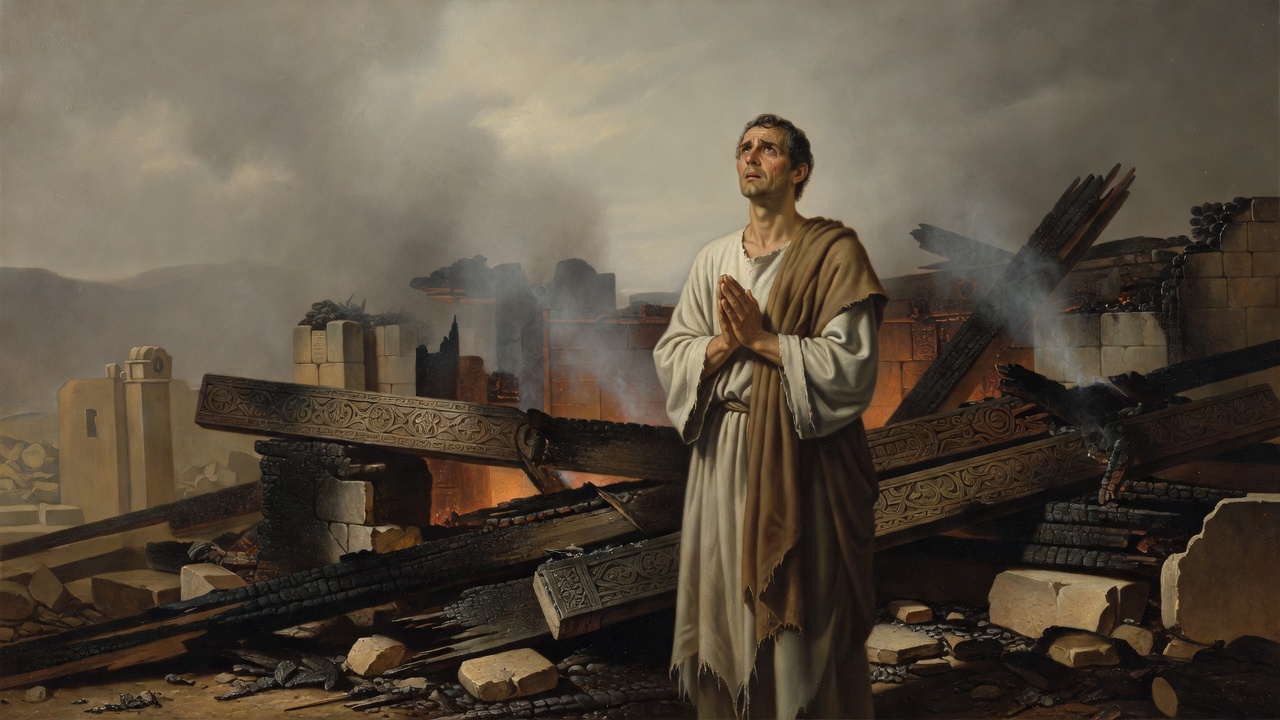
1Maschil of Asaph. O God, why hast thou cast us off for ever? why doth thy anger smoke against the sheep of thy pasture? 2Remember thy congregation, which thou hast purchased of old: the rod of thy inheritance, which thou hast redeemed; this mount Zion, in which thou hast dwelt. 3Lift up thy feet to the perpetual desolations; even all that the enemy hath done wickedly in the sanctuary. 4Thy enemies roar in the midst of thy congregations; they set up their ensigns for signs. 5A man was famous according as he had lifted up axes upon the thick trees. 6But now they break down the carved work of it at once with axes and hammers. 7They have cast fire into thy sanctuary, they have defiled by casting down the dwelling-place of thy name to the ground. 8They said in their hearts, Let us destroy them together: they have burned up all the synagogues of God in the land. 9We see not our signs: there is no more any prophet: neither is there among us any that knoweth how long. 10O God, how long shall the adversary reproach? shall the enemy blaspheme thy name for ever? 11Why withdrawest thou thy hand, even thy right hand? pluck it out of thy bosom. 12For God is my King of old, working salvation in the midst of the earth. 13Thou didst divide the sea by thy strength: thou didst break the heads of the dragons in the waters. 14Thou didst break the head of leviathan in pieces, and didst give him to be food to the people inhabiting the wilderness. 15Thou didst cleave the fountain and the flood: thou didst dry up mighty rivers. 16The day is thine, the night also is thine: thou hast prepared the light and the sun. 17Thou hast set all the borders of the earth: thou hast made summer and winter. 18Remember this, the enemy hath reproached, O LORD, and the foolish people have blasphemed thy name. 19O deliver not the soul of thy turtle dove to the multitude of the wicked : forget not the congregation of thy poor for ever. 20Have respect to the covenant: for the dark places of the earth are full of the habitations of cruelty. 21O let not the oppressed return ashamed: let the poor and needy praise thy name. 22Arise, O God, plead thy own cause: remember how the foolish man reproacheth thee daily. 23Forget not the voice of thy enemies: the tumult of those that rise against thee increaseth continually.
Did you know?
Lament over the Destroyed Sanctuary
- Psalms 73 through 83 are attributed to Asaph, a Levite musician and leader of David's choir. Because Psalm 74 laments the burning and total destruction of the sanctuary, many scholars connect it with the later "sons of Asaph," a guild of poets and singers who preserved his tradition.Sources: Asaph (Levite) · the Bible text itself
- The psalm appeals to God to remember Mount Zion, a prominent hill in Jerusalem where David established his citadel and where the sanctuary stood as the dwelling place of God's name.Sources: Mount Zion · the Bible text itself
- The destruction of the sanctuary is vividly described using the metaphor of woodcutters felling trees, as invaders smashed the intricate carved woodwork with axes and picks before burning the holy place to the ground.Sources: the Bible text itself
Notes written with AI assistance from open sources (Theographic Bible Metadata, CC BY-SA 4.0; Easton’s Bible Dictionary, public domain) and reviewed before publishing.
Places in this chapter
- Mount Zion · 31.772, 35.229 · verse 2
Only places identified with high confidence are shown (90% or more according to the scholarly sources compiled by OpenBible). Period map: DARE (Digital Atlas of the Roman Empire), CC BY 4.0; modern map: © OpenStreetMap contributors; places: OpenBible.info (CC BY 4.0).
Credits and license for this translation
Noah Webster Bible
The Holy Bible, Containing the Old and New Testaments, in the Common Version, with Amendments of the language by Noah Webster, LL.D.
Public Domain
Language: English
Dialect: archaic American
Translation by: Noah Webster
2024-08-01
Section headings adapted from the Berean Standard Bible (public domain); they are not part of this translation’s text.
Source: http://ebible.org/engwebster/ · eBible.org