Leviticus 21
Noah Webster Bible · Tap a verse to see its cross-references.
Holiness Required of Priests
1And the LORD said to Moses, Speak to the priests, the sons of Aaron, and say to them, There shall none be defiled for the dead among his people: 2But for his kin, that is near to him, that is , for his mother, and for his father, and for his son, and for his daughter, and for his brother, 3And for his sister a virgin, that is nigh to him, who hath had no husband: for her he may be defiled. 4But he shall not defile himself, being a chief man among his people, to profane himself. 5They shall not make baldness upon their head, neither shall they shave off the corner of their beard, nor make any cuttings in their flesh. 6They shall be holy to their God, and not profane the name of their God: for the offerings of the LORD made by fire, and the bread of their God they do offer: therefore they shall be holy. 7They shall not take a wife that is a lewd woman, or profane; neither shall they take a woman put away from her husband: for he is holy to his God. 8Thou shalt sanctify him therefore, for he offereth the bread of thy God: he shall be holy to thee: for I the LORD, who sanctify you, am holy. 9And the daughter of any priest, if she shall profane herself by lewdness, she profaneth her father: she shall be burnt with fire. 10And he that is the high priest among his brethren, upon whose head the anointing oil was poured, and that is consecrated to put on the garments, shall not uncover his head, nor rend his clothes; 11Neither shall he go in to any dead body, nor defile himself for his father, or for his mother; 12Neither shall he go out of the sanctuary, nor profane the sanctuary of his God; for the crown of the anointing oil of his God is upon him: I am the LORD. 13And he shall take a wife in her virginity. 14A widow, or a divorced woman, or profane, or a harlot, these shall he not take: but he shall take a virgin of his own people for a wife. 15Neither shall he profane his seed among his people: for I the LORD do sanctify him.
Restrictions against Those with Blemishes
16And the LORD spoke to Moses, saying, 17Speak to Aaron, saying, whoever he may be of thy seed in their generations that hath any blemish, let him not approach to offer the bread of his God: 18For whatever man he may be that hath a blemish, he shall not approach: a blind man, or a lame, or he that hath a flat nose, or any thing superfluous, 19Or a man that is broken-footed, or broken-handed, 20Or crooked-backed, or a dwarf, or that hath a blemish in his eye, or be scurvy, or scabbed, or hath his peculiar members broken: 21No man of the seed of Aaron the priest, that hath a blemish, shall come nigh to offer the offerings of the LORD made by fire; he hath a blemish, he shall not come nigh to offer the bread of his God. 22He shall eat the bread of his God, both of the most holy, and of the holy. 23Only he shall not go in to the vail, nor come nigh to the altar, because he hath a blemish; that he may not profane my sanctuaries: for I the LORD do sanctify them. 24And Moses told it to Aaron, and to his sons, and to all the children of Israel.
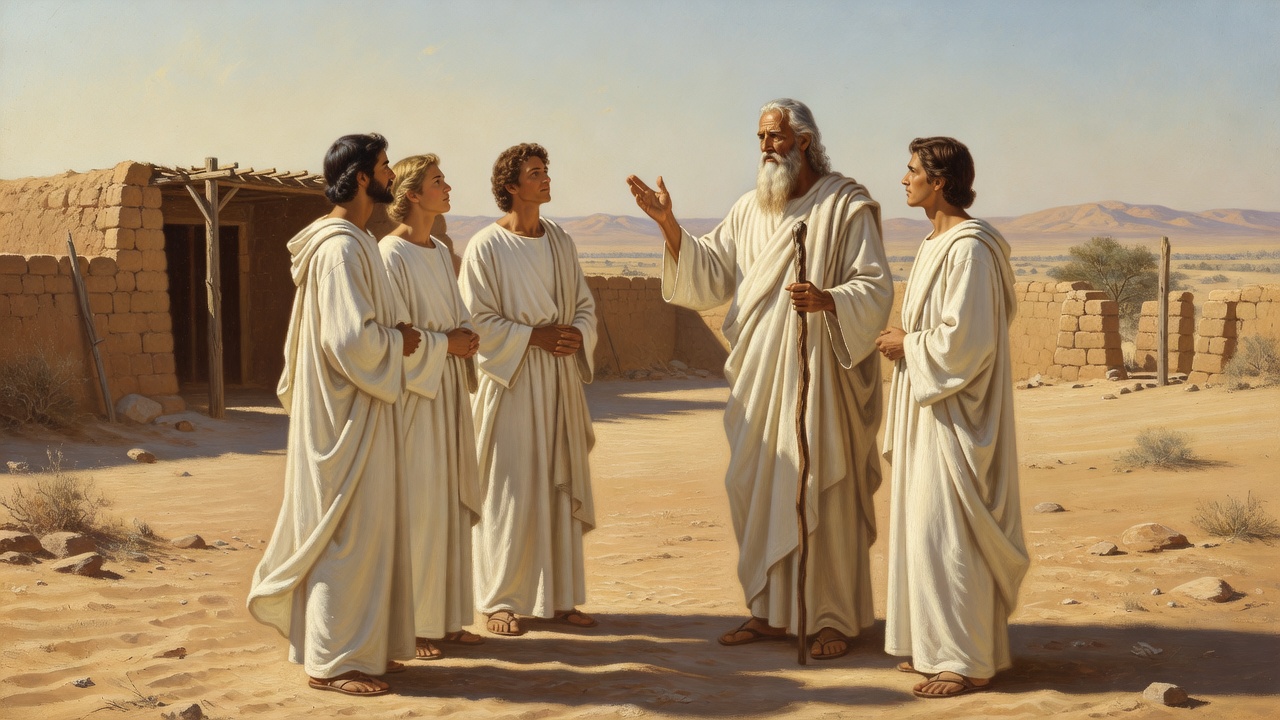
Did you know?
Holiness and Requirements for the Priesthood
- Ordinary priests were permitted to mourn only for immediate blood relatives—parents, children, and unmarried siblings—whereas the high priest was strictly forbidden from defiling himself for any corpse, including his own parents, and could not tear his vestments in grief.Sources: the Bible text itself
- While regular priests were forbidden from marrying divorced women or prostitutes, the high priest faced an even stricter standard: he was permitted to marry only a virgin from his own people.Sources: the Bible text itself
- Descendants of Aaron with physical blemishes or injuries were disqualified from presenting fire offerings at the altar, but they were still fully permitted to share in and eat the holy and most holy food portions.Sources: the Bible text itself
Notes written with AI assistance from open sources (Theographic Bible Metadata, CC BY-SA 4.0; Easton’s Bible Dictionary, public domain) and reviewed before publishing.
Credits and license for this translation
Noah Webster Bible
The Holy Bible, Containing the Old and New Testaments, in the Common Version, with Amendments of the language by Noah Webster, LL.D.
Public Domain
Language: English
Dialect: archaic American
Translation by: Noah Webster
2024-08-01
Section headings adapted from the Berean Standard Bible (public domain); they are not part of this translation’s text.
Source: http://ebible.org/engwebster/ · eBible.org