Proverbs 9
One Unity Resource Bible · Tap a verse to see its cross-references.
The Way of Wisdom
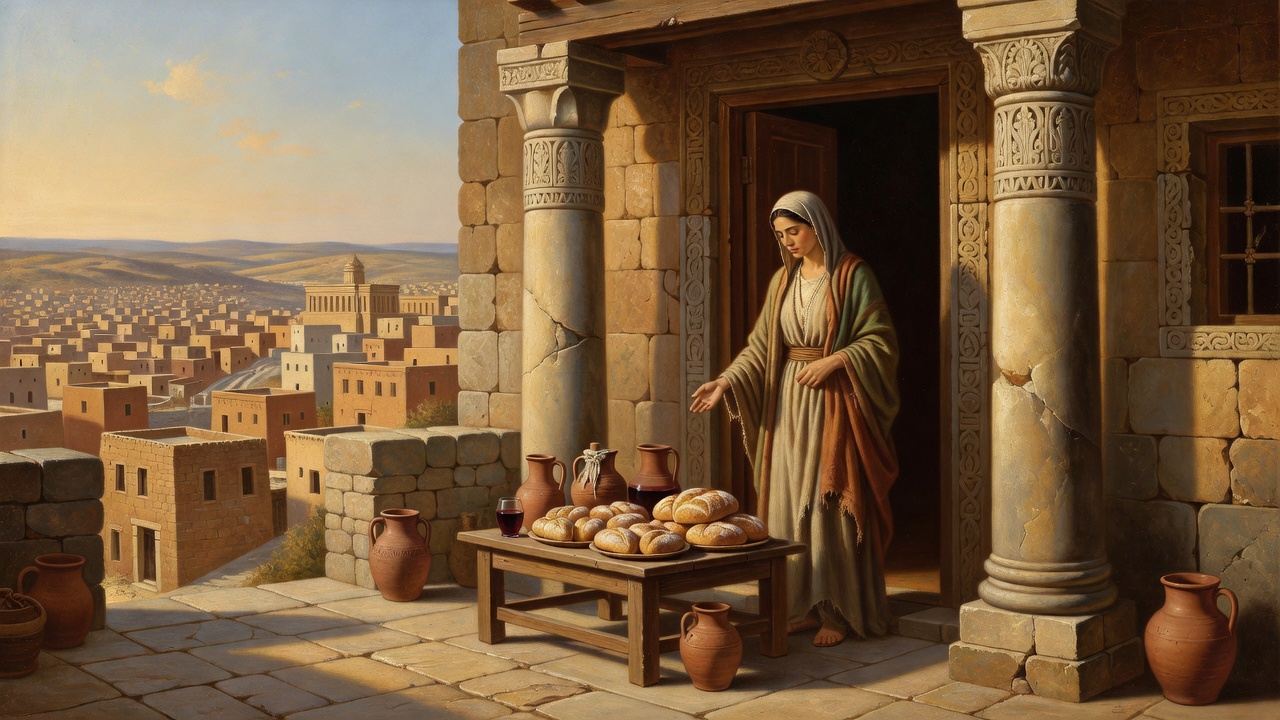
1Wisdom has built her house.
She has carved out her seven pillars.
2She has prepared her meat.
She has mixed her wine.
She has also set her table.
3She has sent out her maidens.
She cries from the highest places of the city:
4“Whoever is simple, let him turn in here!”
As for him who is void of understanding, she says to him,
5“Come, eat some of my bread,
Drink some of the wine which I have mixed!
6Leave your simple ways, and live.
Walk in the way of understanding.”
7He who corrects a mocker invites insult.
He who reproves a wicked man invites abuse.
8Don’t reprove a scoffer, lest he hate you.
Reprove a wise man, and he will 'ahav ·affectionately love· you.
9Instruct a wise man, and he will be still wiser.
Teach a upright man, and he will increase in learning.
10The fear of Adonai is the beginning of wisdom.
The knowledge of the Holy One is understanding.
11For by me your days will be multiplied.
The years of your life will be increased.
12If you are wise, you are wise for yourself.
If you mock, you alone will bear it.
The Way of Folly
13The foolish woman is loud,
Undisciplined, and knows nothing.
14She sits at the door of her house,
on a seat in the high places of the city,
15To call to those who pass by,
who go straight on their ways,
16“Whoever is simple, let him turn in here.”
As for him who is void of understanding, she says to him,
17“Stolen water is sweet.
Food eaten in secret is pleasant.”
18But he does not know that the departed spirits are there,
that her guests are in the depths of Sheol ·Place of the dead·.
Did you know?
The Invitations of Wisdom and Folly
- Proverbs 9 contrasts two personified figures, Wisdom and Folly, who each present a rival banquet. Both women issue public invitations from the highest places of the city, appealing directly to the simple and those lacking judgment to make a choice between their paths.Sources: the Bible text itself
- The two feasts offer starkly different outcomes. Wisdom invites guests to a prepared house with seven carved pillars to eat her meat, drink mixed wine, and gain life, whereas Folly seductively offers stolen water and secret food, concealing that her guests end up in the depths of the grave.Sources: the Bible text itself
- The chapter highlights differing responses to instruction: correcting a mocker brings insult and hatred, whereas teaching a wise person increases their understanding. The foundation of true discernment is described as the fear of the LORD and the knowledge of the Holy One.Sources: the Bible text itself
Notes written with AI assistance from open sources (Theographic Bible Metadata, CC BY-SA 4.0; Easton’s Bible Dictionary, public domain) and reviewed before publishing.
Credits and license for this translation
One Unity Resource Bible
The One Unity Resource Bible translation of the Holy Bible into American English with some transliterated Hebrew notations
Copyright © 2016,2019 Thomas Robinson
Language: English
Dialect: American
Translation by: Thomas Robinson
This translation is made available to you under the terms of the
Creative Commons Attribution Share-Alike license 4.0.
You have permission to share and redistribute this Bible translation in any format and to make reasonable revisions and adaptations of this translation, provided that:
You include the above copyright and source information.
If you make any changes to the text, you must indicate that you did so in a way that makes it clear that the original licensor is not necessarily endorsing your changes.
If you redistribute this text, you must distribute your contributions under the same license as the original.
Pictures included with Scriptures and other documents on this site are licensed just for use with those Scriptures and documents.
For other uses, please contact the respective copyright owners.
Note that in addition to the rules above, revising and adapting God's Word involves a great responsibility to be true to God's Word. See Revelation 22:18-19.
2024-12-05
Section headings adapted from the Berean Standard Bible (public domain); they are not part of this translation’s text.
Source: http://ebible.org/engourb/ · eBible.org