Leviticus 19
Targum Onkelos Etheridge · Tap a verse to see its cross-references.
Commandments for Holiness
1And the Lord spake with Mosheh, saying: 2Speak with all the congregation of the sons of Israel and say to them, You shall be holy; for I, the Lord your God, am holy. 3A man shall reverence his mother and his father, and you shall keep the day of My Sabbath: I am the Lord your God. 4Turn not after idols, nor make molten things (for worship): I am the Lord your God.
5And when you offer the sacrifice of consecrated things before the Lord, make the sacrifice thereof with your own free-will. 6On the day that it is sacrificed it may be eaten, and on the following day; but that which remaineth on the third day shall be burned with fire. 7If indeed it be eaten on the third day, it (the oblation) is rejected, and shall not be accepted. 8And whoever eateth it shall bear his guilt; for he hath profaned that which was consecrated, and that man shall destroyed from his people.
Love Your Neighbor
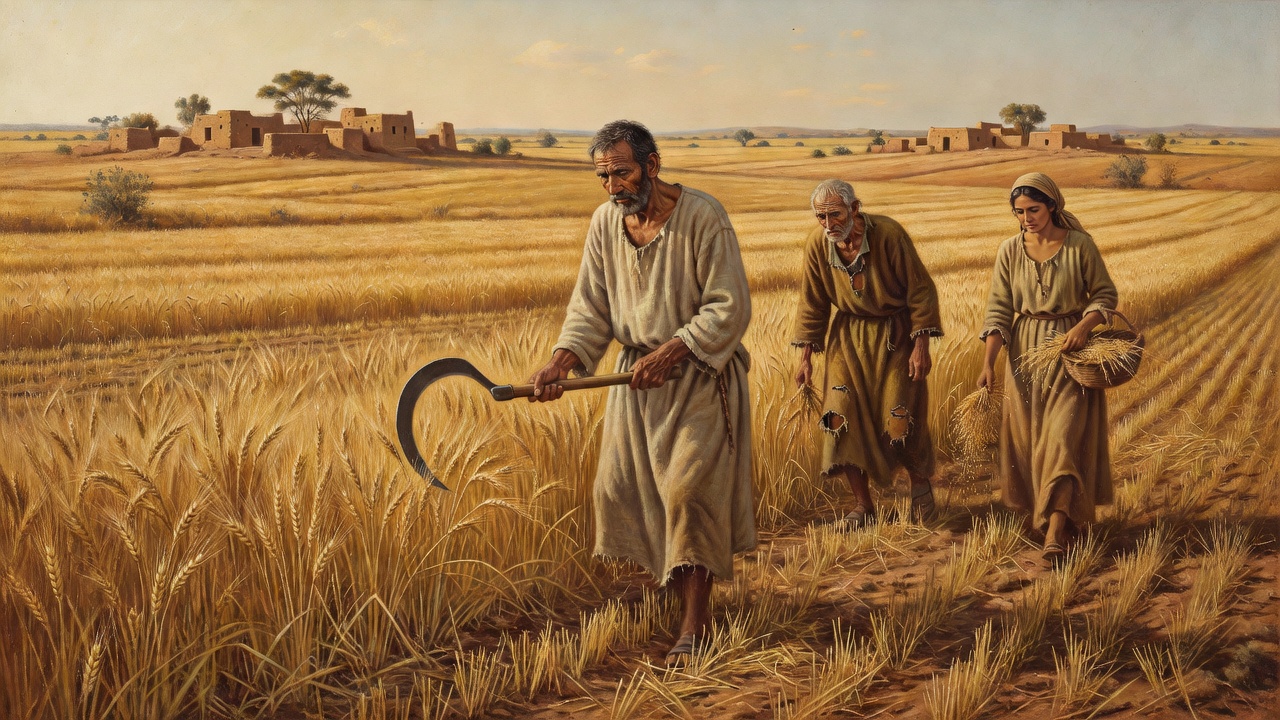
9And when you reap the harvest of your land, thou shalt not wholly reap the corners of thy field, and the gleanings of thy harvest thou shalt not gather. 10Neither in thy vineyard shalt thou (entirely) ingather, nor collect the remainder of thy vineyard; thou shalt leave them for the poor, and for the stranger: I am the Lord thy God.
11You shall not steal, nor prevaricate, nor be false, a man with his neighbour. 12Neither swear by My Name unto falsehood, nor profane the Name of thy God: I am the Lord.
13Thou shalt not overbear thy neighbour, nor be coercive: the hire of the hireling shall not abide with thee till the morning. 14Thou shalt not curse him who cannot hear, nor put a stumblingblock before him who cannot see, but shalt fear thy God: I am the Lord.
15You shall not deal falsely in judgment, nor accept the face of the poor, nor honour the face of the great; in truthfulness shalt thou judge thy neighbour. 16Thou shalt not make false accusations against thy people, neither stand against thy neighbour’s blood: I am the Lord.
17Thou shalt not hate thy brother in thy heart: reproving, reprove thou thy neighbour, and contract not sin his account. 18Thou shalt not be revengeful, nor keep enmity against the children of thy people, but love thy neighbour as thyself. I am the Lord.
Keep My Statutes
19You shall observe My statutes. Thy cattle thou shalt not make to gender with various kinds, nor sow thy field with various kinds, nor let a garment of a mixture of woollen and linen come upon thee.
20And if a man lie carnally with a woman, and she be a handmaid betrothed unto (another) man, and with redemption of money not redeemed, nor having freedom given to her by an instrument of writing, the stripe shall be upon her; they shall not be put to death, for she was not free. 21But he shall bring his trespass offering before the Lord, at the door of the tabernacle of ordinance, a ram for a trespass offering. 22And the priest shall make atonement with the ram of the trespass offering before the Lord for the sin that he hath sinned, that the sin he hath sinned may be forgiven him.
23And when you have entered upon the land, and have planted any (kind) of tree for eating, the fruit of it shall be put away (from you); three years shall it be set aside to be destroyed; it shall not be eaten. 24But in the fourth year all the fruit shall be consecrated for thanksgiving before the Lord; 25And in the fifth year you shall eat the fruit of it, that the fruit may be added (increased) to you. I am the Lord your God.
26You shall not eat anything with the blood. You shall not use enchantments, nor augury by the clouds. 27You shall not shave the hair on your head in a circle, nor destroy the hair of thy beard, 28nor make a cutting for the dead in thy flesh; nor imprint signatures upon you: I am the Lord.
29Thou shalt not profane thy daughter to make her to become a fornicatress, lest the land become whorish, and the land be filled with the ways of wickedness. 30The days of Sabbaths, which are Mine, observe ye, and hold in reverence the house of My sanctuary. I am the Lord.
31Turn not after deceivers, nor inquire by diviners to pollute yourselves with them: I am the Lord your God.
32Thou shalt rise up before one who is a teacher in the law, and pay honour to the presence of the aged, and fear thy God. I am the Lord.
33And if a stranger sojourn with you in the land, you shall not oppress him. 34As one born among you shall be the stranger who sojourneth among you, and thou shalt love him as thyself, because you were sojourners in the land of Mizraim: I am the Lord your God.
35You shall commit no falsity in judgment, in rule, (or line,) in weight, or in measure. 36Balances of truth, weights of truth, a measure in truth, and hins of truth you shall have. 37I am the Lord your God, who have brought you out from the land of Mizraim; and you shall keep all My statutes, and all My judgments, and do them: I am the Lord.
Did you know?
Holiness and Community Life
- Leviticus 19 contains the command to love your neighbor as yourself. It explicitly extends this same requirement to resident foreigners, reminding the Israelites that they were once strangers in the land of Egypt.Sources: the Bible text itself
- The law required farmers to leave the outer edges of their fields unharvested and forbade gathering dropped grain or fallen grapes. These remaining crops were reserved specifically for the poor and the resident foreigner.Sources: the Bible text itself
- Holiness was tied directly to practical ethics, prohibiting actions such as cursing the deaf, placing a stumbling block before the blind, perverting justice, and withholding a laborer's wages overnight.Sources: the Bible text itself
Notes written with AI assistance from open sources (Theographic Bible Metadata, CC BY-SA 4.0; Easton’s Bible Dictionary, public domain) and reviewed before publishing.
Places in this chapter
Only places identified with high confidence are shown (90% or more according to the scholarly sources compiled by OpenBible). Period map: DARE (Digital Atlas of the Roman Empire), CC BY 4.0; modern map: © OpenStreetMap contributors; places: OpenBible.info (CC BY 4.0).
Credits and license for this translation
Targum Onkelos Etheridge
The Targums of Onkelos and Jonathan Ben Uzziel On the Pentateuch With The Fragments of the Jerusalem Targum From the Chaldee by J. W. Etheridge, M.A. First Published 1862-65.
Public Domain
Language: English
2020-12-20
Section headings adapted from the Berean Standard Bible (public domain); they are not part of this translation’s text.
Source: http://ebible.org/engoke/ · eBible.org