Psalms 56
The Orthodox Jewish Bible · Tap a verse to see its cross-references.
Be Merciful to Me, O God
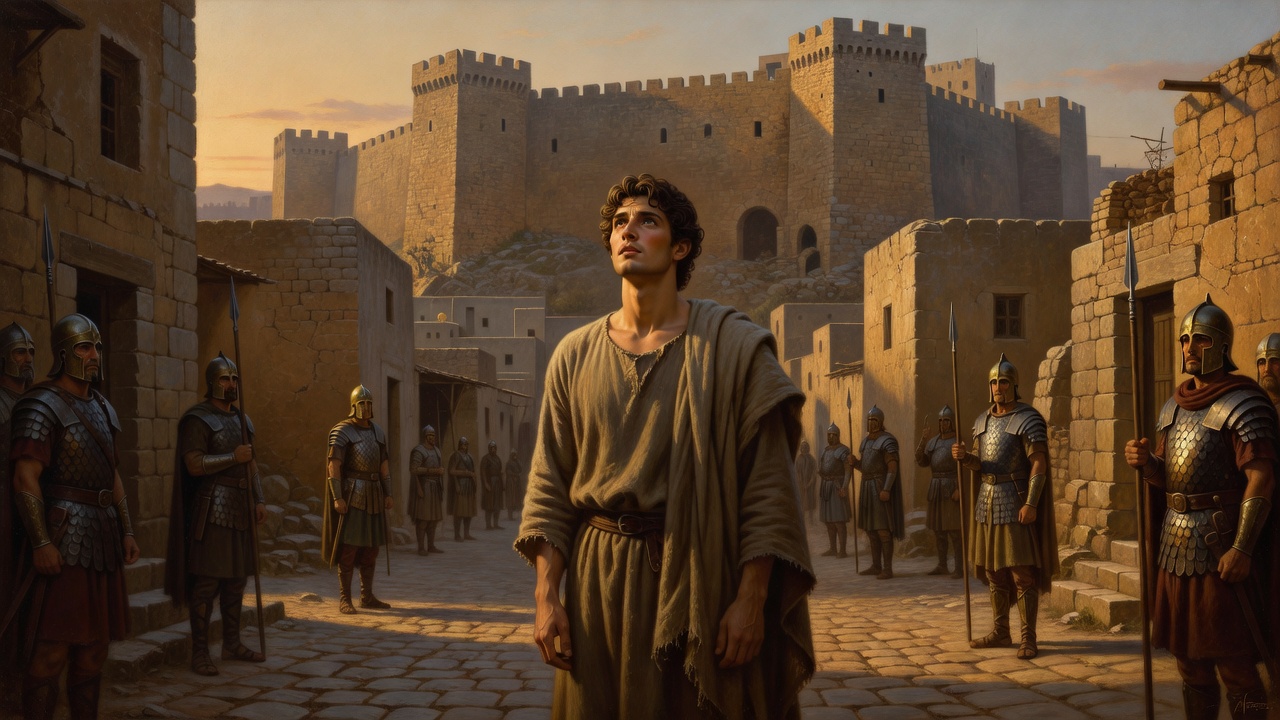
1(For the director. Set to The Silent, Distant Yonah. Of Dovid. A mikhtam — when the Pelishtim seized him in Gat)
2Channeni (be merciful) unto me, O Elohim:
for enosh (man) tramples upon me;
kol hayom they press their attack against me.
3Mine adversaries kol hayom trample me;
for they be rabbim that fight against me, Marom (Most High).
4What time I am afraid,
I will trust in Thee.
5In Elohim I will praise His Word.
In Elohim I have put my trust;
I will not fear
what basar can do unto me.
6Kol hayom they twist my words;
all their machsh'vot (thoughts) are against me for rah (evil).
7They gather themselves together, they hide themselves,
they are shomer over my steps,
when they wait for my nefesh.
8Shall they escape by iniquity?
In Thine anger cast down the amim (peoples), O Elohim.
9Thou hast acted as a sofer, recording my wanderings;
put Thou my tears into Thy wineskin;
are they not in Thy Sefer (Book)?
10On the day when I cry unto Thee,
then shall mine oyevim turn back;
of this I have da'as; for Elohim is for me.
11In Elohim will I praise His Word;
in Hashem will I praise His Word.
12In Elohim have I put my trust;
I will not be afraid.
What can adam do unto me?
13Thy nederim are upon me, O Elohim;
I will render todot (thank offerings) unto Thee.
14For Thou hast delivered my nefesh from mavet (death).
Wilt not Thou deliver my feet from stumblimg,
that I may walk before Elohim
in the Ohr HaChayyim (the light of the living)?
Did you know?
Trusting God in Enemy Territory
- The superscription links this psalm to David when the Philistines seized him in Gath. Gath was one of the five royal cities of the Philistines and the hometown of Goliath, making David's flight there from King Saul particularly dangerous.Sources: the Bible text itself · Gath
- The psalmist uses vivid personal metaphors, asking God to collect his tears in a bottle and record his wanderings in a book, portraying divine awareness and care in times of distress.Sources: the Bible text itself
Notes written with AI assistance from open sources (Theographic Bible Metadata, CC BY-SA 4.0; Easton’s Bible Dictionary, public domain) and reviewed before publishing.
Credits and license for this translation
The Orthodox Jewish Bible
The Orthodox Jewish Bible - Tanakh and Orthodox Jewish Brit Chadasha - The Holy Bible
copyright © 2002-2011, 2021, 2024 Artists for Israel International
Language: English
Contributor: Artists for Israel International
THE ORTHODOX JEWISH TANAKH
Artists For Israel Intl Inc.
This version also appears with the Orthodox Yiddish Triglot which presents the Hebrew Yiddish script in Latin script and an English word for word translation, available at afii.org/Torah
To donate PayPal.Me
This translation is made available to you under the terms of the
Creative Commons Attribution license 4.0.
You may share and redistribute this Bible translation or extracts from it in any format, provided that:
You include the above copyright and source information.
If you make any changes to the text, you must indicate that you did so in a way that makes it clear that the original licensor is not necessarily endorsing your changes.
Pictures included with Scriptures and other documents on this site are licensed just for use with those Scriptures and documents.
For other uses, please contact the respective copyright owners.
Note that in addition to the rules above, revising and adapting God's Word involves a great responsibility to be true to God's Word. See Revelation 22:18-19.
2026-01-06
Section headings adapted from the Berean Standard Bible (public domain); they are not part of this translation’s text.
Source: http://ebible.org/engojb/ · eBible.org