Psalms 39
The Orthodox Jewish Bible · Tap a verse to see its cross-references.
I Will Watch My Ways
1(For the one directing, even to Yedutun. Mizmor Dovid)
2I said, I will be shomer over my ways,
that I sin not with my leshon;
I will be shomer over my mouth with a muzzle,
while the rashah is before me.
3I was dumb with silence,
I held my peace for the sake of tov;
and my distress grew severe.
4My lev became hot within me;
while I was musing the eish burned;
then I spoke with my leshon:
5Hashem, make me to know mine end,
and the measure of my yamim, what it is;
that I may have da'as of how chadel (fleeting, frail) I am.
6Hinei, Thou hast made my yamim as a handbreadth,
and mine lifespan is as nothing before Thee;
verily kol adam stand as kol hevel (altogether vanity).
Selah
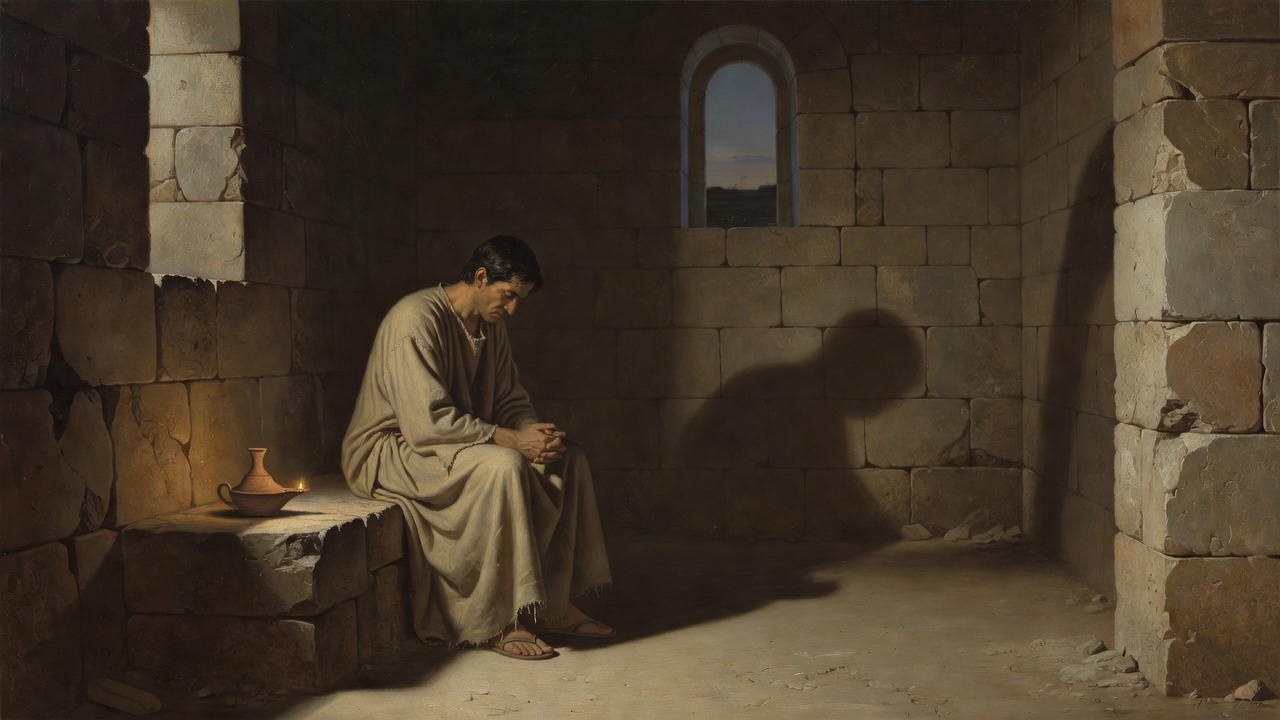
7Surely every ish walketh in a tzel (shadow);
surely they are in turmoil in vain;
he heapeth up riches, and hath no da'as of who shall gather them.
8And now, Adonoi, what do I wait for?
My hope is in Thee.
9Save me from all my peysha'im;
make me not the reproach of the foolish.
10I was silent, I opened not my mouth;
because Atah (Thou) did it.
11Remove Thy nega (stroke, scourge) away from me;
I am consumed by the blow of Thine yad.
12When Thou with rebukes dost correct man for avon (iniquity),
Thou makest his beauty to consume away like a moth:
surely kol adam are hevel (vanity).
Selah
13Hear my tefillah, Hashem, and give ear unto my cry;
hold not Thy peace at my weeping;
for I am a ger with Thee,
and a sojourner, as were all my Avot.
14O spare me from Thy frown, that I may recover strength,
before I depart, v'eineni (and I be no more).
Did you know?
The Frailty and Fleeting Nature of Human Life
- The superscription dedicates this composition to the choirmaster and to Jeduthun, attributing the prayer to David.Sources: the Bible text itself · David
- The psalm illustrates the brevity of human existence by describing human life as merely a handbreadth—an ancient unit of measurement based on the width of the palm—and as a passing breath or shadow.Sources: the Bible text itself
- The speaker identifies as a foreigner and a temporary guest dwelling with God, reflecting an attitude of complete dependence on divine mercy and hospitality.Sources: the Bible text itself
Notes written with AI assistance from open sources (Theographic Bible Metadata, CC BY-SA 4.0; Easton’s Bible Dictionary, public domain) and reviewed before publishing.
Credits and license for this translation
The Orthodox Jewish Bible
The Orthodox Jewish Bible - Tanakh and Orthodox Jewish Brit Chadasha - The Holy Bible
copyright © 2002-2011, 2021, 2024 Artists for Israel International
Language: English
Contributor: Artists for Israel International
THE ORTHODOX JEWISH TANAKH
Artists For Israel Intl Inc.
This version also appears with the Orthodox Yiddish Triglot which presents the Hebrew Yiddish script in Latin script and an English word for word translation, available at afii.org/Torah
To donate PayPal.Me
This translation is made available to you under the terms of the
Creative Commons Attribution license 4.0.
You may share and redistribute this Bible translation or extracts from it in any format, provided that:
You include the above copyright and source information.
If you make any changes to the text, you must indicate that you did so in a way that makes it clear that the original licensor is not necessarily endorsing your changes.
Pictures included with Scriptures and other documents on this site are licensed just for use with those Scriptures and documents.
For other uses, please contact the respective copyright owners.
Note that in addition to the rules above, revising and adapting God's Word involves a great responsibility to be true to God's Word. See Revelation 22:18-19.
2026-01-06
Section headings adapted from the Berean Standard Bible (public domain); they are not part of this translation’s text.
Source: http://ebible.org/engojb/ · eBible.org