Psalms 36
The Orthodox Jewish Bible · Tap a verse to see its cross-references.
The Transgression of the Wicked
1(For the one directing. Of Dovid, the eved Hashem)
2Peysha speaketh to the rashah within my lev,
that there is no pachad Elohim (fear of G-d) before his eyes.
3For he flattereth himself in his own eyes,
until his avon (iniquity) be found to be hateful.
4The words of his mouth are iniquity and mirmah (deceit);
he hath ceased to be wise, and to do tov (good).
5He deviseth evil upon his mishkav (bed);
he setteth himself in a derech that is not tov;
he abhorreth not rah.
6Thy chesed, Hashem, is in HaShomayim;
and Thy emunah (faithfulness) reacheth unto the clouds.
7Thy tzedakah is like the great mountains;
Thy mishpatim are tehom rabbah (a great deep);
Hashem, Thou preservest adam (man) and behemah (beast).
8How precious is Thy chesed, O Elohim!
Therefore the Bnei Adam find refuge
under the shadow of Thy wings.
9They shall be abundantly satisfied with the abundance of Thy Beis;
and Thou shalt give them to drink of Thy river of delight.
10For with Thee is the Makor Chayyim (fountain of life);
in Thy Ohr shall we see ohr.
11O continue Thy chesed unto them that know Thee;
and Thy tzedakah to the yishrei lev (the ones upright of heart).
12Let not the regel ga'avah (foot of pride) come against me,
and let not the yad of the resha'im drive me away.
13There are the po'alei aven (workers of iniquity) fallen;
they are thrown down, and shall not be able to rise.
Did you know?
Human Malice and Divine Abundance
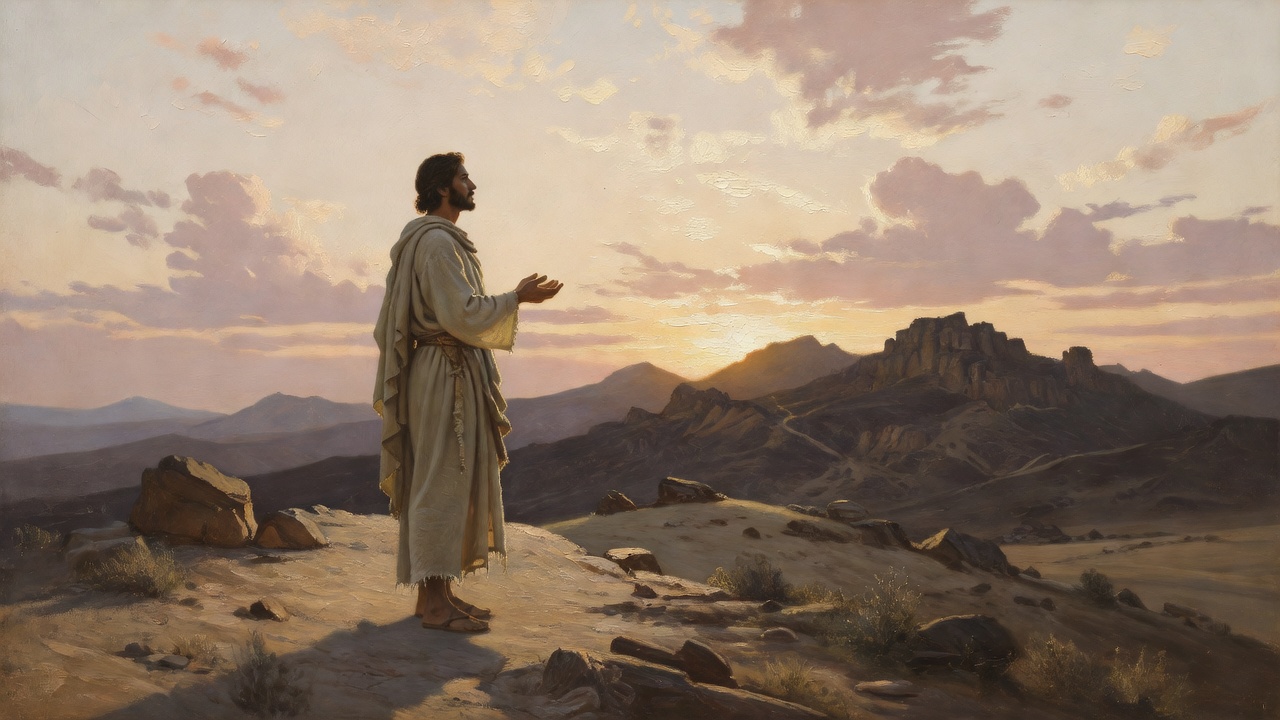
- The psalm is structured around a sharp contrast between the scheming nature of the wicked and the boundless character of God. While the transgressor plots deceit even on his bed without fear of God, God's loving devotion and righteousness are described using vast cosmic imagery, reaching to the heavens, the clouds, the highest mountains, and the deep sea.Sources: the Bible text itself
- The poem employs rich sanctuary and hospitality metaphors to describe divine care. The faithful are portrayed as taking refuge beneath the shadow of God's wings, feasting on the abundance of his house, and drinking from the fountain of life and a river of delights.Sources: the Bible text itself
Notes written with AI assistance from open sources (Theographic Bible Metadata, CC BY-SA 4.0; Easton’s Bible Dictionary, public domain) and reviewed before publishing.
Credits and license for this translation
The Orthodox Jewish Bible
The Orthodox Jewish Bible - Tanakh and Orthodox Jewish Brit Chadasha - The Holy Bible
copyright © 2002-2011, 2021, 2024 Artists for Israel International
Language: English
Contributor: Artists for Israel International
THE ORTHODOX JEWISH TANAKH
Artists For Israel Intl Inc.
This version also appears with the Orthodox Yiddish Triglot which presents the Hebrew Yiddish script in Latin script and an English word for word translation, available at afii.org/Torah
To donate PayPal.Me
This translation is made available to you under the terms of the
Creative Commons Attribution license 4.0.
You may share and redistribute this Bible translation or extracts from it in any format, provided that:
You include the above copyright and source information.
If you make any changes to the text, you must indicate that you did so in a way that makes it clear that the original licensor is not necessarily endorsing your changes.
Pictures included with Scriptures and other documents on this site are licensed just for use with those Scriptures and documents.
For other uses, please contact the respective copyright owners.
Note that in addition to the rules above, revising and adapting God's Word involves a great responsibility to be true to God's Word. See Revelation 22:18-19.
2026-01-06
Section headings adapted from the Berean Standard Bible (public domain); they are not part of this translation’s text.
Source: http://ebible.org/engojb/ · eBible.org