Psalms 127
The Orthodox Jewish Bible · Tap a verse to see its cross-references.
Children Are a Heritage from the LORD
1(Shir HaMa'alot, of Sh'lomo)
1 Except Hashem build the bais,
they that build it labor in vain;
except Hashem is shomer over the city,
the shomair (watchman) stands guard in vain.
2It is vain for you to rise up early,
to sit up late,
to eat the lechem ha'atzavim (bread of toils);
for so He giveth his beloved sleep.
3Hinei, banim are nachalat Hashem;
and the p'ri habeten is a zachar (reward).
4As khitzim (arrows) are in the yad of a gibbor;
so are bnei haneurim (children born in oneʼs youth).
5Ashrei hagever that hath his quiver full of them;
they shall not be ashamed,
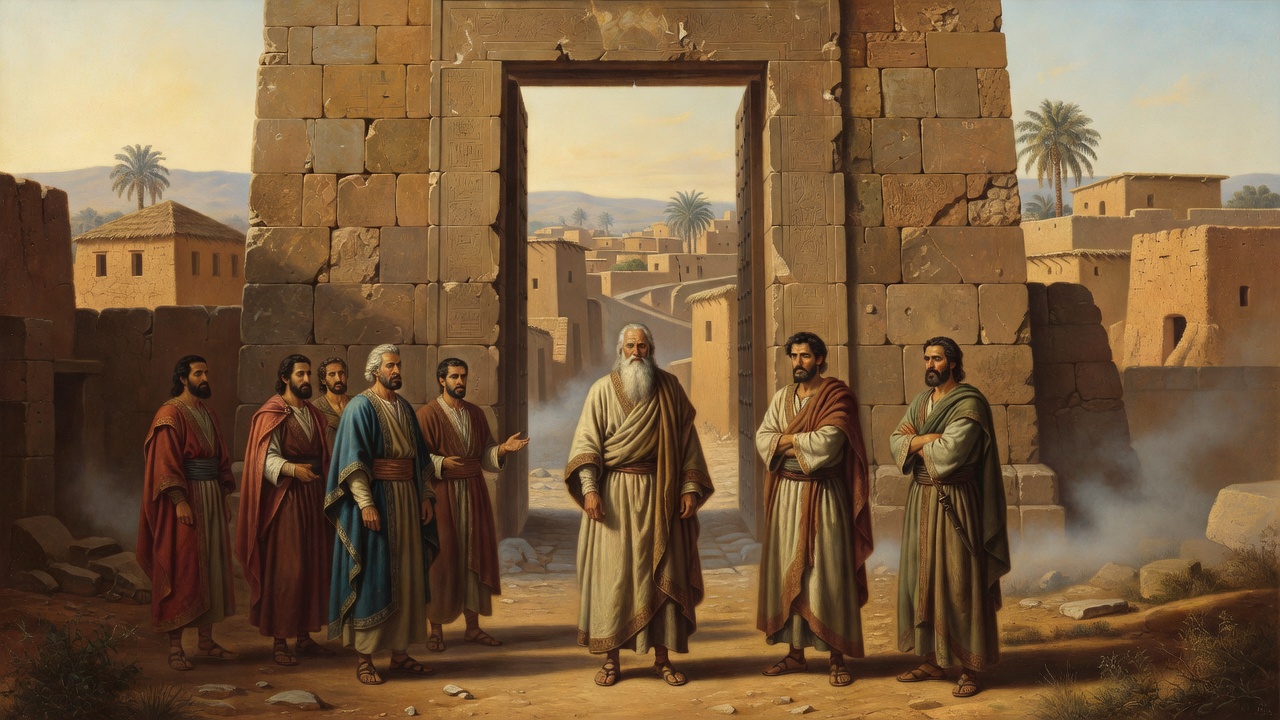
but they shall speak with the oyevim basha'ar (enemy at the gate).
Did you know?
Divine Blessing and Family
- The superscription identifies Psalm 127 as a Song of Ascents attributed to Solomon. The opening verses emphasize that human endeavors, such as building a house, guarding a city, or working long hours for food, are futile without the Lord's involvement and blessing.Sources: the Bible text itself
- The psalm compares children born in one's youth to arrows in the hands of a warrior, presenting them as a heritage and reward from the Lord. Having a household full of them provides support and honor when confronting adversaries at the city gate.Sources: the Bible text itself
Notes written with AI assistance from open sources (Theographic Bible Metadata, CC BY-SA 4.0; Easton’s Bible Dictionary, public domain) and reviewed before publishing.
Places in this chapter
- Jerusalem · 31.777, 35.234 · verse 1
Only places identified with high confidence are shown (90% or more according to the scholarly sources compiled by OpenBible). Period map: DARE (Digital Atlas of the Roman Empire), CC BY 4.0; modern map: © OpenStreetMap contributors; places: OpenBible.info (CC BY 4.0).
Credits and license for this translation
The Orthodox Jewish Bible
The Orthodox Jewish Bible - Tanakh and Orthodox Jewish Brit Chadasha - The Holy Bible
copyright © 2002-2011, 2021, 2024 Artists for Israel International
Language: English
Contributor: Artists for Israel International
THE ORTHODOX JEWISH TANAKH
Artists For Israel Intl Inc.
This version also appears with the Orthodox Yiddish Triglot which presents the Hebrew Yiddish script in Latin script and an English word for word translation, available at afii.org/Torah
To donate PayPal.Me
This translation is made available to you under the terms of the
Creative Commons Attribution license 4.0.
You may share and redistribute this Bible translation or extracts from it in any format, provided that:
You include the above copyright and source information.
If you make any changes to the text, you must indicate that you did so in a way that makes it clear that the original licensor is not necessarily endorsing your changes.
Pictures included with Scriptures and other documents on this site are licensed just for use with those Scriptures and documents.
For other uses, please contact the respective copyright owners.
Note that in addition to the rules above, revising and adapting God's Word involves a great responsibility to be true to God's Word. See Revelation 22:18-19.
2026-01-06
Section headings adapted from the Berean Standard Bible (public domain); they are not part of this translation’s text.
Source: http://ebible.org/engojb/ · eBible.org