Psalms 112
The Orthodox Jewish Bible · Tap a verse to see its cross-references.
The Blessed Fear of the LORD
1Praise Hashem.
Ashrei is the ish that feareth Hashem,
that delighteth greatly in His mitzvot.
2His zera shall be gibbor ba'aretz;
the dor (generation) of the Yesharim (upright ones) shall be blessed.
3Wealth and osher (riches) shall be in his bais;
and his tzedakah endureth forever.
4Unto the Yesharim (upright ones) there ariseth ohr in the choshech;
he is channun, and rachum, and tzaddik.
5A tov ish is generous, and lendeth;
he will guide his affairs with mishpat.
6Surely he shall never falter;
the tzaddik shall be in remembrance olam (forever).
7He shall not be afraid of mishmu'ah ra'ah (news of misfortune, evil tidings);
his lev is nachon (steadfast), trusting in Hashem.
8His lev is samuch (sustained), he shall not be afraid,
until he look in triumph upon his foes.
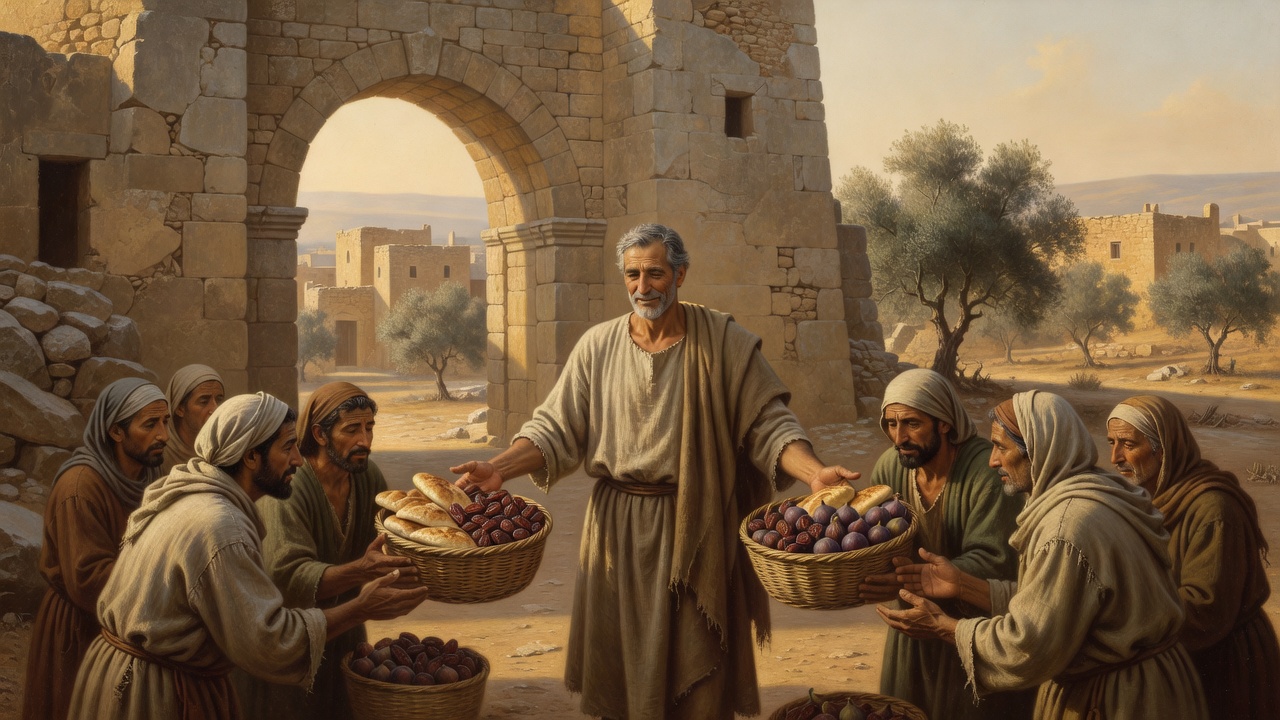
9He hath contributed freely, he hath given to the evyonim (needy);
his tzedakah endureth forever;
his keren shall be lifted up in kavod.
10The rasha shall see it, and be incensed;
he shall gnash his teeth, and waste away;
the ta'avot resha'im (desire of the wicked ones) shall come to nothing.
Did you know?
The Blessings and Character of the Righteous
- Psalm 112 connects devotion to God with practical generosity and fairness, describing the upright person as one who acts with justice, lends freely, and distributes gifts to the poor.Sources: the Bible text itself
- The psalm portrays the righteous as emotionally and spiritually steadfast, noting that they do not fear bad news because their heart remains firmly anchored in trust in the LORD.Sources: the Bible text itself
Notes written with AI assistance from open sources (Theographic Bible Metadata, CC BY-SA 4.0; Easton’s Bible Dictionary, public domain) and reviewed before publishing.
Credits and license for this translation
The Orthodox Jewish Bible
The Orthodox Jewish Bible - Tanakh and Orthodox Jewish Brit Chadasha - The Holy Bible
copyright © 2002-2011, 2021, 2024 Artists for Israel International
Language: English
Contributor: Artists for Israel International
THE ORTHODOX JEWISH TANAKH
Artists For Israel Intl Inc.
This version also appears with the Orthodox Yiddish Triglot which presents the Hebrew Yiddish script in Latin script and an English word for word translation, available at afii.org/Torah
To donate PayPal.Me
This translation is made available to you under the terms of the
Creative Commons Attribution license 4.0.
You may share and redistribute this Bible translation or extracts from it in any format, provided that:
You include the above copyright and source information.
If you make any changes to the text, you must indicate that you did so in a way that makes it clear that the original licensor is not necessarily endorsing your changes.
Pictures included with Scriptures and other documents on this site are licensed just for use with those Scriptures and documents.
For other uses, please contact the respective copyright owners.
Note that in addition to the rules above, revising and adapting God's Word involves a great responsibility to be true to God's Word. See Revelation 22:18-19.
2026-01-06
Section headings adapted from the Berean Standard Bible (public domain); they are not part of this translation’s text.
Source: http://ebible.org/engojb/ · eBible.org