Proverbs 14
The Orthodox Jewish Bible · Tap a verse to see its cross-references.
The Wise Woman
1Chachmot nashim buildeth her bais,
but the foolish pulleth it down with her hands.
2He that walketh in his yashar feareth Hashem,
but he that is devious in his drakhim despiseth Him.
3In the peh (mouth) of the fool is a rod of ga'avah (pride),
but the sfatayim (lips) of the chachamim shall be shomer over them and preserve them.
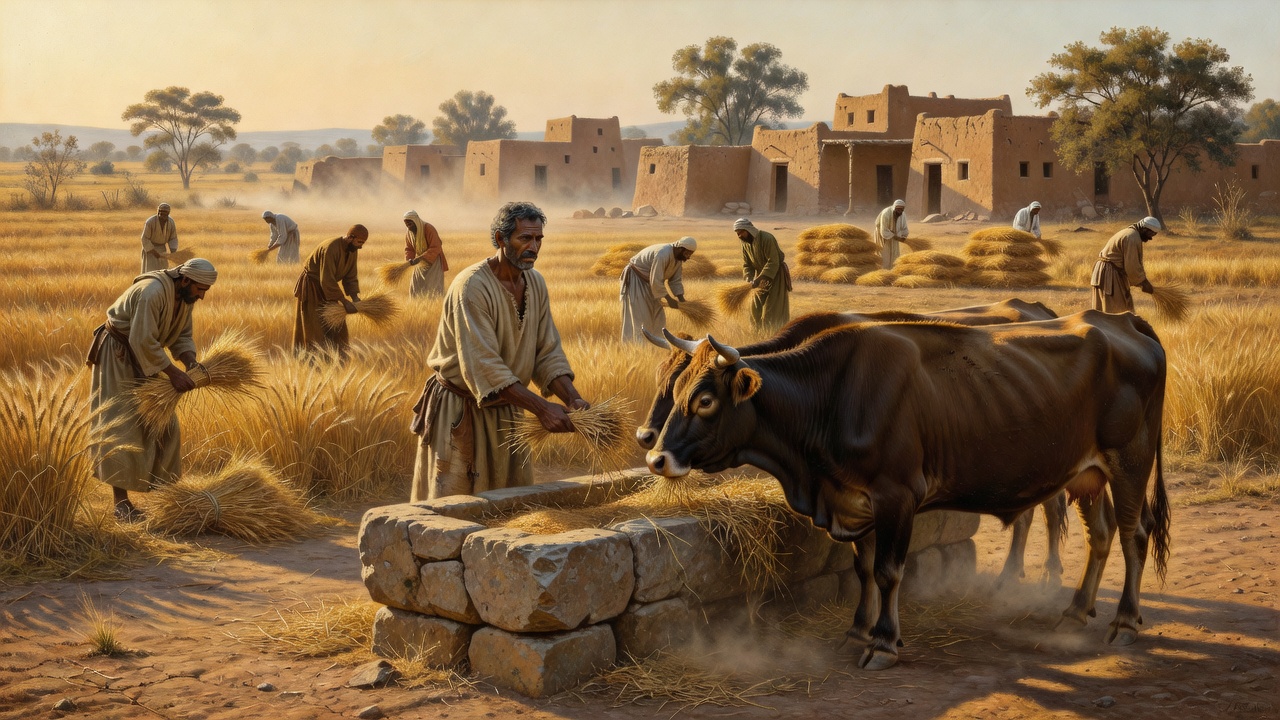
4Where no oxen are, the evus (feeding trough) is clean,
but much increase is by the ko'ach of the shor (ox).
5An ed emunim will not lie,
but an ed sheker will utter lies.
6A scoffer seeketh chochmah, and findeth it not,
but da'as cometh easily unto him that is discerning.
7Go from the presence of an ish kesil,
when thou perceivest not in him the sfatayim (lips) of da'as (knowledge).
8The chochmah of the prudent is to understand his derech,
but the folly of kesilim is mirmah (deceit).
9Fools mock at guilt,
but among the yesharim (upright ones) there is ratzon (favor).
10The lev knoweth its own bitterness,
and a zar (stranger) doth not share its simchah.
11The bais of the resha'im shall be shmad,
but the ohel of the yesharim shall flourish.
12There is a derech (road) which seemeth yashar (right) unto an ish,
but the acharit (latter end, future) thereof are the drakhim of mavet.
13Even in sekhok (laughter) the lev is sad,
and the acharit (latter end) of that simchah is grief.
14The sug (backslider, faithless one) in lev is filled with his own drakhim (roads),
but an ish tov shall be satisfied from above himself.
15The naive believeth every davar,
but the prudent looketh with care to his steps.
16A chacham feareth, and departeth from rah,
but the kesil throweth off restraint and is arrogantly reckless.
17He that is quick-tempered dealeth folly,
and an ish mezimot (a man of crafty schemes) is hated.
18The naive inherit folly,
but the prudent are crowned with da'as.
19The ra'im will bow before the tov'im,
and the resha'im at the she'arim of the tzaddik.
20The poor is hated even by his own re'a (neighbor),
but the oisher hath many friends.
21He that despiseth his re'a sinneth,
but he that is kind to the anayim (needy ones), happy is he.
22Do they not go astray that plot rah?
But chesed and emes shall be to them that plan tov.
23In all hard work there is profit,
but idle chatter of the sfatayim (lips) tendeth only to makhsor (poverty, want).
24The ateret chachamim is their riches,
but the foolishness of kesilim is folly.
25An ed emes (true witness) saveth nefashot (souls, lives),
but a lying witness is a betrayer.
26In the Yirat Hashem is strong confidence,
and his banim shall have a place of refuge.
27The Yirat Hashem is a makor chayyim (fountain of life)
to turn one away from the snares of mavet.
28In the multitude of people is the glory of a melech,
but in the lack of subjects is the ruin of the prince.
29He that is slow to wrath
is of rav tevunah (great understanding),
but he that is angrily impulsive
exalteth folly.
30A lev marpeh (sound mind) is life to the basar,
but kinah (envy) is the rottenness of the atzmot (bones).
31He that oppresseth the dal (poor) showeth contempt for his Oseh (Maker),
but he that honoreth Him is kind to the evyon (needy).
32The reshah is banished in his ra'ah,
but the tzaddik hath refuge in his mot (death).
33In the lev of the discerning reposes chochmah,
but that which is in kesilim is made known.
34Tzedakah exalteth a nation,
but chattat (sin) is a reproach to any people.
35The ratzon melech (kingʼs favor) is toward an eved maskil (a wise servant),
but his wrath is against him that bringeth shame.
Did you know?
Wisdom, Labor, and Justice
- Proverbs 14 uses practical agricultural life to illustrate that meaningful productivity requires labor and investment. While an empty manger stays clean without oxen, an abundant harvest depends directly on the strength and work of draft animals.Sources: the Bible text itself
- The chapter directly links social justice to reverence for God. Mistreating or despising the poor and needy is described as an insult to their Maker, whereas showing kindness and generosity to them honors God.Sources: the Bible text itself
- The proverbs extend moral guidance to governance and national health, stating that a king's glory depends on a thriving population and that moral righteousness exalts an entire nation, while sin brings collective disgrace.Sources: the Bible text itself
Notes written with AI assistance from open sources (Theographic Bible Metadata, CC BY-SA 4.0; Easton’s Bible Dictionary, public domain) and reviewed before publishing.
Credits and license for this translation
The Orthodox Jewish Bible
The Orthodox Jewish Bible - Tanakh and Orthodox Jewish Brit Chadasha - The Holy Bible
copyright © 2002-2011, 2021, 2024 Artists for Israel International
Language: English
Contributor: Artists for Israel International
THE ORTHODOX JEWISH TANAKH
Artists For Israel Intl Inc.
This version also appears with the Orthodox Yiddish Triglot which presents the Hebrew Yiddish script in Latin script and an English word for word translation, available at afii.org/Torah
To donate PayPal.Me
This translation is made available to you under the terms of the
Creative Commons Attribution license 4.0.
You may share and redistribute this Bible translation or extracts from it in any format, provided that:
You include the above copyright and source information.
If you make any changes to the text, you must indicate that you did so in a way that makes it clear that the original licensor is not necessarily endorsing your changes.
Pictures included with Scriptures and other documents on this site are licensed just for use with those Scriptures and documents.
For other uses, please contact the respective copyright owners.
Note that in addition to the rules above, revising and adapting God's Word involves a great responsibility to be true to God's Word. See Revelation 22:18-19.
2026-01-06
Section headings adapted from the Berean Standard Bible (public domain); they are not part of this translation’s text.
Source: http://ebible.org/engojb/ · eBible.org