Proverbs 10
The Orthodox Jewish Bible · Tap a verse to see its cross-references.
Solomon’s Proverbs: The Wise Son
1The mishle (proverbs) of Sh'lomo.
A ben chacham maketh glad an av,
but a ben kesil is the grief of his em.
2Otzarot resha profit nothing,
but tzedakah (righteousness) saveth from mavet.
3Hashem will not suffer the nefesh of the tzaddik to famish,
but He thwarteth the craving of the resha'im.
4He becometh poor that dealeth with a negligent palm,
but the yad of the diligent maketh wealth.
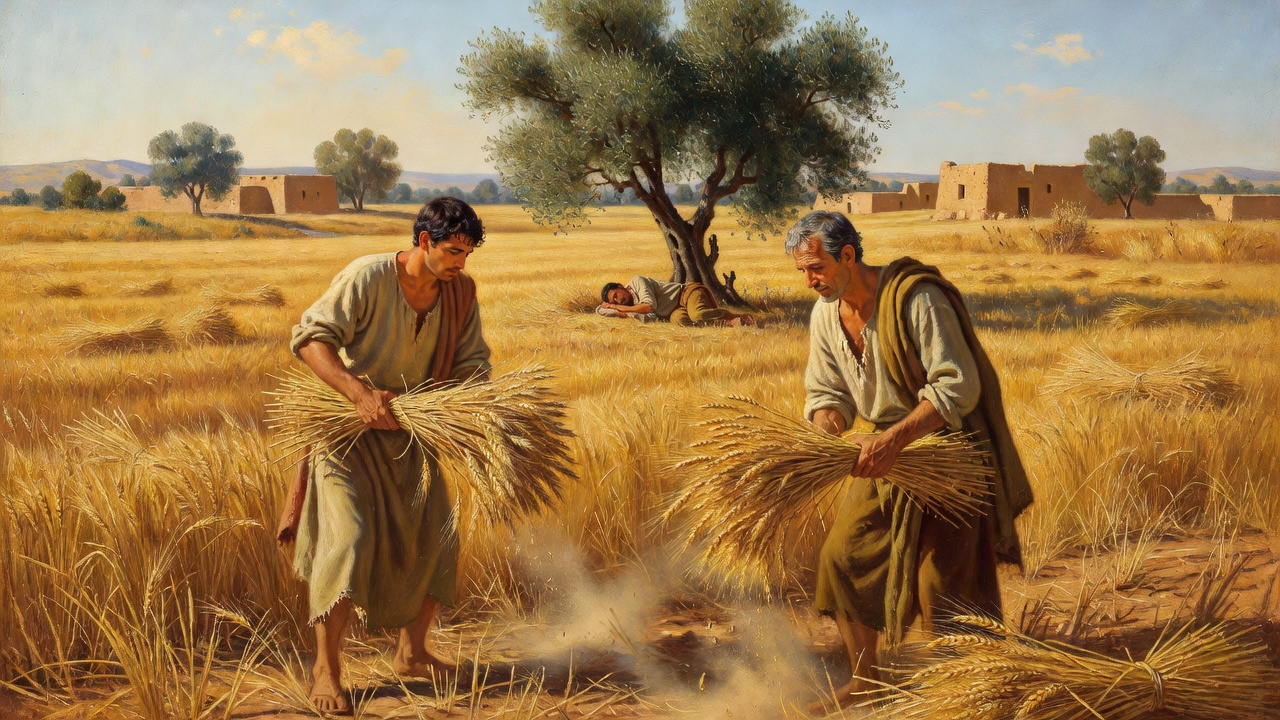
5He that gathereth in kayitz is a ben maskil (son of wisdom),
but he that sleepeth in katzir (harvest) is a ben that causeth shame.
6Brakhot are upon the head of the tzaddik,
but chamas covereth the peh (mouth) of the resha'im.
7The memory of the tzaddik is as bracha,
but the shem resha'im shall rot.
8The chacham lev will receive mitzvot,
but one with foolish sfatayim (lips) shall be thrust down.
9He that walketh uprightly walketh securely,
but he that perverteth his drakhim shall be known.
10He that winketh with the ayin causeth trouble,
but one with foolish sfatayim shall come to ruin.
11The peh (mouth) of a tzaddik is a Makor Chayyim,
but chamas covereth the peh (mouth) of the resha'im.
12Sin'ah (hatred) stirreth up medanim (dissensions),
but ahavah covereth all peysha'im.
13In the sfatayim (lips) of him that hath understanding
chochmah is found,
but a shevet (rod) is for the back of him
that is devoid of lev.
14Chachamim treasure up da'as (knowledge);
but the peh (mouth) of the foolish is near destruction.
15The oisherʼs wealth is his strong city;
the destruction of the poor ones is their poverty.
16The wage of the tzaddik leadeth to Chayyim;
the wage of the rashah is for chattat.
17He is in the orach (path) of Chayyim that is shomer over musar,
but he that abandoneth tokhakhat (reproof) goes astray.
18He that hideth sin'ah with sfatayim sheker,
and he that uttereth a slander, is a kesil (fool).
19In the multitude of devarim there wanteth not sin,
but he that restraineth his sfatayim (lips) is maskil (wise).
20The lashon of the tzaddik is as choice kesef;
the lev of the resha'im is of little worth.
21The sfatayim (lips) of the tzaddik feed rabbim (many),
but fools die for lack of lev.
22The Birkat Hashem, it maketh wealthy,
and He addeth no sorrow with it.
23It is as sport to a kesil to do zimmah (evil design),
but an ish tevunah (man of understanding) hath chochmah.
24What the rashah dreads, it shall come upon him,
but the ta'avat tzaddikim shall be granted.
25As the whirlwind passeth, so is the rashah no more,
but the tzaddik is a yesod olam (an everlasting foundation).
26As chometz to the teeth, and as smoke to the eyes,
so is the atzel (sluggard, lazy one) to them that send him.
27The Yirat Hashem prolongeth yamim;
but the shanot of the resha'im shall be cut short.
28The prospect of the tzaddikim shall be simchah,
but the tikveh of the resha'im shall perish.
29The Derech Hashem is maoz to the blameless,
but destruction shall be to the workers of iniquity.
30The tzaddik shall never be removed,
but the resha'im shall not inhabit Eretz.
31The peh (mouth) of the tzaddik bringeth forth chochmah,
but the lashon tahpukhot (tongue of perversion, distortion) shall be cut off.
32The sfatayim (lips) of the tzaddik know what is ratzon (acceptable),
but the peh (mouth) of the resha'im speaketh tahpukhot (perversity).
Did you know?
The Proverbs of Solomon and Practical Wisdom
- Chapter 10 marks the beginning of a collection directly attributed to King Solomon, transitioning from longer instructional poems to concise two-line maxims that contrast the ways of the righteous and the wicked.Sources: the Bible text itself · Solomon
- Many sayings in this section draw from agrarian life, using the seasonal rhythm of summer gathering and harvest labor to illustrate how diligence leads to stability while laziness brings shame and poverty.Sources: the Bible text itself
- The chapter places a strong emphasis on speech, comparing the words of the wise to a fountain of life and choice silver, while warning that uncontrolled or deceitful speech brings strife and ruin.Sources: the Bible text itself
Notes written with AI assistance from open sources (Theographic Bible Metadata, CC BY-SA 4.0; Easton’s Bible Dictionary, public domain) and reviewed before publishing.
Credits and license for this translation
The Orthodox Jewish Bible
The Orthodox Jewish Bible - Tanakh and Orthodox Jewish Brit Chadasha - The Holy Bible
copyright © 2002-2011, 2021, 2024 Artists for Israel International
Language: English
Contributor: Artists for Israel International
THE ORTHODOX JEWISH TANAKH
Artists For Israel Intl Inc.
This version also appears with the Orthodox Yiddish Triglot which presents the Hebrew Yiddish script in Latin script and an English word for word translation, available at afii.org/Torah
To donate PayPal.Me
This translation is made available to you under the terms of the
Creative Commons Attribution license 4.0.
You may share and redistribute this Bible translation or extracts from it in any format, provided that:
You include the above copyright and source information.
If you make any changes to the text, you must indicate that you did so in a way that makes it clear that the original licensor is not necessarily endorsing your changes.
Pictures included with Scriptures and other documents on this site are licensed just for use with those Scriptures and documents.
For other uses, please contact the respective copyright owners.
Note that in addition to the rules above, revising and adapting God's Word involves a great responsibility to be true to God's Word. See Revelation 22:18-19.
2026-01-06
Section headings adapted from the Berean Standard Bible (public domain); they are not part of this translation’s text.
Source: http://ebible.org/engojb/ · eBible.org