Numbers 35
The Orthodox Jewish Bible · Tap a verse to see its cross-references.
Forty-Eight Cities for the Levites
1And Hashem spoke unto Moshe in the plains of Moav by Yarden near Yericho, saying, 2Command the Bnei Yisroel, that they give unto the Levi'im from the nachalah of their achuzzah towns to dwell in; and ye shall give also unto the Levi'im open pasturelands around the towns. 3And the towns shall they have to dwell in; and the open pasturelands of them shall be for their behemah, and for their livestock, and for all their animals. 4And the open pasturelands of the towns, which ye shall give unto the Levi'im, shall reach from the wall of the Ir and outward a thousand cubits all around. 5And ye shall measure from outside the Ir on the east side 2,000 cubits, and on the south side 2,000 cubits, and on the west side 2,000 cubits, and on the north side 2,000 cubits; and the Ir shall be in the midst; this shall be to them the open pasturelands of the towns. 6And among the towns which ye shall give unto the Levi'im there shall be six cities for refuge, which ye shall appoint for the rotze'ach, that he may flee to there; and to them ye shall add 42 ir. 7So all the arim (towns) which ye shall give to the Levi'im shall be 48 ir: them shall ye give with their migrashim (open pasturelands). 8And the arim (towns) which ye shall give shall be of the achuzzat Bnei Yisroel; from them that have many ye shall give more; but from them that have few ye shall give less; every one shall give of his arim unto the Levi'im according to his nachalah which he inheriteth.
Six Cities of Refuge
9And Hashem spoke unto Moshe, saying, 10Speak unto the Bnei Yisroel, and say unto them, When ye be come over the Yarden into Eretz Kena'an, 11Then ye shall appoint you arim to be arei miklat (cities of refuge) for you; that the rotze'ach may flee to there, which killeth any nefesh bishegagah (unintentionally, accidently). 12And they shall be unto you arei miklat (cities of refuge) from the Go'el; that the rotze'ach die not, until he stand before the Edah in mishpat. 13And of these arim which ye shall give there shall be shesh arei miklat. 14Ye shall give shlosh he'arim on this side of the Yarden, and shlosh he'arim shall ye give in Eretz Kena'an, which shall be arei miklat. 15These shesh he'arim shall be for miklat (refuge), both for the Bnei Yisroel, and for the ger, and for the toshav (sojourner) among them; that every one that killeth any nefesh bishegagah (unintentionally, accidently) may flee there. 16And if he strike him with keli barzel, so that he die, he is a rotze'ach; the rotze'ach shall surely be put to death. 17And if he strike him with an even (stone) in his yad that could kill, and he die, he is a rotze'ach; the rotze'ach shall surely be put to death. 18Or if he strike him with a keli in his hand that could kill, and he die, he is a rotze'ach; the rotze'ach shall surely be put to death. 19The Go'el HaDahm himself shall slay the rotze'ach; when he meeteth him, he shall slay him. 20And if he push him out of sin'ah (hatred), or hurl upon him bitzediyyah (with intention, by laying in wait) that he die; 21Or in eivah (enmity) strike him with his yad, that he die; he that struck him shall surely be put to death; for he is a rotze'ach; the Go'el HaDahm shall slay the rotze'ach, when he meeteth him. 22But if he push him suddenly without eivah (enmity), or have thrown upon him any keli with no tzediyyah (intention, laying in wait), 23Or with any even (stone), that could kill, seeing him not, and cast it upon him, that he die, and was not his oyev, neither sought his ra'ah, 24Then the Edah shall judge between the striker and the Go'el HaDahm according to these mishpatim;
25And the Edah shall deliver the rotze'ach out of the yad Goel HaDahm, and the Edah shall restore him to his ir miklat, to which he fled; and he shall abide in it unto the mot HaKohen HaGadol which was mashach (anointed) with the shemen hakodesh. 26But if the rotze'ach shall at any time come outside the border of the ir miklat to which he fled; 27And the Go'el HaDahm find him outside the gevul (borders, city limit) of his ir miklat, and the Go'el HaDahm kill the rotze'ach, he shall not be guilty of dahm, 28Because he should have remained in his ir miklat until the mot HaKohen HaGadol; but after the mot HaKohen HaGadol the rotze'ach shall return into his eretz achuzzat. 29So these things shall be for a chukkat mishpat unto you throughout your dorot in all your dwellings.
30Whosoever killeth any nefesh, the rotze'ach shall be put to death by the mouth of edim (witnesses); but ed echad (one witness) shall not testify against any nefesh to cause him to die. 31Moreover ye shall take no kofer (ransom payment, satisfaction) for the nefesh of a rotze'ach, which is guilty of death; but he shall be surely put to death. 32And ye shall take no kofer for him that is fled to his ir miklat that he should come again to dwell in HaAretz until the mot HaKohen. 33So ye shall not pollute HaAretz wherein ye are; for dahm pollutes HaAretz; and kapporah cannot be made for HaAretz for the shefach dahm therein, except by the dahm of him that committed shefach dahm (shedding of blood). 34Therefore, make not tameh HaAretz which ye shall inhabit, wherein I dwell; for I Hashem dwell among the Bnei Yisroel.
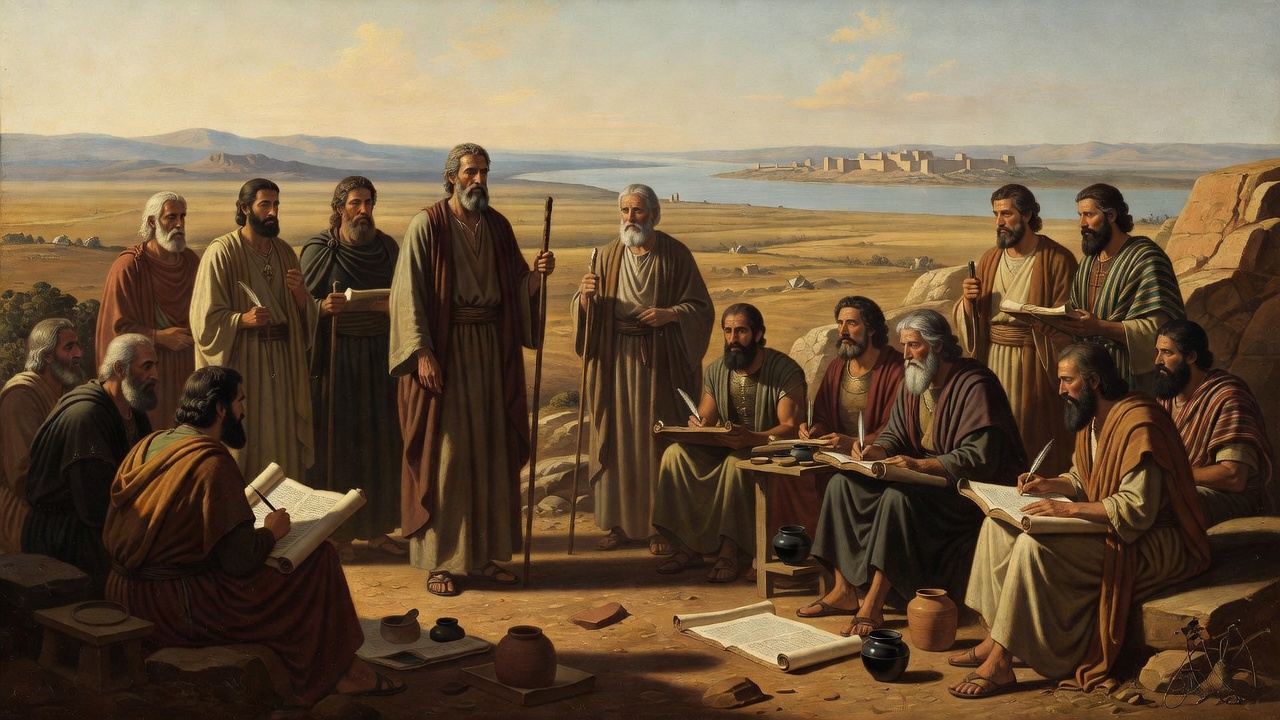
Did you know?
Levitical Towns and Cities of Refuge
- Unlike the other tribes, the Levites were not allotted a continuous territory. Instead, the Israelites were instructed to provide them with forty-eight cities along with surrounding pasturelands, contributed by each tribe in proportion to the size of its tribal inheritance.Sources: the Bible text itself
- Six of the forty-eight Levitical towns were designated as cities of refuge, with three located east of the Jordan and three in the land of Canaan. These sanctuaries offered legal protection for Israelites and resident foreigners who caused an accidental death, sheltering them from the avenger of blood until a formal trial could take place.Sources: the Bible text itself · Canaan · Jordan
- The law strictly distinguished between intentional murder and accidental manslaughter, requiring multiple witnesses before carrying out capital punishment. Furthermore, financial ransoms were forbidden either to spare a convicted murderer or to release an accidental killer from their city of refuge before the death of the high priest.Sources: the Bible text itself
Notes written with AI assistance from open sources (Theographic Bible Metadata, CC BY-SA 4.0; Easton’s Bible Dictionary, public domain) and reviewed before publishing.
Places in this chapter
- Jericho · Today: Tell es Sultan · 31.872, 35.445 · verse 1
- Jordan · Today: Jordan River · 31.761, 35.558 · verses 1, 10, 14
- Moab · Today: Moab 2 · 31.840, 35.674 · verse 1
- Canaan · 32.767, 35.333 · verses 10, 14
Only places identified with high confidence are shown (90% or more according to the scholarly sources compiled by OpenBible). Period map: DARE (Digital Atlas of the Roman Empire), CC BY 4.0; modern map: © OpenStreetMap contributors; places: OpenBible.info (CC BY 4.0).
Credits and license for this translation
The Orthodox Jewish Bible
The Orthodox Jewish Bible - Tanakh and Orthodox Jewish Brit Chadasha - The Holy Bible
copyright © 2002-2011, 2021, 2024 Artists for Israel International
Language: English
Contributor: Artists for Israel International
THE ORTHODOX JEWISH TANAKH
Artists For Israel Intl Inc.
This version also appears with the Orthodox Yiddish Triglot which presents the Hebrew Yiddish script in Latin script and an English word for word translation, available at afii.org/Torah
To donate PayPal.Me
This translation is made available to you under the terms of the
Creative Commons Attribution license 4.0.
You may share and redistribute this Bible translation or extracts from it in any format, provided that:
You include the above copyright and source information.
If you make any changes to the text, you must indicate that you did so in a way that makes it clear that the original licensor is not necessarily endorsing your changes.
Pictures included with Scriptures and other documents on this site are licensed just for use with those Scriptures and documents.
For other uses, please contact the respective copyright owners.
Note that in addition to the rules above, revising and adapting God's Word involves a great responsibility to be true to God's Word. See Revelation 22:18-19.
2026-01-06
Section headings adapted from the Berean Standard Bible (public domain); they are not part of this translation’s text.
Source: http://ebible.org/engojb/ · eBible.org