Leviticus 22
The Orthodox Jewish Bible · Tap a verse to see its cross-references.
Restrictions against the Unclean
1And Hashem spoke unto Moshe, saying, 2Speak unto Aharon and to his Banim, that they separate themselves from the kodashim of the Bnei Yisroel which they set apart as kodesh unto Me, so that they will not commit Chillul ha-shem of Shem Kodshi: I am Hashem.
3Say unto them, Whosoever he be of all your zera among your dorot, that goeth unto the kodashim, which the Bnei Yisroel treat as kodesh unto Hashem, having his tumah upon him, that nefesh shall be cut off from My presence: I am Hashem. 4Whatsoever man of the zera Aharon is a metzora, or hath a discharge; he shall not eat of the kodashim, until he be tahor. And whosoever toucheth any thing that is tamei by the dead, or a man whose shikhvat zera goeth from him; 5Or whosoever toucheth any creeping thing, whereby he may be made tamei, or a man who makes him tamei, whatsoever tumah he hath; 6The nefesh which hath touched any such shall be tamei until erev, and shall not eat of the kodashim, unless he immerse his basar with mayim. 7And when the shemesh is down, he shall be tahor, and shall afterward eat of the kodashim; because it is his lechem. 8Nevelah (that which dieth of itself), or tereifah (what is torn by beasts), he shall not eat to make himself tamei therewith; I am Hashem. 9They shall therefore be shomer over My charge, lest they bear chet for it, and die therefore, if they profane it: I Hashem do set them apart as kodesh. 10There shall no zar eat of the kodesh: a toshav (guest) of the kohen, or a sakhir (hired servant), shall not eat of the kodesh. 11But if the kohen buy any nefesh with his kesef, he shall eat of it, or he that is born in his bais; they shall eat of his lechem. 12If the bat kohen also be married unto a man who is a zar, she may not eat of a terumah (offering) of the kodashim. 13But if the bat kohen becomes an almanah, or gerusha, and have no zera, and is returned unto bais aviha (house of her father), as in her youth, she shall eat of the lechem aviha; but there shall be no zar eat thereof. 14And if an ish eat of the kodesh bishgagah (unintentionally), then he shall add as restitution the fifth part thereof unto it, and shall give it unto the kohen with the kodesh. 15And they shall not profane the kodshei Bnei Yisroel, which they offer unto Hashem; 16And they will cause themselves to bear the avon of guilt when they eat their kodashim; for I Hashem do set them apart as kodesh.
Worthy Offerings
17And Hashem spoke unto Moshe, saying, 18Speak unto Aharon, and to his Banim, and unto kol Bnei Yisroel, and say unto them, Whatsoever he be of the Bais Yisroel, or of the Ger B'Yisroel, that will offer his korban for any of his nederim, and for all his nedavot, which they will offer unto Hashem for an olah, 19That it may be accepted on your behalf, ye shall offer a zachar tamim (male without defect), of the cattle and of the sheep, or of the goats. 20But whatsoever hath a mum, that shall ye not offer, for it shall not be for you leratzon (acceptable). 21And whosoever offereth a zevach shelamim unto Hashem to fulfill his neder, or as a nedavah in cattle or sheep, it shall be tamim (perfect, without defect) to be accepted; there shall be no mum therein. 22Avveret (blind), or injured, or charutz (maimed), or having an abnormal growth, or dry skin eruption, or running sore, ye shall not offer these unto Hashem, nor make an offering by eish of them upon the Mizbe'ach unto Hashem. 23Either a bull or a seh that hath a limb too long or too short thou mayest offer for a nedavah; but for a neder it shall not be accepted. 24Ye shall not offer unto Hashem that which is bruised, or crushed, or torn, or cut; neither shall ye make any offering thereof in your eretz. 25Neither from the hand of a ben nakhar shall ye offer the lechem Eloheichem of any of these; because their corruption is in them, and mum be in them: they shall not be accepted for you.
26And Hashem spoke unto Moshe, saying,
27When a bull, or a sheep, or a goat, is brought forth, then it shall be seven days with its mother; and from the yom hashemini and thenceforth it shall be accepted for a korban isheh (offering made by eish) unto Hashem. 28And whether it be an ox or seh, ye shall not slaughter (shachat) it and her young both in yom echad. 29And when ye will offer a zevach todah unto Hashem, offer it liretzonechem (for your acceptance). 30On the same day it shall be eaten; ye shall leave none of it until the boker: I am Hashem. 31Therefore shall ye be shomer mitzvot over My commands, and do them: I am Hashem. 32Neither shall ye profane Shem Kodshi; but I will be treated as kodesh among the Bnei Yisroel: I am Hashem, the One making you Kedoshim, 33That brought you out of Eretz Mitzrayim, to be for you Elohim (your G-d): I am Hashem.
Did you know?
Holiness in Offerings and the Priesthood
- The sacred offerings contributed by Israelites were designated as food for the priests and their households. However, strict rules governed who could eat them: an unclean descendant of Aaron was barred until evening after washing, outsiders and hired hands were excluded, while a purchased or home-born servant could partake.Sources: the Bible text itself
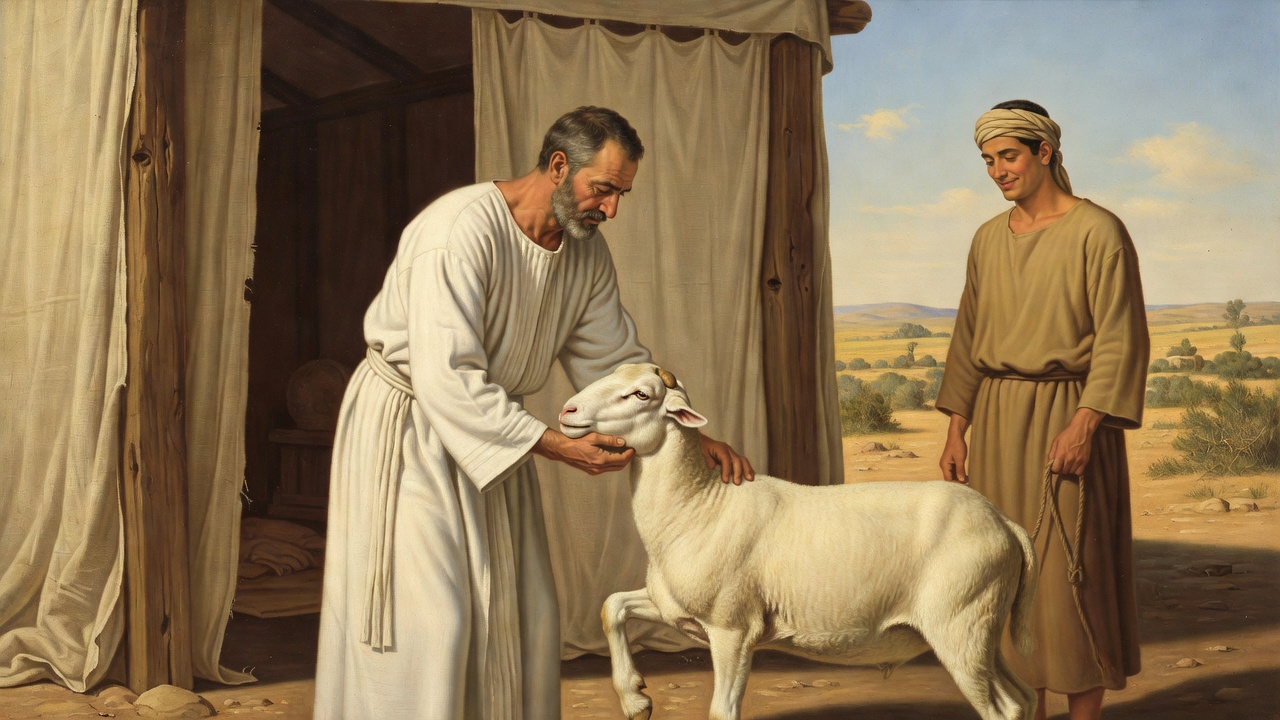
- Animals brought as sacrifices for burnt offerings or peace offerings had to be without blemish, such as blindness, injuries, sores, or physical deformities. In addition, newborn livestock had to remain with their mother for seven days before becoming eligible for sacrifice on the eighth day.Sources: the Bible text itself
- If a non-priest unintentionally ate of the sacred food, the law required full restitution plus an additional fifth of its value paid to the priest. This ensured sacred contributions consecrated to God were not treated carelessly by the community.Sources: the Bible text itself
Notes written with AI assistance from open sources (Theographic Bible Metadata, CC BY-SA 4.0; Easton’s Bible Dictionary, public domain) and reviewed before publishing.
Places in this chapter
- Egypt · 30.129, 31.308 · verse 33
Only places identified with high confidence are shown (90% or more according to the scholarly sources compiled by OpenBible). Period map: DARE (Digital Atlas of the Roman Empire), CC BY 4.0; modern map: © OpenStreetMap contributors; places: OpenBible.info (CC BY 4.0).
Credits and license for this translation
The Orthodox Jewish Bible
The Orthodox Jewish Bible - Tanakh and Orthodox Jewish Brit Chadasha - The Holy Bible
copyright © 2002-2011, 2021, 2024 Artists for Israel International
Language: English
Contributor: Artists for Israel International
THE ORTHODOX JEWISH TANAKH
Artists For Israel Intl Inc.
This version also appears with the Orthodox Yiddish Triglot which presents the Hebrew Yiddish script in Latin script and an English word for word translation, available at afii.org/Torah
To donate PayPal.Me
This translation is made available to you under the terms of the
Creative Commons Attribution license 4.0.
You may share and redistribute this Bible translation or extracts from it in any format, provided that:
You include the above copyright and source information.
If you make any changes to the text, you must indicate that you did so in a way that makes it clear that the original licensor is not necessarily endorsing your changes.
Pictures included with Scriptures and other documents on this site are licensed just for use with those Scriptures and documents.
For other uses, please contact the respective copyright owners.
Note that in addition to the rules above, revising and adapting God's Word involves a great responsibility to be true to God's Word. See Revelation 22:18-19.
2026-01-06
Section headings adapted from the Berean Standard Bible (public domain); they are not part of this translation’s text.
Source: http://ebible.org/engojb/ · eBible.org