Job 20
The Orthodox Jewish Bible · Tap a verse to see its cross-references.
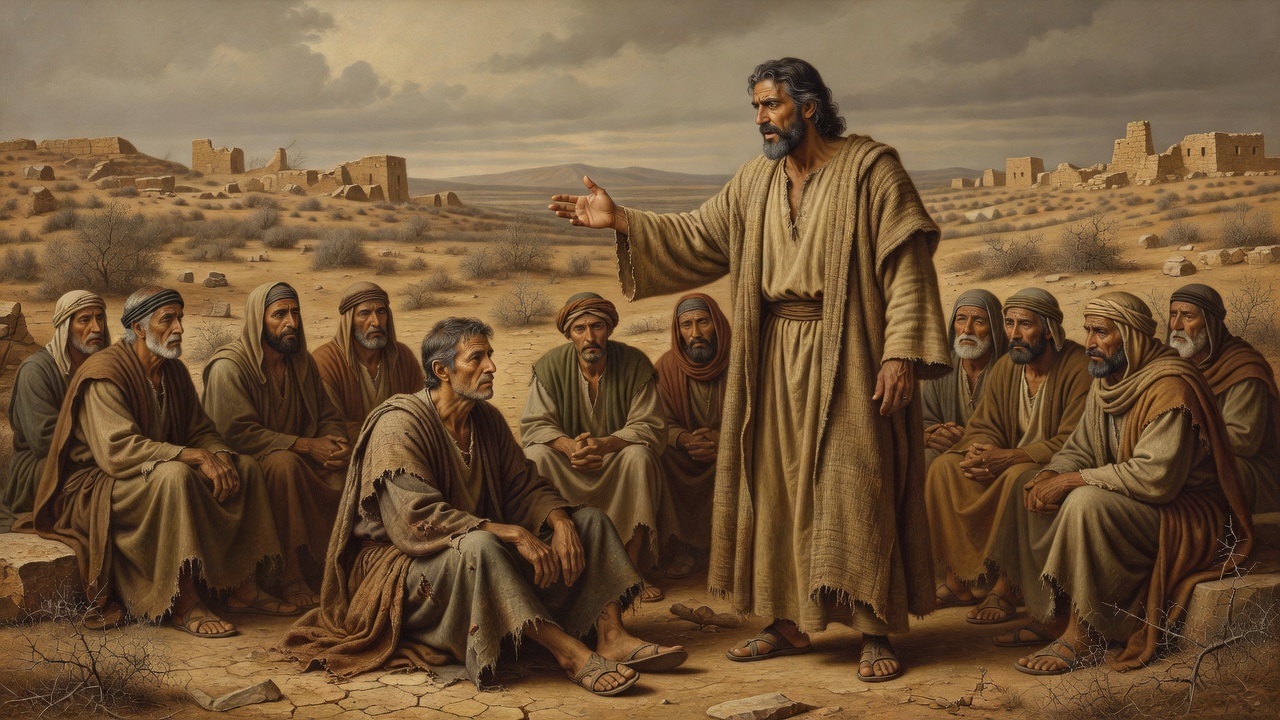
Zophar: Destruction Awaits the Wicked
1Then answered Tzophar the Na'amati, and said,
2Therefore do my thoughts cause me to answer,
and ba'avur (because of [this]) I make haste.
3I hear the musar that insults me,
and the ruach of my understanding causeth me to answer.
4Knowest thou not this of old,
since adam was placed upon earth,
5That the triumphing of the resha'im is short,
and the simchat chanef (joy of the hypocrite) but for a moment?
6Though his excellency mount up to Shomayim,
and his rosh reach unto the clouds;
7Yet he shall perish lanetzach (forever) like his own dung;
they which have seen him shall say, Where is he?
8He shall fly away as a chalom, and shall not be found;
yea, he shall be chased away as a chezyon lailah.
9The ayin also which saw him shall see him no more;
neither shall his makom any more behold him.
10His banim shall seek the favor of the poor,
and his hands shall restore their goods.
11His atzmot are full of youthful vigor,
which shall lie down with him in the aphar.
12Though wickedness be sweet in his mouth,
though he hide it under his leshon;
13Though he savor it, and forsake it not,
but keep it still betoch (within) his mouth;
14Yet his lechem in his stomach is turned sour;
it is the venom of vipers within him.
15He hath swallowed down riches, and he shall vomit them up again;
El shall drive them out of his beten.
16He shall suck the venom of asps;
the viperʼs leshon shall slay him.
17He shall not see the rivers,
the floods, the brooks of devash and khemah (butter, curds).
18That which he labored for shall he give back, and shall not swallow it down;
he shall not rejoice according to his chayil temurah (business profit).
19Because he hath oppressed and hath forsaken the destitute;
because he hath violently seized a bais which he built not;
20Surely he knew no quiet in his beten;
he shall not save anything which he desired.
21There shall none of his ochel be left;
therefore his posterity will not endure.
22In the fulness of his sufficiency he shall be in distress;
kol yad of misery shall come upon him.
23When he is about to fill his beten,
He shall cast the charon af (fury of His wrath) upon him,
and shall rain it upon him while he is eating.
24He shall flee from the weapon of barzel (iron),
and the keshet of bronze shall strike him through.
25It is drawn, and cometh out of their body;
yea, the glittering point cometh out of his gall;
emim (terrors [of death]) are upon them.
26Kol choshech is reserved for his treasures;
an eish not fanned shall consume him;
it shall go ill with him that is left in his ohel.
27Shomayim shall reveal his iniquity;
and eretz shall rise up against him.
28The increase of his bais shall depart,
and his goods shall flow away in [G-dʼs] Yom Af.
29This is the chelek of an adam rasha from Elohim,
and the nachalah decreed unto him by El (G-d).
Did you know?
Zophar on the Fate of the Wicked
- Zophar is identified as a Naamathite, pointing to an otherwise unknown location named Naamah. In the ancient Greek Septuagint translation of the Hebrew Scriptures, he is described as a king of the Mineans or Maonites from southern Arabia.Sources: Zophar · the Bible text itself
- In his speech, Zophar uses metaphors of digestion and venom, asserting that ill-gotten wealth turns into the poison of vipers and cobras within the stomach of the wicked person.Sources: the Bible text itself
- Zophar also incorporates military imagery from the ancient world, describing a fleeing transgressor escaping an iron weapon only to be struck down by a bronze-tipped arrow.Sources: the Bible text itself
Notes written with AI assistance from open sources (Theographic Bible Metadata, CC BY-SA 4.0; Easton’s Bible Dictionary, public domain) and reviewed before publishing.
Credits and license for this translation
The Orthodox Jewish Bible
The Orthodox Jewish Bible - Tanakh and Orthodox Jewish Brit Chadasha - The Holy Bible
copyright © 2002-2011, 2021, 2024 Artists for Israel International
Language: English
Contributor: Artists for Israel International
THE ORTHODOX JEWISH TANAKH
Artists For Israel Intl Inc.
This version also appears with the Orthodox Yiddish Triglot which presents the Hebrew Yiddish script in Latin script and an English word for word translation, available at afii.org/Torah
To donate PayPal.Me
This translation is made available to you under the terms of the
Creative Commons Attribution license 4.0.
You may share and redistribute this Bible translation or extracts from it in any format, provided that:
You include the above copyright and source information.
If you make any changes to the text, you must indicate that you did so in a way that makes it clear that the original licensor is not necessarily endorsing your changes.
Pictures included with Scriptures and other documents on this site are licensed just for use with those Scriptures and documents.
For other uses, please contact the respective copyright owners.
Note that in addition to the rules above, revising and adapting God's Word involves a great responsibility to be true to God's Word. See Revelation 22:18-19.
2026-01-06
Section headings adapted from the Berean Standard Bible (public domain); they are not part of this translation’s text.
Source: http://ebible.org/engojb/ · eBible.org