Jeremiah 3
The Orthodox Jewish Bible · Tap a verse to see its cross-references.
The Wages of the Harlot
1They say:
If an ish put away [in divorce] his isha,
and she go from him,
and become another manʼs,
shall he return unto her again?
Shall not that eretz be defiled and greatly polluted?
But thou hast played the zonah with re'im rabbim (many lovers);
yet shuv (turn) to Me,
saith Hashem.
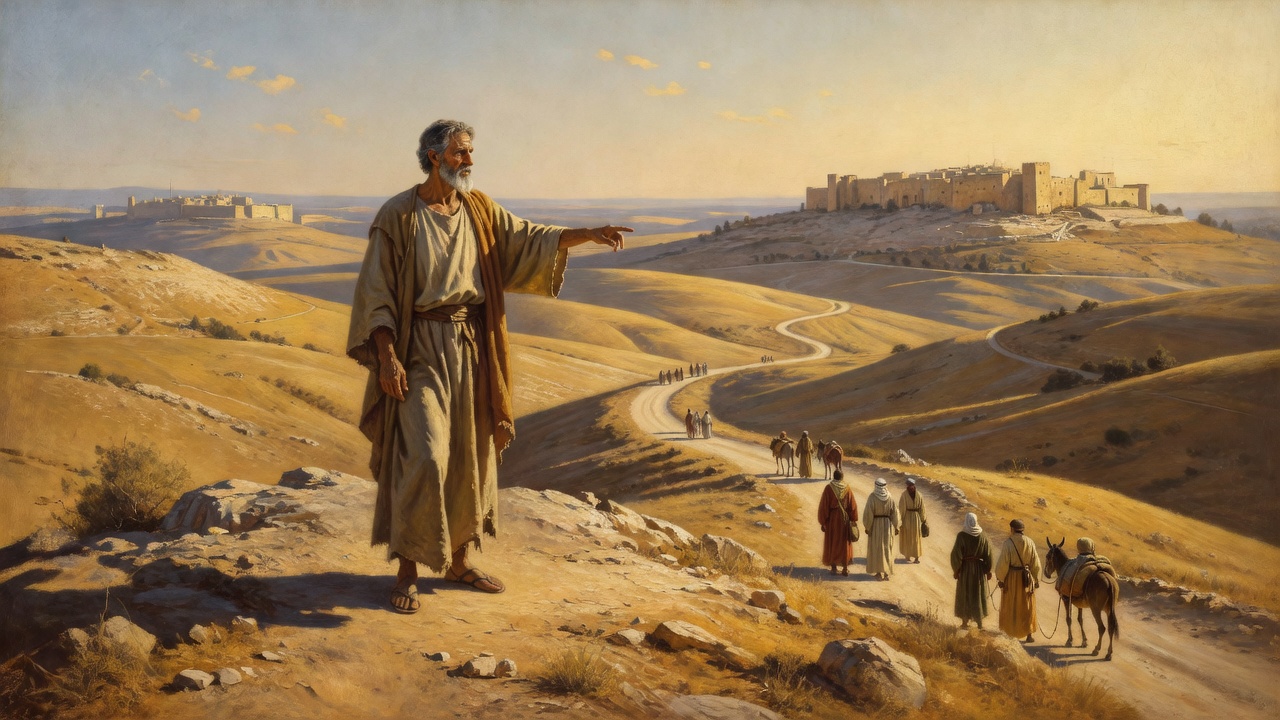
2Lift up thine eyes unto the hilltops, and see!
Where hast thou not been lain with?
In the drakhim (ways, roads) hast thou sat [waiting] for them,
as the nomad in the midbar;
and thou hast defiled the eretz
with thy zenut (whoredom, prostitution) and with thy ra'ah (wickedness).
3Therefore the revivim (showers) have been withheld,
and there hath been no malkosh (latter rain, spring rain);
and thou hadst a metzach isha zonah (whoreʼs forehead),
and thou refusedst to blush with shame.
4Wilt thou not from this time cry unto Me:
Avi, Thou art the Alluf (Guide, Friend) of my neurim (youth)?
5Will He reserve His anger l'olam?
Will He keep it lanetzach?
Hinei, this is what you preach,
but you practice all hara'ot (the evils) you can.
Judah Follows Israel’s Example
6Hashem said also unto me in the days of Yoshiyah HaMelech, Hast thou seen that which meshuvah Yisroel (backsliding Yisroel) hath done? She is gone up upon every high hill and under every green tree, and there hath played the zonah. 7And I said after she had done all these things, Turn thou unto Me. But she returned not. And her treacherous achot Yehudah saw it. 8And I saw, when for all the causes whereby meshuvah Yisroel (backsliding Yisroel) committed adultery, I had put her away, and given her a sefer keritut (bill of divorce); yet her treacherous achot Yehudah feared not, but went and played the zonah also. 9And it came to pass through the lightness with which she took her zenut (whoredom), that she defiled HaAretz, and committed adultery with HaEven (the Stone) and with HaEtz (the Wood). 10And yet for all this her treacherous achot Yehudah hath not returned unto Me with her kol lev, but in sheker (falsity, pretense, an insincere religious spirit), saith Hashem.
A Call to Repentance
11And Hashem said unto me, Meshuvah Yisroel hath come nearer to justifying herself than treacherous Yehudah.
12Go and proclaim these devarim toward the north, and say:
Return, thou meshuvah Yisroel,
saith Hashem;
and I will not cast down Mine anger to fall upon you;
for I am chasid (displaying chesed, mercy),
saith Hashem,
and I will not keep anger l'olam.
13Only acknowledge thine avon (iniquity, guilt of wrongdoing),
that thou hast rebelled against Hashem your G-d,
and hast scattered thy favors to the zarim
under every green tree,
and ye have not obeyed My voice,
saith Hashem.
14Shuvu (Turn), O banim shovaviv (backsliding children),
saith Hashem;
for I am married unto you:
and I will take you one from a town,
and two from a mishpakhah,
and I will bring you to Tziyon:
15And I will give you ro'im according to Mine lev, which shall feed you with da'as and seichel. 16And it shall come to pass, when ye be multiplied and increased in HaAretz, in those days, saith Hashem, they shall say no more, The Aron Brit Hashem: neither shall it come to mind: neither shall they remember it; neither shall they ask for it; neither shall another be fashioned. 17At that time they shall call Yerushalayim the Kisse Hashem; and all the Goyim shall be gathered unto it, to the Shem Hashem, to Yerushalayim; neither shall they walk any more after the sherirut libam harah (the stubbornness of their evil heart). 18In those days Bais Yehudah shall walk with Bais Yisroel, and they shall come together out of the eretz tzafon to HaAretz that I have given for a nachalah unto Avoteichem.
19But I said:
How can I set thee among the banim,
and give thee an eretz chemdah (a land of desire),
the most beautiful nachalah of the Goyim?
And I said: Thou shalt call Me, Avi;
and shalt not turn back from following Me.
20Surely as an isha treacherously departeth from her husband,
so have ye dealt treacherously with Me, O Bais Yisroel,
saith Hashem.
21A voice was heard upon the high places,
weeping and tachanunei Bnei Yisroel (supplications of the Children of Israel);
for they have perverted their derech,
and they have forgotten Hashem Eloheihem.
22Shuvu (return), ye banim shovavim (backsliding children),
and I will heal your meshuvot (backslidings).
Behold, we come unto Thee;
for Thou art Hashem Eloheinu.
23Truly in sheker is Salvation hoped for from the hills,
and from the multitude of mountains;
truly in Hashem Eloheinu
is the Teshu'at Yisroel (Salvation of Israel).
24For HaBoshet (the Shame), hath devoured the labor of Avoteinu from ne'ureinu (our youth): their tzon and their bakar, their banim and their banot. 25We lie down in our Boshet (Shame), and kelimateinu (our humiliation) covereth us; for we have sinned against Hashem Eloheinu, we and Avoteinu, from our youth even unto this day, and have not obeyed the voice of Hashem Eloheinu.
Did you know?
A Call to Faithless Sisters to Return
- During the reign of King Josiah of Judah, Jeremiah received prophecies comparing the northern kingdom of Israel and the southern kingdom of Judah to two sisters. Although the northern kingdom had already been sent away for its idolatry, Judah failed to learn from her sister's fate and turned back only in pretense.Sources: the Bible text itself · Josiah
- The prophet foretells a future restoration where the scattered people are brought back to Zion, the historic hill of Jerusalem. In that day, Jerusalem itself would be recognized as the Throne of the LORD, and the ark of the covenant would no longer be remembered or rebuilt.Sources: the Bible text itself · Zion · Jerusalem
- Drawing upon ancient marriage and divorce concepts, the text describes worshiping foreign gods on hills and under green trees as marital unfaithfulness. Despite this betrayal, the LORD repeatedly calls upon His faithless children to acknowledge their guilt and return to Him.Sources: the Bible text itself
Notes written with AI assistance from open sources (Theographic Bible Metadata, CC BY-SA 4.0; Easton’s Bible Dictionary, public domain) and reviewed before publishing.
Places in this chapter
Only places identified with high confidence are shown (90% or more according to the scholarly sources compiled by OpenBible). Period map: DARE (Digital Atlas of the Roman Empire), CC BY 4.0; modern map: © OpenStreetMap contributors; places: OpenBible.info (CC BY 4.0).
Credits and license for this translation
The Orthodox Jewish Bible
The Orthodox Jewish Bible - Tanakh and Orthodox Jewish Brit Chadasha - The Holy Bible
copyright © 2002-2011, 2021, 2024 Artists for Israel International
Language: English
Contributor: Artists for Israel International
THE ORTHODOX JEWISH TANAKH
Artists For Israel Intl Inc.
This version also appears with the Orthodox Yiddish Triglot which presents the Hebrew Yiddish script in Latin script and an English word for word translation, available at afii.org/Torah
To donate PayPal.Me
This translation is made available to you under the terms of the
Creative Commons Attribution license 4.0.
You may share and redistribute this Bible translation or extracts from it in any format, provided that:
You include the above copyright and source information.
If you make any changes to the text, you must indicate that you did so in a way that makes it clear that the original licensor is not necessarily endorsing your changes.
Pictures included with Scriptures and other documents on this site are licensed just for use with those Scriptures and documents.
For other uses, please contact the respective copyright owners.
Note that in addition to the rules above, revising and adapting God's Word involves a great responsibility to be true to God's Word. See Revelation 22:18-19.
2026-01-06
Section headings adapted from the Berean Standard Bible (public domain); they are not part of this translation’s text.
Source: http://ebible.org/engojb/ · eBible.org