Ecclesiastes 7
The Orthodox Jewish Bible · Tap a verse to see its cross-references.
The Value of Wisdom
1A shem tov is better than precious ointment;
and the yom hamavet than the day of oneʼs birth.
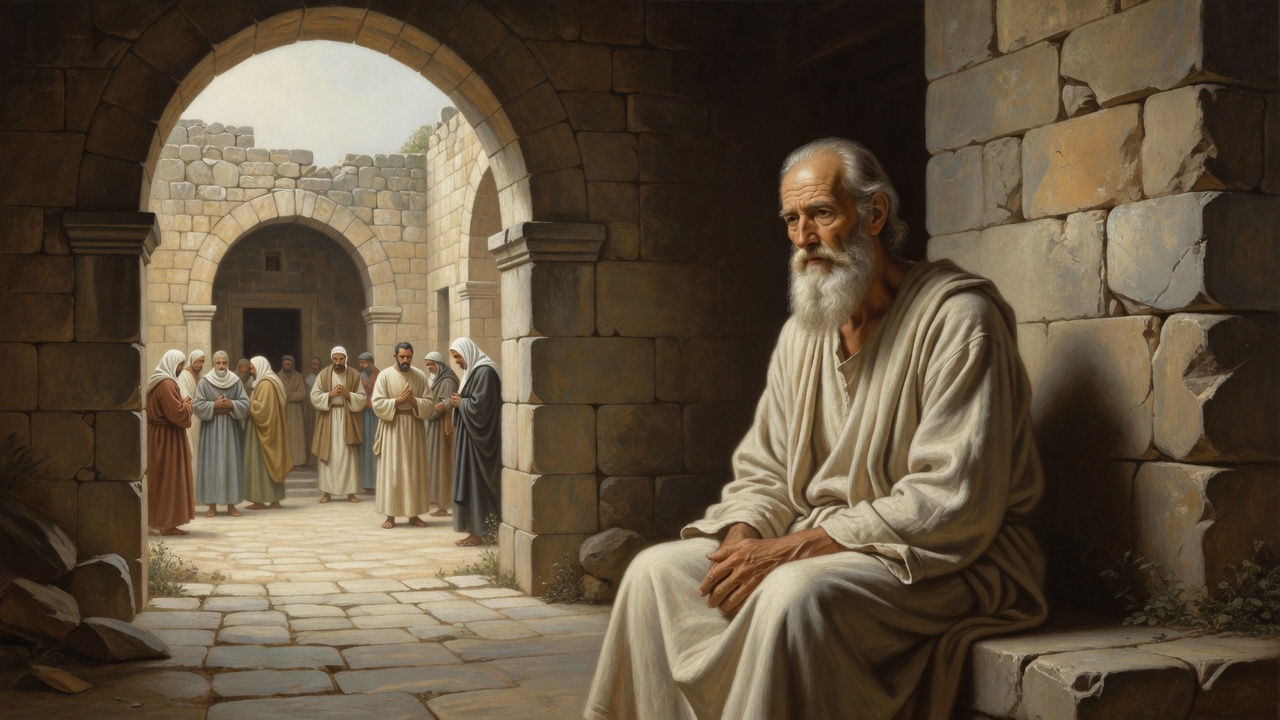
2It is better to go to the bais evel (house of mourning),
than to go to the bais mishteh (house of feasting);
for that is the sof (end, conclusion) of kol haAdam;
and the living will take it to heart.
3Ka'as (sorrow) is better than laughter;
for sadness of the countenance is good for the lev.
4The lev of chachamim is in the bais evel (house of mourning);
but the lev of kesilim is in the bais simchah.
5It is better to hear the rebuke of the chacham,
than for an ish to hear the shir kesilim.
6For as is the crackling of thorns under a pot,
so is the laughter of the kesil;
this also is hevel.
7Surely oppression maketh a chacham mad;
and a bribe corrupts the heart.
8Better is the acharit (end) of a thing than the reshit (beginning) thereof;
and erech ruach (patience) is better than gavoah ruach (haughtiness).
9Be not hasty in thy ruach to be angry;
for ka'as (anger) resteth in the kheyk (bosom) of kesilim.
10Say thou not, What is the cause that the yamim harishonim were better than these? For it is not because of chochmah that thou dost inquire concerning this. 11Chochmah is good with a nachalah (inheritance); and by it there is an advantage to them that see the shemesh. 12For chochmah is a protective tzel (shade), and kesef is as well; but the advantage of da'as is, that chochmah giveth chayyim (life) to them that possess it. 13Consider the ma'aseh HaElohim; for who can make straight what Hashem hath made crooked?
14In the yom tovah be joyful, but in the yom ra'ah consider: HaElohim also hath set the one over against the other in such a way that adam may not find out anything that will come after him.
The Limits of Human Wisdom
15All things have I seen in the yamim of my hevel; there is a tzaddik that perisheth in his tzedakah, and there is a rasha that prolongeth his life in his ra'ah. 16Do not be over much the tzaddik nor over much the chacham; why cause thyself desolation? 17Be not over much resha, neither be thou foolish; why shouldest thou die before thy time? 18It is good that thou holdest fast to the one and withdrawest not thine hand from the other; for he is a yire Elohim (G-d fearer) who shall fulfill both.
19Chochmah makes one chacham stronger than asarah shalitim (ten rulers) which are in the city.
20Surely indeed there is not a tzaddik upon earth, that doeth tov, and sinneth not.
21Also take no heed unto kol devarim that are spoken; lest thou hear thy eved curse thee; 22For oftentimes also thine own lev hath da'as that thou thyself likewise hast cursed others.
23I tested all this with chochmah; I said, I will be wise; but it was far from me. 24That which is far off, and exceeding deep, whose chochmah can find it out?
25I applied mine lev to have da'as, and to search, and to seek out chochmah, and the cheshbon (scheme, plan) of things, and to have da'as of resha (wickedness) of kesel (stupidity), even of sichlut (folly) and holelot (madness). 26And I find more mar (bitter) than mavet the isha, whose lev is snares and traps, and her hands are as chains; whoso pleaseth HaElohim shall escape from her; but the choteh (sinner) shall be ensnared by her. 27Look, this have I discovered, saith Kohelet, adding one point to another to find out the cheshbon (the scheme, plan of things); 28Which yet my nefesh seeketh, but I have not found; one man among a thousand have I found, but a woman among all those have I not found. 29Lo, this only have I found, that HaElohim hath made man yashar (upright); but they have sought out chishvonot rabbim (many schemes).
Did you know?
Wisdom, Mortality, and the Limits of Understanding
- Ecclesiastes 7 begins with a series of comparative proverbs arguing that moments of solemn reflection, such as visiting a house of mourning or facing sorrow, provide greater insight into life than superficial laughter and feast houses.Sources: the Bible text itself
- The Teacher reflects on the reality of human experience, noting that God has appointed both prosperous and adverse days so that humans cannot foresee their future, and that righteous people sometimes perish while the wicked live long.Sources: the Bible text itself
- The chapter highlights the universal limitation of human goodness, observing that there is no one on earth who does good and never sins, and concluding that while God created humanity upright, people pursue many complex schemes.Sources: the Bible text itself
Notes written with AI assistance from open sources (Theographic Bible Metadata, CC BY-SA 4.0; Easton’s Bible Dictionary, public domain) and reviewed before publishing.
Credits and license for this translation
The Orthodox Jewish Bible
The Orthodox Jewish Bible - Tanakh and Orthodox Jewish Brit Chadasha - The Holy Bible
copyright © 2002-2011, 2021, 2024 Artists for Israel International
Language: English
Contributor: Artists for Israel International
THE ORTHODOX JEWISH TANAKH
Artists For Israel Intl Inc.
This version also appears with the Orthodox Yiddish Triglot which presents the Hebrew Yiddish script in Latin script and an English word for word translation, available at afii.org/Torah
To donate PayPal.Me
This translation is made available to you under the terms of the
Creative Commons Attribution license 4.0.
You may share and redistribute this Bible translation or extracts from it in any format, provided that:
You include the above copyright and source information.
If you make any changes to the text, you must indicate that you did so in a way that makes it clear that the original licensor is not necessarily endorsing your changes.
Pictures included with Scriptures and other documents on this site are licensed just for use with those Scriptures and documents.
For other uses, please contact the respective copyright owners.
Note that in addition to the rules above, revising and adapting God's Word involves a great responsibility to be true to God's Word. See Revelation 22:18-19.
2026-01-06
Section headings adapted from the Berean Standard Bible (public domain); they are not part of this translation’s text.
Source: http://ebible.org/engojb/ · eBible.org