1 Peter 2
The Orthodox Jewish Bible · Tap a verse to see its cross-references.
The Living Stone and Chosen People
1Therefore, having put away all rishus (malice), all remiyah (guile, fraud, deceit) and tzevi'ut (hypocrisy) and kin'ah (envy) and all lashon hora, 2As new born olalim (infants), desire the pure cholov ruchani (spiritual milk), that by it you may grow into Yeshu'at Eloheynu, 3Now that you have tasted KI TOV Hashem (that the L-rd is good).
4Come to him, to that “Even Chayyah” (Living Stone), CHADAL ISHIM (rejected by men) but BECHIR (Chosen), and precious in the sight of Hashem. 5You also, like avanim chayyot (living stones), are being built up for a Bayit Ruchani (a Spiritual Beis, House) for a kehunnat kodesh (holy priesthood) to offer up zivchei ruach (sacrifices of the spirit) acceptable to Hashem through Rebbe, Melech HaMoshiach Yehoshua. 6For it stands written in the Kitvei HaKodesh, HINENI YISSAD B'TZIYON EVEN PINNAT YIKRAT (Behold, I place in Zion a precious corner stone), chosen, and HAMMA'AMIN LO YACHISH (the one believing [on Moshiach] never will be dismayed, ashamed). 7Therefore, to you who are the ma'aminim this EVEN (Stone) is YIKRAT (precious), but to the Apikorosim (Unbelievers): EVEN MA'ASU HABONIM HAY'TAH LEROSH PINAH (The Stone which the ones building rejected became the head of the corner). 8And EVEN NEGEF U'L'TZUR MICHSHOL (a stone for stumbling over and a rock for falling over). They stumble because they have no mishma'at (obedience) to the Dvar Hashem which is also what they were appointed for.
9But you are an AM NIVCHAR (a chosen people ), a MAMLECHET KOHANIM (a kingdom of priests, royal priests), a GOY KADOSH (a holy nation), an AM SEGULLAH (a people of treasured possession), for this purpose: that you may declare the wondrous deeds of the One who gave you the kri'ah (calling) and summoned you out of choshech into his marvelous ohr. 10You, who once were LO AMI (not My people) but now AMI ATAH (My people you are), the AM Hashem (the people of G-d), the ones having not received rachamim, but now having received rachamim.
11Chaverim, I say “Chazak!” (Be Strong) to you as aliens and exiles, exhorting you to abstain from fleshly ta'avot (lusts) which make milchamah (war) against the neshamah. 12Let your hitnahagut (conduct) among the Goyim show feste (excellent) midas chasidus (trait of piety) that, wherein they speak against you as anshei resha (men of wickedness), by observing your ma'asim tovim they may glorify Hashem in the YOM PEKUDDAH (Day of Visitation, Reckoning).
Submission to Authorities
13Submit to every created human memshalah (governing authority) because of Hashem, whether to a Melech (King) as being HaRosh, 14Or to moshelim (governors) as being sent by Hashem for the purpose of nakam (vengeance) on anshei resha (men of wickedness), but for the purpose of shevach (praise, commendation) on anshei tzedek. 15For it is the ratzon Hashem (the will of G-d) that you, by acting as anshei tzedek, may silence the lack of da'as (knowledge) of the kesilim (the foolish people). 16As Avadim (Servants) of Hashem, live as Bnei Chorin (Sons of Freedom, Freedmen); yet do not use your cherut (freedom) as a cloak for concealing ra'ah (evil). 17Have kavod (respect, honor) toward kol Bnei Adam; have ahavah (agape) toward HaAchim (The Brotherhood of the Messianic Chavurah); have yirat Shomayim toward Hashem, have kavod to HaMelech.
18Avadim, be submitting in kol yir'ah (all fear) to your adonim (masters), not only to the good and eidele (gentle) adonim, but also to the hard sarei misim (task-masters). 19For this is worthy of shevach (praise, commendation) if, because of a consciousness of Hashem, anyone bears up under tzoros (troubles) while suffering unjustly. 20For what shevach (praise) is it if, after committing chatta'im (sins) and being beaten, you endure? But if being osei tzedek (doers of what is right) and suffering, then you endure, this is worthy of shevach before Hashem.
Christ’s Example of Suffering
21It was for this tachlis (purpose) [of your being osei tzedek and suffering] that you were given your kri'ah (calling), because also Moshiach suffered on behalf of you, leaving you a mofet (example), that you should follow be'ikvot Moshiach (in the steps of Moshiach), 22Who was beli chet (without sin) V'LO MIRMAH BEFIV (and no deceit was in his mouth); 23Rebbe, Melech HaMoshiach, who, being reviled, did not retaliate; suffering, he did not utter iyumim (threats), but handed himself over, entrusting himself to the Shofet Tzedek (Righteous Judge); 24Moshiach, who himself NASAH (bore, carried away) ES PEYSHA'EINU (our transgressions, our sins) in geviyyato on HAETZ that, having become niftarim (deceased ones) to chattoteinu, we might become Kol Chai (all living) to Tzidkanut (Righteousness); UVACHAVURATO NIRPA LANU (by whose wounds you were healed). 25For you were KULLANU KA'TZON TA'INU (all of us like sheep we went astray), for you were as sheep being led astray, but you made teshuva now to the Ro'eh and Mashgiach (Overseer) of your nefashot (souls).
Did you know?
Living Stones and a Chosen People
- This chapter quotes Scripture about a chosen and precious cornerstone laid in Zion: the one who believes in him will never be put to shame. Zion was the south-eastern hill of Jerusalem, one of the heights on which the city was built, surrounded on every side except the north by deep valleys.Sources: the Bible text itself · Zion
- David took Zion from the Jebusites, built a citadel and a palace there, and the hill became known as the city of David. The letter uses that place-name when it quotes Scripture about a cornerstone laid in Zion, and it pictures the readers as living stones being built into a spiritual house and a holy priesthood.Sources: Zion · the Bible text itself
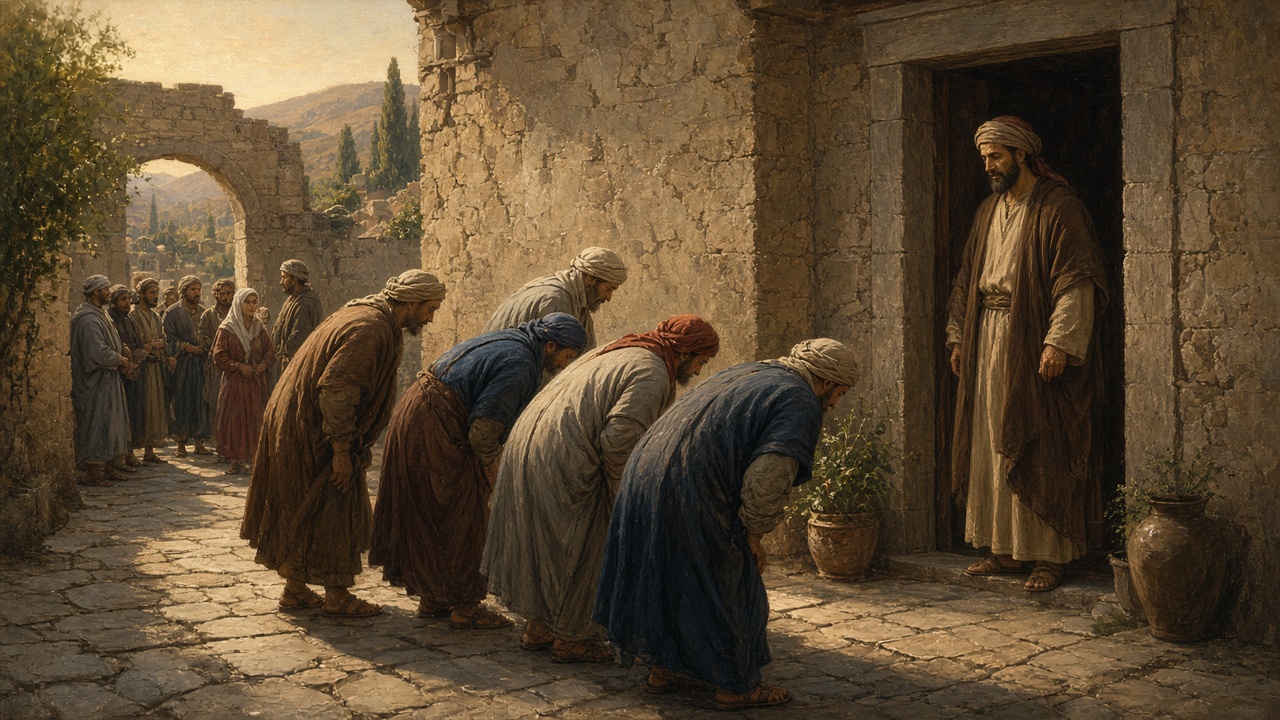
- The chapter urges submission, for the Lord’s sake, to every human institution—to the king as supreme authority and to governors sent to punish wrong and praise what is right. It tells servants to respect even unreasonable masters, and it holds up Christ’s suffering, without sin, deceit, threats, or retaliation, as the pattern for enduring unjust pain.Sources: the Bible text itself
Notes written with AI assistance from open sources (Theographic Bible Metadata, CC BY-SA 4.0; Easton’s Bible Dictionary, public domain) and reviewed before publishing.
Places in this chapter
- Zion · Today: Jerusalem · 31.777, 35.234 · verse 6
Only places identified with high confidence are shown (90% or more according to the scholarly sources compiled by OpenBible). Period map: DARE (Digital Atlas of the Roman Empire), CC BY 4.0; modern map: © OpenStreetMap contributors; places: OpenBible.info (CC BY 4.0).
Credits and license for this translation
The Orthodox Jewish Bible
The Orthodox Jewish Bible - Tanakh and Orthodox Jewish Brit Chadasha - The Holy Bible
copyright © 2002-2011, 2021, 2024 Artists for Israel International
Language: English
Contributor: Artists for Israel International
THE ORTHODOX JEWISH TANAKH
Artists For Israel Intl Inc.
This version also appears with the Orthodox Yiddish Triglot which presents the Hebrew Yiddish script in Latin script and an English word for word translation, available at afii.org/Torah
To donate PayPal.Me
This translation is made available to you under the terms of the
Creative Commons Attribution license 4.0.
You may share and redistribute this Bible translation or extracts from it in any format, provided that:
You include the above copyright and source information.
If you make any changes to the text, you must indicate that you did so in a way that makes it clear that the original licensor is not necessarily endorsing your changes.
Pictures included with Scriptures and other documents on this site are licensed just for use with those Scriptures and documents.
For other uses, please contact the respective copyright owners.
Note that in addition to the rules above, revising and adapting God's Word involves a great responsibility to be true to God's Word. See Revelation 22:18-19.
2026-01-06
Section headings adapted from the Berean Standard Bible (public domain); they are not part of this translation’s text.
Source: http://ebible.org/engojb/ · eBible.org