1 Chronicles 4
The Orthodox Jewish Bible · Tap a verse to see its cross-references.
The Descendants of Judah
1The Bnei Yehudah; Peretz, Chetzron, and Carmi, and Chur, and Shoval.
2And Reayah Ben Shoval fathered Yachat; and Yachat fathered Achumai, and Lahad. These are the mishpekhot of the Tzorati.
3And these were the sons of Eitam; Yizre'el (Jezreel), Yishma, Yidbash; and the shem of their achot (sister) was Hatzlelponi; 4And Penuel avi Gedor, and Ezer avi Chushah. These are the Bnei Chur, the bechor of Ephratah avi Beit-Lechem.
5And Ashchur avi Tekoa had two nashim (wives), Chelah and Na'arah. 6And Na'arah bore him Achuzam, Chepher, Temeni, Haachashtari, the Bnei Na'arah. 7And the Bnei Chelah were Tzeret, and Yetzochar, and Etnan. 8And Kotz fathered Anuv, and Tzovevah, and the mishpekhot of Acharchel Ben Harum.
The Prayer of Jabez
9And Yabetz was more honorable than his brethren; and immo (his mother) called shmo Yabetz, saying, Because I bore him beotzev (with sorrow). 10And Yabetz called on Elohei Yisroel, saying, O that Thou wouldest put a barucha on me indeed, and enlarge my territory, and that Thine yad might be with me, and that Thou wouldest keep me from ra'ah, that it may not grieve me! And Elohim granted him that which he requested.
More Descendants of Judah
11And Keluv achi (brother of) Shuchah fathered Mechir avi Eshton. 12And Eshton fathered Beit-Rapha, and Paseach, and Techinnah avi Ir Nachash. These are the anashim of Rechah.
13And the Bnei Kenaz; Otniel, and Serayah; and the Bnei Otniel; Chatat. 14And Me'onotai fathered Ophrah; and Serayah fathered Yoav avi Gey Charashim; for they were charashim (craftsmen). 15And the Bnei Kalev Ben Yephunneh; Iru, Elah, and Na'am; and the Bnei Elah, even Kenaz.
16And the Bnei Yehallelel; Ziph, and Ziphah, Tirya, and Asare'el. 17And the Bnei Ezrah were Yeter, and Mered, and Epher, and Yalon; and she bore Miryam, and Shammai, and Yishbach avi Eshtemo'a.
18And his isha a Yehudiyah bore Yered avi Gedor, Chever avi Sokhoh, and Yekutiel avi Zanoach. And these are the Bnei Bityah Bat Pharaoh, which Mered took [as isha].
19And the Bnei eshet Hodiyah the achot (sister) of Nacham avi Ke'ilah the Garmi, and Eshtemo'a the Ma'akhati. 20And the Bnei Shimon were Amnon, and Rinnah, Ben-Chanan, and Tilon. And the Bnei Yishi were Zochet, and Ben-Zochet.
21The Bnei Shelah Ben Yehudah were Er avi Lekhah, and La'dah avi Mareshah, and the mishpekhot of the bais of them that were workers with fine linen, of the Bais-Ashbe'a, 22And Yokim, and the anashim of Kozeva, and Yoash, and Saraph who ruled in Moav, and Yashuvi Lechem. And these are ancient records. 23These were the yotzerim, (potters) and those that dwelt in Neta'im and Gederah; there they dwelt and worked for the melech.
The Descendants of Simeon
24The Bnei Shim'on were Nemuel, and Yamin, Yariv, Zerach and Sha'ul; 25Shallum bno, Mivsam bno, Mishma bno. 26And the Bnei Mishma: Chamuel bno, Zakkur bno, Shime'i bno.
27And Shime'i had sixteen banim and six banot, but his brethren had not many banim, neither did all their mishpakhat multiply like the Bnei Yehudah.
28And they dwelt at Be'er-Sheva, and Moladah, and Chatzar Shual,
29And at Bilhah, and at Etzem, and at Tolad, 30And at Betuel, and at Chormah, and at Tziklag, 31And at Beit-Marcavot, and Chatzar Susim, and at Beit-Biri, and at Sha'arayim. These were their towns until the reign of Dovid. 32And their villages were Eitam, and Ayin, Rimmon, and Tokhen, and Ashan, five towns; 33And all their villages were all around these towns as far as Ba'al. These were their settlements, and their genealogical records.
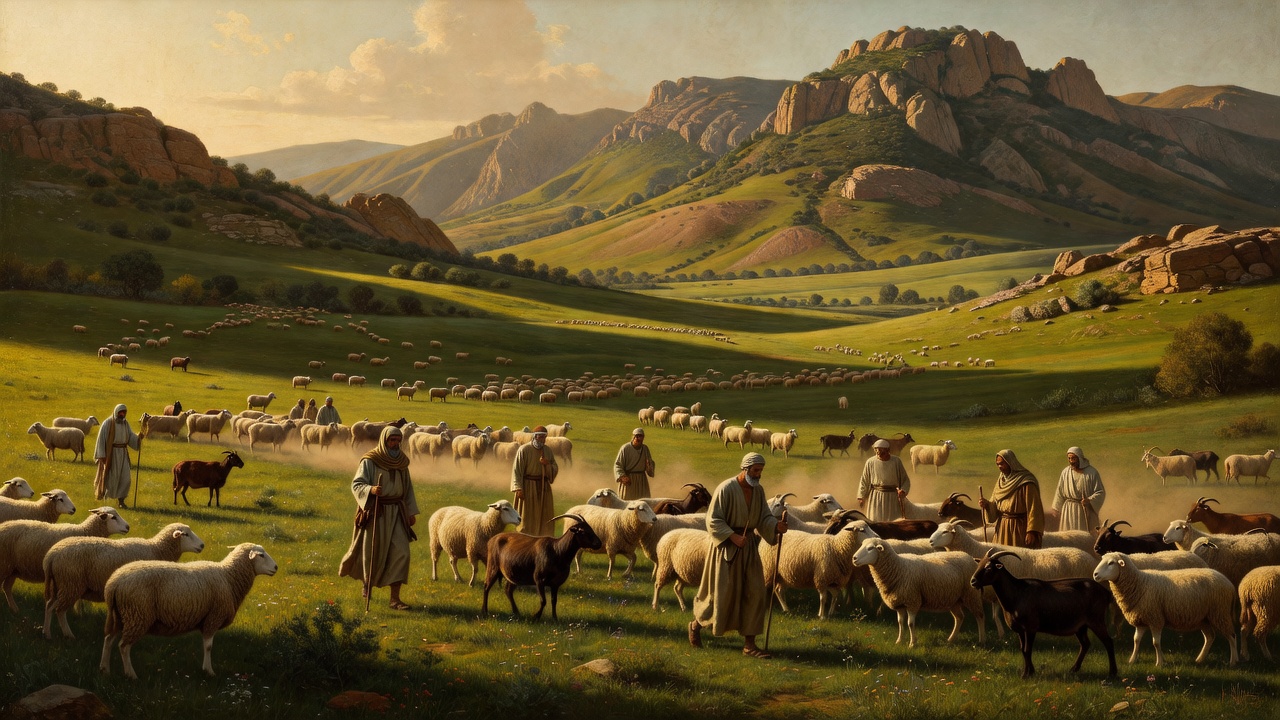
34And Meshovav, and Yamlech, and Yoshah Ben Amatzyah, 35And Yoel, and Yehu Ben Yoshivyah Ben Serayah Ben Asiel, 36And Elyo'einai, and Ya'akovah, and Yeshochayah, and Asayah, and Adiel, and Yesimi'el, and Benayah, 37And Ziza Ben Shiphi Ben Allon Ben Yedayah Ben Shimri Ben Shema'yah. 38These listed by their shmot were nasi'im in their mishpekhot; and the bais of avoteihem increased greatly. 39And they went to the outlying area of Gedor, even unto the east side of the gey (valley), to seek mireh (pasture) for their tzon. 40And they found mireh fertile and tov, and ha'aretz was spacious, and quiet, and peaceful; for they of Cham had dwelt there of old. 41And these listed by shemot came in the days of Chizkiyah (Yechizkiyahu) Melech Yehudah, and attacked their ohalim, and the habitations that were found there, and destroyed them utterly unto this day, and dwelt in their place, because there was mireh there for their tzon. 42And some of them, even of the Bnei Shim'on, five hundred anashim, went to Har Se'ir, having for their leaders Pelatyah, and Nearyah, and Refayah, and Uzziel, the Bnei Yishi. 43And they struck the she'erit (remnant) of Amalek that were escaped, and dwelt there unto this day.
Did you know?
Genealogies of Judah and Simeon
- The genealogy of Judah briefly pauses to highlight Jabez, whose name was associated with pain at birth. He prayed for God to bless him, enlarge his territory, and keep him from harm, and the biblical record notes that God granted his request.Sources: Jabez · the Bible text itself
- Unlike lists focusing solely on political rulers, this chapter records specific occupational guilds, including the craftsmen of Ge-harashim, linen workers at Beth-ashbea, and potters who resided at Netaim and Gederah in royal service.Sources: Beth-ashbea · Netaim · the Bible text itself
- During the reign of King Hezekiah of Judah, clan leaders from the tribe of Simeon migrated southward in search of fresh pasture for their livestock, establishing settlements in fertile areas near Gedor and Mount Seir.Sources: Simeon · the Bible text itself
Notes written with AI assistance from open sources (Theographic Bible Metadata, CC BY-SA 4.0; Easton’s Bible Dictionary, public domain) and reviewed before publishing.
Places in this chapter
- Bethlehem · 31.704, 35.208 · verse 4
- Tekoa · Today: Khirbet Teku’a · 31.632, 35.210 · verse 5
- Moab · Today: Moab 1 · 31.181, 35.701 · verse 22
Only places identified with high confidence are shown (90% or more according to the scholarly sources compiled by OpenBible). Period map: DARE (Digital Atlas of the Roman Empire), CC BY 4.0; modern map: © OpenStreetMap contributors; places: OpenBible.info (CC BY 4.0).
Credits and license for this translation
The Orthodox Jewish Bible
The Orthodox Jewish Bible - Tanakh and Orthodox Jewish Brit Chadasha - The Holy Bible
copyright © 2002-2011, 2021, 2024 Artists for Israel International
Language: English
Contributor: Artists for Israel International
THE ORTHODOX JEWISH TANAKH
Artists For Israel Intl Inc.
This version also appears with the Orthodox Yiddish Triglot which presents the Hebrew Yiddish script in Latin script and an English word for word translation, available at afii.org/Torah
To donate PayPal.Me
This translation is made available to you under the terms of the
Creative Commons Attribution license 4.0.
You may share and redistribute this Bible translation or extracts from it in any format, provided that:
You include the above copyright and source information.
If you make any changes to the text, you must indicate that you did so in a way that makes it clear that the original licensor is not necessarily endorsing your changes.
Pictures included with Scriptures and other documents on this site are licensed just for use with those Scriptures and documents.
For other uses, please contact the respective copyright owners.
Note that in addition to the rules above, revising and adapting God's Word involves a great responsibility to be true to God's Word. See Revelation 22:18-19.
2026-01-06
Section headings adapted from the Berean Standard Bible (public domain); they are not part of this translation’s text.
Source: http://ebible.org/engojb/ · eBible.org