Psalms 88
Open English Bible (U. S. spelling) · Tap a verse to see its cross-references.
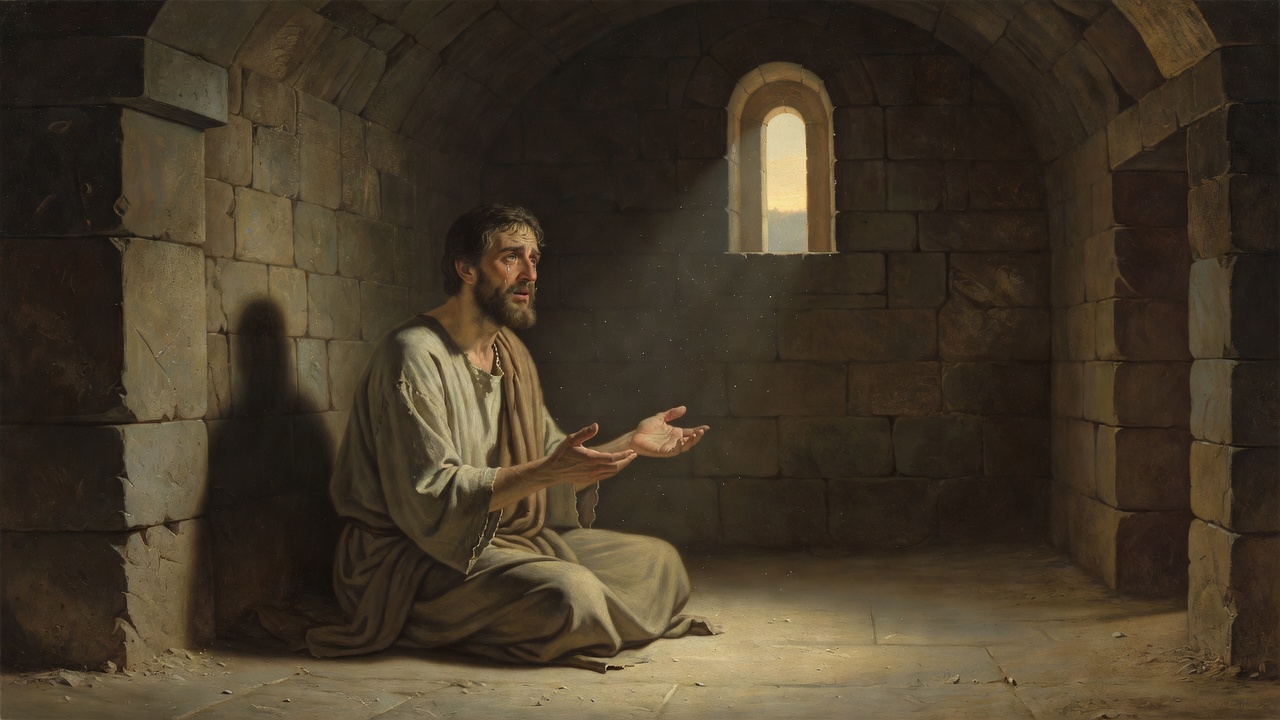
Psalm 88 – The Prayer of Despair
A Song, a psalm of the Korahites. To the leader: according to Mahalath Leannoth. A Maskil of Heman the Ezrahite.
1O Lord my God,
I cry for help in the day-time,
in the night my cry is before you;
2let my prayer come into your presence,
incline your ear to my cry.
3For I am sated with sorrow,
my life draws near to Sheol.
4I am counted with those who go down to the pit;
without strength am I.
5My home is among the dead,
like the slain that lie in the grave,
whom you remember no more
cut off as they are from your hand.
6In the deepest pit you have put me,
in shadows deep and dark.
7Your wrath lies heavy upon me,
waves of your anger roll over me. Selah
8You have put my friends far from me,
you have made them shun me.
I am shut in, and cannot escape,
9my eyes are wasted with sorrow.
I call on you, Lord, every day,
spreading my hands out to you.
10For the dead can you work wonders?
Can the shades rise again to praise you? Selah
11Can your kindness be told in the grave,
your faithfulness in the tomb?
12Can your wonders be known in the darkness,
or your help in the land of forgetfulness?
13I cry for help to you,
in the morning my prayer comes before you.
14Why, O Lord, do you spurn me,
and hide your face from me?
15From my youth I am wretched and dying,
I am numbed by the terrors I bear.
16The fires of your wrath have passed over me,
your terrors destroy me,
17surging around me forever,
hemming me in altogether.
18Those who love me you put far from me;
the dark is my only friend.
Did you know?
A Cry from Deep Darkness
- The superscription designates this song as a psalm of the sons of Korah and a Maskil of Heman the Ezrahite, directed according to Mahalath Leannoth.Sources: the Bible text itself
- The speaker depicts the realm of the dead using several terms, including Sheol, the Pit, Abaddon, and the land of oblivion. The text poses rhetorical questions about whether God's wonders and faithfulness can be known or praised from such places.Sources: the Bible text itself
- Unlike many biblical laments that transition into expressions of confidence or praise, Psalm 88 sustains an unrelieved tone of suffering and isolation, ending with darkness described as the speaker's closest companion.Sources: the Bible text itself
Notes written with AI assistance from open sources (Theographic Bible Metadata, CC BY-SA 4.0; Easton’s Bible Dictionary, public domain) and reviewed before publishing.
Credits and license for this translation
Open English Bible (U. S. spelling)
The Holy Bible, Open English Bible translation, U. S. spelling edition
Public Domain
Language: English
Translation by: OpenEnglishBible.org
Please see OpenEnglishBible.org/ for information about this translation.
2026-10-02
Source: http://ebible.org/engoebus/ · eBible.org