Psalms 42
Open English Bible (Commonwealth Spelling) · Tap a verse to see its cross-references.
Book Two
Psalm 42 – Yearning for God
For the leader. A maskil of the Korahites.
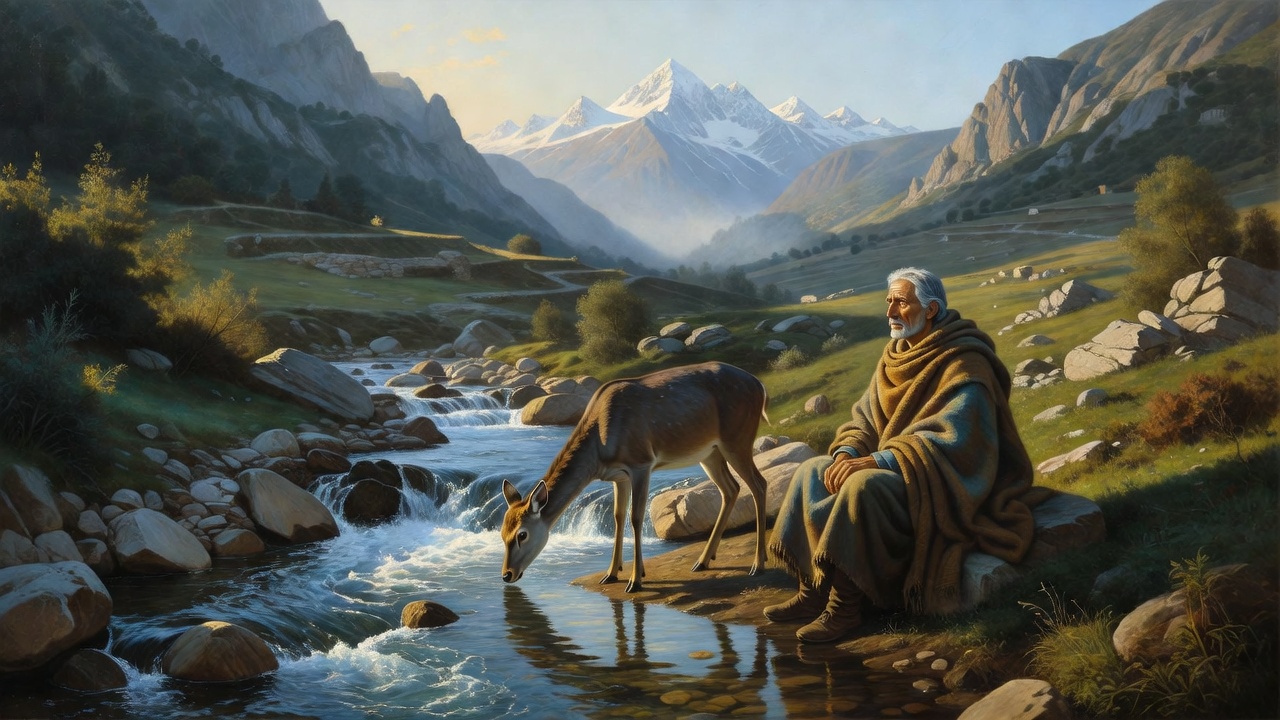
1Like the hart which longs
for brooks of water,
I long
for you, God.
2I thirst for God,
for my living God.
When shall I enter in,
and see the face of God?
3My tears have been my food
by day and by night;
for they say to me all the day long,
‘Where is your God?’
4My heart floods with sorrow,
as I call to mind:
how I used to pass on with the throng,
at their head, to the house of God,
with glad shouts and giving of thanks,
in the throng who kept festival.
5Why am I downcast?
Why this moaning within me?
Hope in God;
for yet will I praise him,
my help, my God.
6I am sunk in my misery;
I will therefore call you to mind
from the land of Jordan and Hermon,
the mountain Mizar.
7Flood is calling to flood
at the noise of your cataracts;
all your waves and your breakers
have passed over me.
8In the day I cry to the Lord
to summon his kindness;
and the song that I sing in the night
is a prayer to the living God.
9I say to God my rock,
‘Why have you forgotten me?
Why must I walk so sadly,
so hard pressed by the foe?’
10It pierces me to the heart
to hear the enemy’s taunts,
as all the day long they say to me,
‘Where is your God?’
11Why am I downcast?
Why this moaning within me?
Hope in God;
for yet will I praise him,
my help, my God.
Did you know?
Thirsting for God Far from Home
- The psalm is introduced as a song of the sons of Korah, a Levitical family descended from the Levite Korah who took part in temple music and worship.Sources: the Bible text itself · Korah (Levite)
- The speaker longs for God from the northern borderlands, mentioning the Jordan, Mount Hermon, and Mount Mizar. Hermon is a towering range with multiple peaks reaching over 9,000 feet, while Mizar (meaning 'smallness') represents a lesser neighboring summit.Sources: the Bible text itself · Hermon · Hill Mizar
- The poem uses vivid water metaphors, moving from a thirsty deer longing for mountain streams to roaring waterfalls and crashing waves that symbolize overwhelming emotional distress.Sources: the Bible text itself
Notes written with AI assistance from open sources (Theographic Bible Metadata, CC BY-SA 4.0; Easton’s Bible Dictionary, public domain) and reviewed before publishing.
Places in this chapter
Only places identified with high confidence are shown (90% or more according to the scholarly sources compiled by OpenBible). Period map: DARE (Digital Atlas of the Roman Empire), CC BY 4.0; modern map: © OpenStreetMap contributors; places: OpenBible.info (CC BY 4.0).
Credits and license for this translation
Open English Bible (Commonwealth Spelling)
The Holy Bible, Open English Bible translation, with Commonwealth spelling
Public Domain
Language: English
Translation by: OpenEnglishBible.org
Please see OpenEnglishBible.org/ for information about this translation.
2026-10-02
Source: http://ebible.org/engoebcw/ · eBible.org