Psalms 79
George Noyes Bible · Tap a verse to see its cross-references.
A Prayer for Deliverance
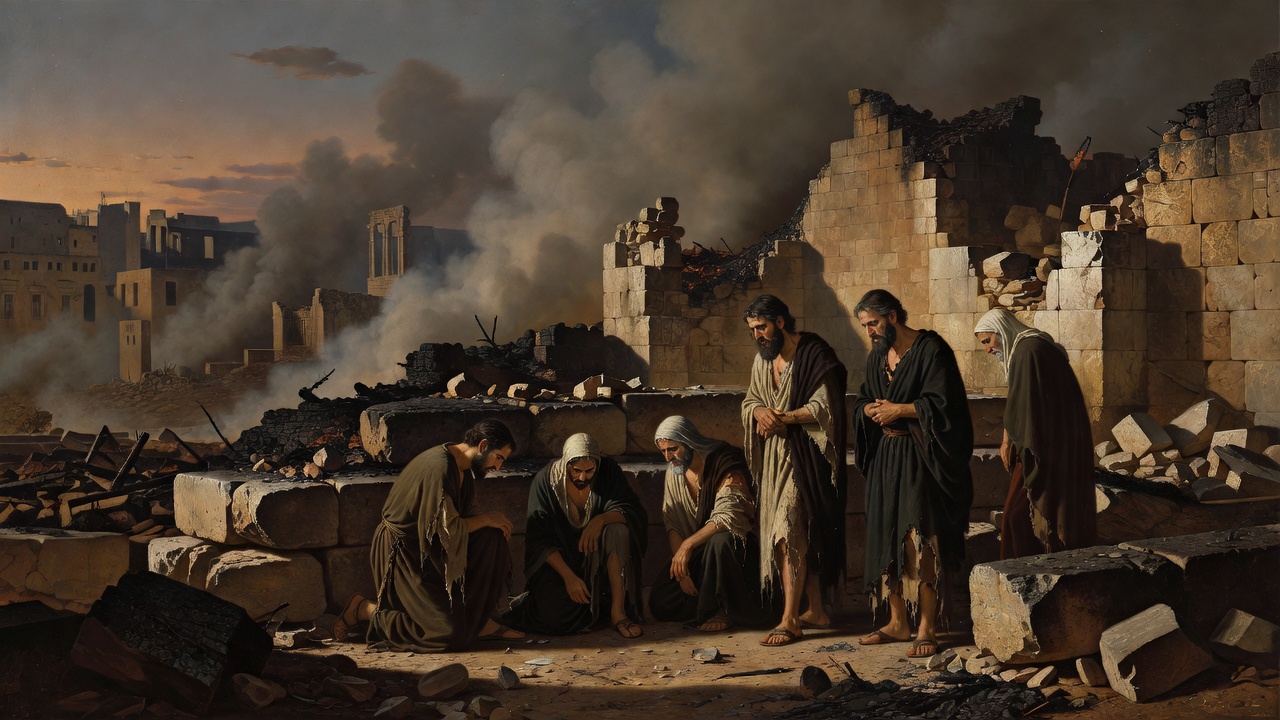
1“A psalm of Asaph.” O God! the nations have come into thine inheritance; They have polluted thy holy temple; They have made Jerusalem a heap of ruins! 2They have given the dead bodies of thy servants to be food for the birds of heaven, The flesh of thy holy ones to the wild beasts of the earth! 3Their blood have they shed like water around Jerusalem, And there was none to bury them! 4We have become the reproach of our neighbors,—The scorn and derision of those around us. 5How long, O LORD! wilt thou be angry for ever? How long shall thy jealousy burn like fire? 6Pour out thy wrath on the nations which acknowledge thee not. And on the kingdoms which call not upon thy name! 7For they have devoured Jacob, And laid waste his dwelling-place. 8O remember not against us former iniquities; Let thy tender mercy speedily succor us, 9For we are brought very low! Help us, O God of our salvation! for the honor of thy name; F or thy name's sake save us, and forgive our iniquities! 10Why should the nations say, “Where is their God?” May the revenging of the blood of thy servants, which hath been shed, Be manifested among the nations before our eyes! 11Let the cry of the prisoner come before thee! According to the greatness of thy power preserve those that are appointed to die! 12And return sevenfold into our neighbors' bosoms The reproach with which they have reproached thee, O Lord! 13So shall we, thy people, and the flock of thy pasture, Give thanks to thee for ever. And show forth thy praise to all generations.
Did you know?
A Lament over the Destruction of Jerusalem
- Psalm 79 is titled a psalm of Asaph, placing it among a collection of psalms (Psalms 50 and 73–83) associated with the Levite musician and seer Asaph. In the biblical record, the title may also refer to the sons of Asaph, a recognized guild of temple singers and poets.Sources: Asaph (Levite) · the Bible text itself
- The psalm laments the defilement of the holy temple, the destruction of Jerusalem into rubble, and the unburied bodies left throughout the city. Jerusalem, known as the holy city and a mountain fastness, is portrayed here as having suffered devastating invasion by surrounding nations.Sources: Jerusalem · the Bible text itself
- The poem calls upon God for help because foreign nations have devoured Jacob and devastated his homeland. In biblical tradition, the name of the patriarch Jacob is frequently used as a poetic collective term for his descendants and their shared homeland.Sources: Jacob (Israel) · the Bible text itself
Notes written with AI assistance from open sources (Theographic Bible Metadata, CC BY-SA 4.0; Easton’s Bible Dictionary, public domain) and reviewed before publishing.
Places in this chapter
Only places identified with high confidence are shown (90% or more according to the scholarly sources compiled by OpenBible). Period map: DARE (Digital Atlas of the Roman Empire), CC BY 4.0; modern map: © OpenStreetMap contributors; places: OpenBible.info (CC BY 4.0).
Credits and license for this translation
George Noyes Bible
The Holy Bible, translated into English by George Noyes (1869)
Public Domain
Language: English
Dialect: archaic British
Translation by: George Noyes
2019-10-24
Section headings adapted from the Berean Standard Bible (public domain); they are not part of this translation’s text.
Source: http://ebible.org/engnoy/ · eBible.org