Psalms 28
George Noyes Bible · Tap a verse to see its cross-references.
The LORD Is My Strength
1“A psalm of David.” To thee do I cry, O LORD! O my rock! be not silent to me, Lest, if thou answer me not, I become like those who go down to the pit! 2Hear the voice of my supplication, when I cry unto thee, When I lift up my hands to thy most holy sanctuary! 3Draw me not away with the impious, and with evil-doers, Who speak peace to their neighbors, while mischief is in their hearts! 4Give them according to their deeds, and the wickedness of their doings; Give them according to the work of their hands; Render to them their desert! 5For they regard not the doings of the LORD, nor the work of his hands; Therefore will he destroy them, and not again build them up. 6Praised be the LORD, for he hath heard the voice of my supplications! 7The LORD is my strength and my shield; My heart trusteth in him, and he helpeth me; Therefore doth my heart exult, And in my song I will praise him. 8Jehovah is the strength of his people; He is the protecting shield of his anointed. 9Save thy people, and bless thine inheritance; Feed them also, and build them up for ever!
Did you know?
A Plea for Mercy and a Song of Trust
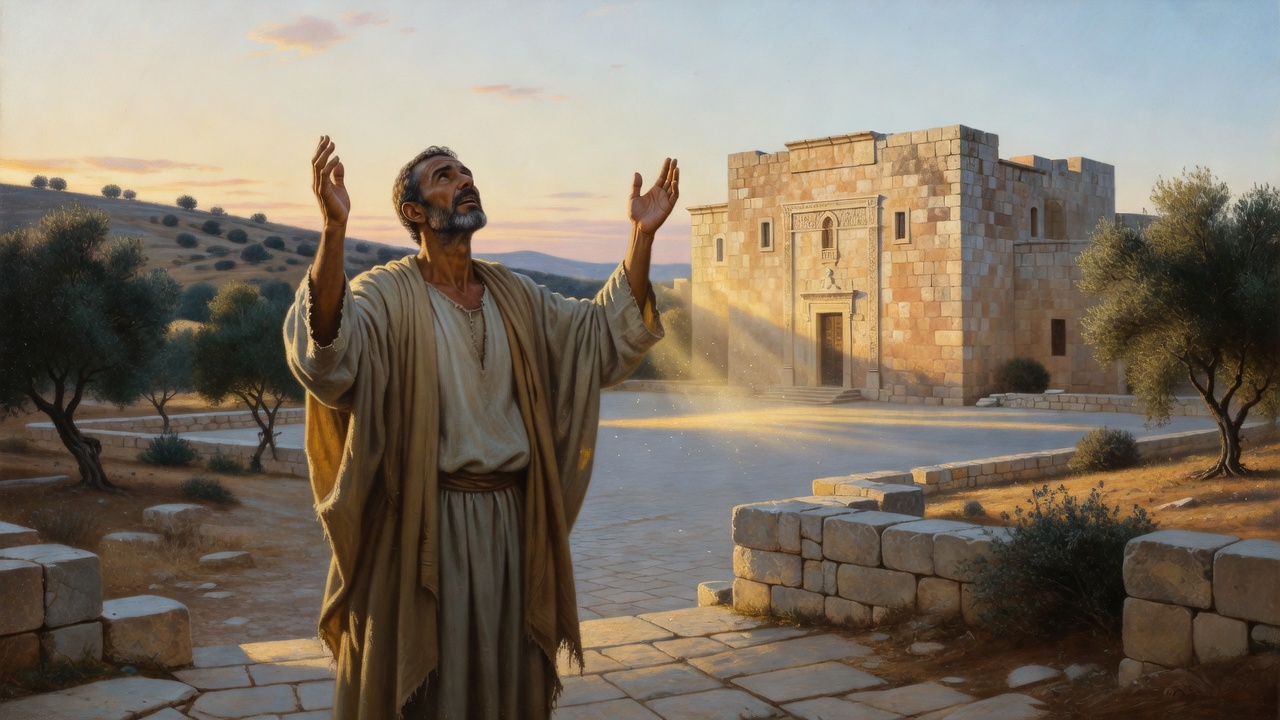
- Lifting up hands toward the sanctuary was a customary ancient posture of earnest prayer in Israel, visibly demonstrating supplication, humility, and full dependence on God.Sources: the Bible text itself
- The psalm transitions dramatically from a desperate plea for deliverance from death and judgment alongside the wicked to joyful thanksgiving, concluding with pastoral imagery where God is asked to shepherd and carry His people forever.Sources: the Bible text itself
Notes written with AI assistance from open sources (Theographic Bible Metadata, CC BY-SA 4.0; Easton’s Bible Dictionary, public domain) and reviewed before publishing.
Places in this chapter
- Most Holy Place · Today: on Mount Moriah · 31.778, 35.236 · verse 2
Only places identified with high confidence are shown (90% or more according to the scholarly sources compiled by OpenBible). Period map: DARE (Digital Atlas of the Roman Empire), CC BY 4.0; modern map: © OpenStreetMap contributors; places: OpenBible.info (CC BY 4.0).
Credits and license for this translation
George Noyes Bible
The Holy Bible, translated into English by George Noyes (1869)
Public Domain
Language: English
Dialect: archaic British
Translation by: George Noyes
2019-10-24
Section headings adapted from the Berean Standard Bible (public domain); they are not part of this translation’s text.
Source: http://ebible.org/engnoy/ · eBible.org