Job 15
George Noyes Bible · Tap a verse to see its cross-references.
Eliphaz: Job Does Not Fear God
1Then answered Eliphaz the Temanite, and said: 2Should a wise man answer with arguments of wind, Or fill his bosom with the east wind? 3Should he argue with speech that helpeth him not, And with words which do not profit him? 4Behold, thou makest the fear of God a vain thing, And discouragest prayer before him. 5Yea, thy own mouth proclaimeth thy iniquity, Though thou choosest the tongue of the crafty. 6Thy own mouth condemneth thee, and not I; Thy own lips testify against thee. 7Art thou the first man that was born? Wast thou formed before the hills? 8Hast thou listened in the council of God, And drawn all wisdom to thyself? 9What dost thou know, that we know not also? What dost thou understand, that is a secret to us? 10With us are the aged and hoary-headed; Much older than thy father. 11Dost thou despise the consolations of God, And words so full of kindness to thee? 12Why hath thy passion taken possession of thee? And why this winking of thine eyes? 13For against God hast thou turned thy spirit, And uttered such words from thy mouth. 14What is man, that he should be pure, And he that is born of woman, that he should be innocent? 15Behold, He putteth no trust in his ministering spirits, And the heavens are not pure in his sight; 16Much less, abominable and polluted man, Who drinketh iniquity as water. 17Hear me, and I will show thee, And that which I have seen will I declare; 18Which the wise men have told, And not kept concealed, as received from their fathers; 19To whom alone the land was given, And among whom not a stranger wandered. 20“All his days the wicked man is in pain; Yea, all the years, that are laid up for the oppressor. 21A fearful sound is in his ears; In peace the destroyer cometh upon him. 22He hath no hope that he shall escape from darkness; He is set apart for the sword. 23He wandereth about, seeking bread; He knoweth that a day of darkness is at hand. 24Distress and anguish fill him with dread; They prevail against him like a king ready for the battle. 25Because he stretched forth his hand against God, And bade defiance to the Almighty, 26And ran against him with outstretched neck, With the thick bosses of his bucklers; 27Because he covered his face with fatness, And gathered fat upon his loins, 28And dwelt in desolated cities, In houses which no man inhabiteth, That are ready to become heaps. 29He shall not be rich; his substance shall not endure, And his possessions shall not be extended upon the earth. 30He shall not escape from darkness, And the flame shall dry up his branches; Yea, by the breath of His mouth shall he be taken away. 31“Let not man trust in vanity! he will be deceived; For vanity shall be his recompense. 32He shall come to his end before his time, And his branch shall not be green. 33He shall shake off his unripe fruit like the vine, And shed his blossoms like the olive-tree. 34The house of the unrighteous shall be famished, And fire shall consume the tents of bribery. 35They conceive mischief, and bring forth misery, And their breast deviseth deceit.”
Did you know?
Eliphaz's Second Speech and Ancestral Wisdom
- Eliphaz accuses Job of filling his belly with the hot east wind, invoking a familiar ancient Near Eastern metaphor for the dry, scorching desert wind that blights vegetation and brings destruction instead of sustenance.Sources: the Bible text itself
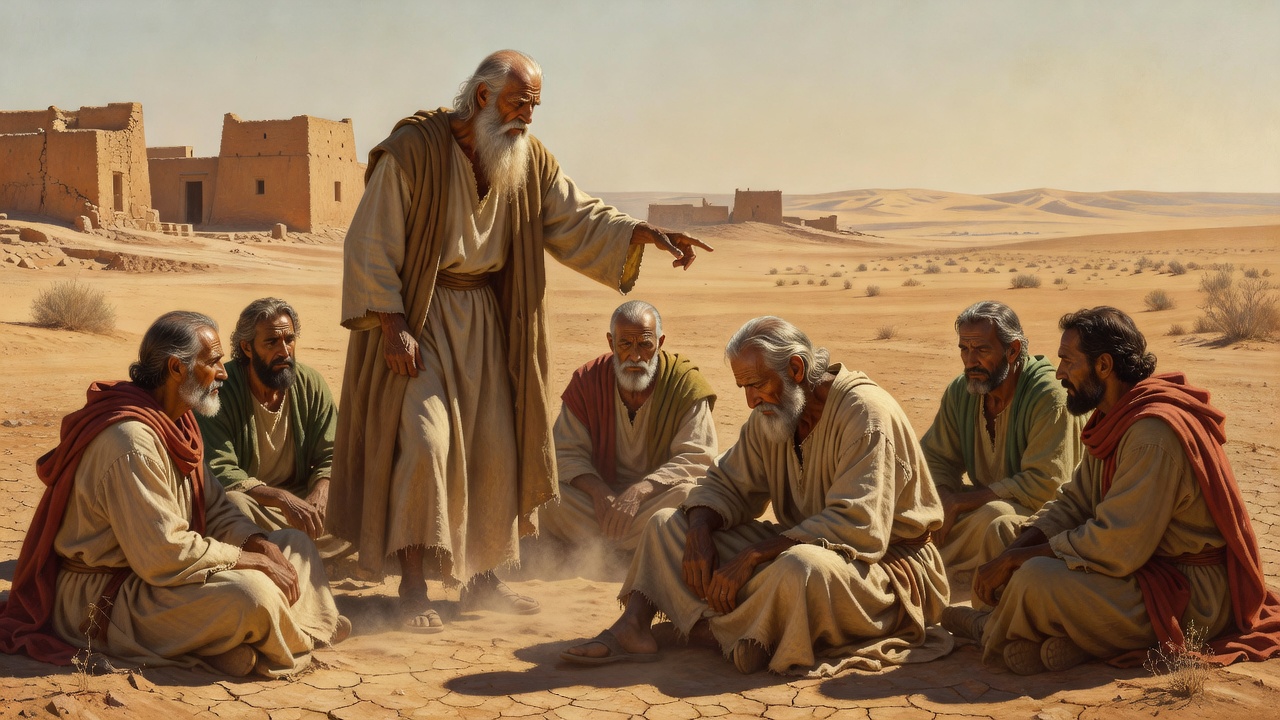
- To validate his view that the wicked inevitably suffer ruin, Eliphaz appeals to the authority of ancient, gray-haired sages and traditional lore handed down from a time before foreign influences entered the land.Sources: the Bible text itself · Eliphaz
Notes written with AI assistance from open sources (Theographic Bible Metadata, CC BY-SA 4.0; Easton’s Bible Dictionary, public domain) and reviewed before publishing.
Credits and license for this translation
George Noyes Bible
The Holy Bible, translated into English by George Noyes (1869)
Public Domain
Language: English
Dialect: archaic British
Translation by: George Noyes
2019-10-24
Section headings adapted from the Berean Standard Bible (public domain); they are not part of this translation’s text.
Source: http://ebible.org/engnoy/ · eBible.org