Jeremiah 24
George Noyes Bible · Tap a verse to see its cross-references.
The Good and Bad Figs
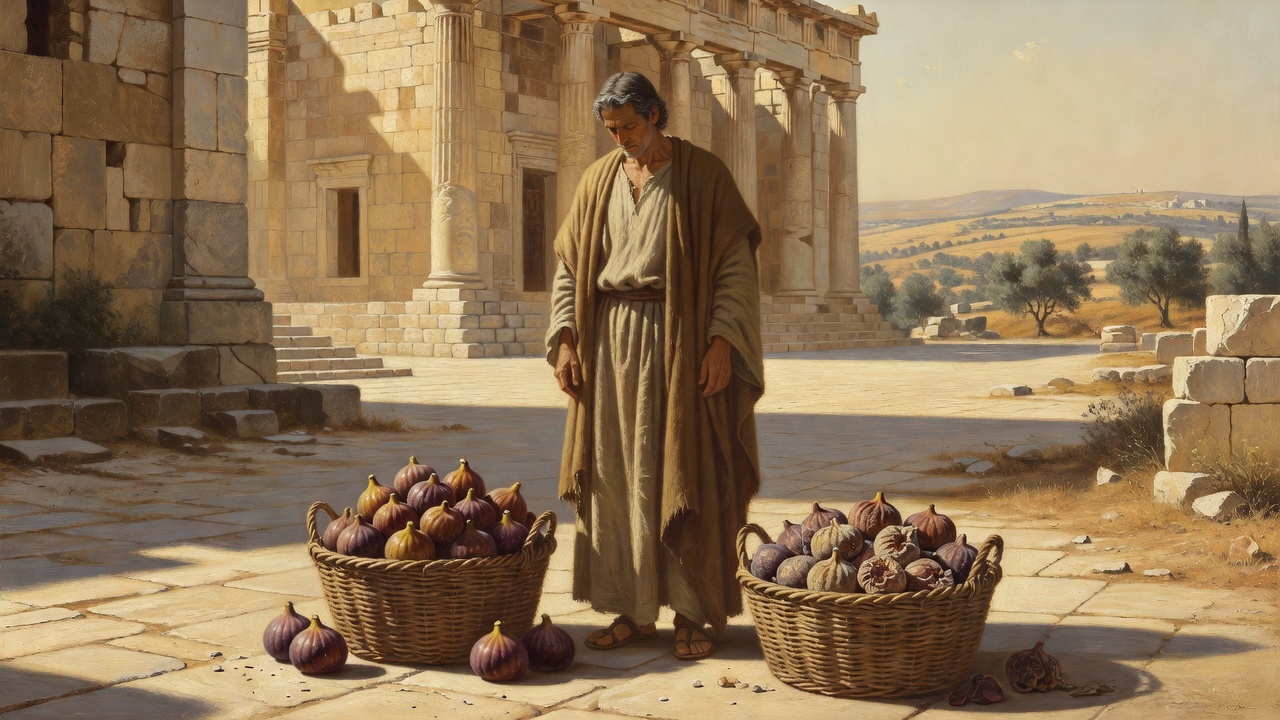
1Jehovah showed me this vision. Behold, two baskets of figs were set before the temple of Jehovah. This was after Nebuchadnezzar, king of Babylon, had carried away captive Jeconiah, the son of Jehoiakim, king of Judah, and the princes of Judah, and the artificers, and the smiths, from Jerusalem, and had led them to Babylon. 2One of the baskets contained very good figs, like those which are first ripe. The other contained very bad figs, so bad that they could not be eaten. 3And Jehovah said to me, What seest thou, Jeremiah? And I said: Figs; the good figs, exceedingly good; and the bad, exceedingly bad, so bad that they cannot be eaten. 4Then came the word of Jehovah to me, saying: 5Thus saith Jehovah, the God of Israel: As these good figs, so will I regard the captives of Judah, whom I have sent out of this place into the land of Chaldaea for their good; 6yea, I will set my eyes upon them for good, and I will bring them again to this land; and I will build them up, and not pull them down; and I will plant them, and not pluck them up. 7And I will give them a heart to know me, that I am Jehovah; and they shall be my people, and I will be their God; for they shall return to me with their whole heart. 8And as the bad figs, which are so bad that they cannot be eaten, saith Jehovah, so will I make Zedekiah, the king of Judah, and his princes, and the residue of Jerusalem, those that are left in this land, and those that dwell in the land of Egypt; 9and I will give them up to oppression and affliction in all the kingdoms of the earth; yea, to be a reproach and a proverb, a taunt and a curse, in all places whither I shall drive them. 10And I will send the sword, the famine, and the pestilence among them, till they be consumed from the land, which I gave to them and to their fathers.
Did you know?
The Two Baskets of Figs
- Jeremiah received this vision after King Nebuchadnezzar of Babylon deported King Jeconiah (also called Jehoiachin), along with the officials, craftsmen, and metalsmiths of Jerusalem. Nebuchadnezzar subsequently installed Zedekiah as king over the remaining population in Judah.Sources: the Bible text itself · Jehoiachin · Zedekiah · Nebuchadnezzar
- In the vision set before the temple, the basket of prime, early-ripening figs symbolizes the exiles carried off to Babylon. The Lord promises to preserve them, give them a heart to know him, and restore them to their land.Sources: the Bible text itself
- In contrast, the basket of rotten, inedible figs symbolizes King Zedekiah, his leaders, and the remnant staying in Judah or fleeing to Egypt. Instead of finding security, they are warned of disaster, famine, disease, and derision among the nations.Sources: the Bible text itself · Zedekiah · Egypt
Notes written with AI assistance from open sources (Theographic Bible Metadata, CC BY-SA 4.0; Easton’s Bible Dictionary, public domain) and reviewed before publishing.
Places in this chapter
- Babylon · 32.543, 44.422 · verse 1
- Jerusalem · 31.777, 35.234 · verses 1, 8
- Chaldea · 30.962, 46.104 · verse 5
- Egypt · 30.129, 31.308 · verse 8
Only places identified with high confidence are shown (90% or more according to the scholarly sources compiled by OpenBible). Period map: DARE (Digital Atlas of the Roman Empire), CC BY 4.0; modern map: © OpenStreetMap contributors; places: OpenBible.info (CC BY 4.0).
Credits and license for this translation
George Noyes Bible
The Holy Bible, translated into English by George Noyes (1869)
Public Domain
Language: English
Dialect: archaic British
Translation by: George Noyes
2019-10-24
Section headings adapted from the Berean Standard Bible (public domain); they are not part of this translation’s text.
Source: http://ebible.org/engnoy/ · eBible.org