Isaiah 47
George Noyes Bible · Tap a verse to see its cross-references.
The Humiliation of Babylon
1Come down, and sit in the dust, O virgin, daughter of Babylon! Sit on the ground without a throne, O daughter of the Chaldaeans! For thou shalt no longer be called the tender and delicate! 2Take the mill-stones and grind meal; Raise thy veil, lift up thy train; Make bare the leg, wade through the streams! 3Thy nakedness shall be uncovered, And thy shame shall be seen. I will take vengeance; I will make peace with none. 4Our Redeemer, Jehovah of hosts is his name, The Holy One of Israel. 5Sit thou in silence; go into darkness, O daughter of the Chaldaeans! For thou shalt no more be called the mistress of kingdoms. 6I was angry with my people; I profaned my inheritance, And gave them into thy hand; Thou didst show them no mercy; Even upon the aged didst thou lay a very grievous yoke. 7Thou saidst, “I shall be mistress forever”; So that thou didst not lay these things to thy heart, Nor consider what would be the end of them. 8But hear thou this, thou that art given to pleasure! That sittest in security, And sayest in thy heart, “I am, and there is none besides me; I shall not be a widow, Nor see myself childless!” 9Behold, both these things shall come upon thee suddenly, in one day, Loss of children, and widowhood; In full measure shall they come upon thee, In spite of thy many sorceries, And the great abundance of thy enchantments. 10Thou didst trust in thy wickedness, and saidst, “No one seeth me”; Thy wisdom and thy knowledge have led thee astray; Thou saidst in thy heart, “I am, and there is none besides me”; 11Therefore shall evil come upon thee, of which thou shalt not know the dawn; And mischief shall fall upon thee, which thou shalt not be able to expiate; Suddenly shall desolation come upon thee, when thou thinkest not of it. 12Persevere now in thy enchantments; In the multitude of thy sorceries, in which thou hast labored from thy youth; Perhaps thou mayst be profited by them! Perhaps thou mayst make thyself feared! 13Art thou wearied with thy many devices? Let them stand up, then, and save thee, The observers of the heavens, the star-gazers, They that prognosticate at every new moon The things that shall come upon thee! 14Behold, they shall be like stubble; the fire shall burn them up; They shall not deliver themselves from the power of the flame; Not a coal shall be left of them to warm one, Nor a spark of fire to sit by. 15Thus shall it be with them with whom thou hast labored; Thus with them with whom thou hast trafficked from thy youth; They shall go every one his own way; None shall help thee.
Did you know?
The Fall of Babylon
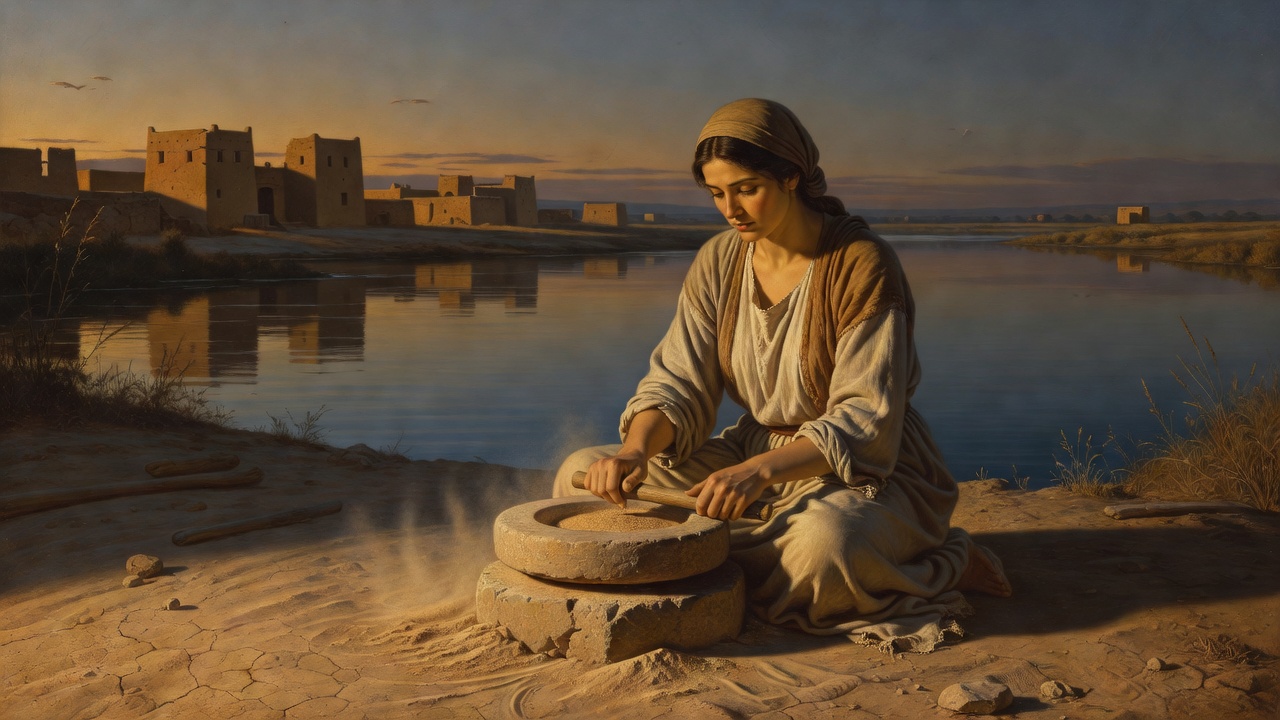
- Babylon is personified as a pampered queen and royal daughter who is abruptly humiliated. Instead of sitting securely on a throne in luxury, she is commanded to sit in the dust and perform the menial labor of an enslaved worker, grinding flour with millstones.Sources: the Bible text itself
- The chapter highlights Babylon's reliance on occult practices and stargazing. The prophet challenges the city's astrologers, sorcerers, and monthly omen-casters to step forward, declaring that their arts will be completely burned up like stubble and unable to prevent sudden ruin.Sources: the Bible text itself
- Babylon, situated along the Euphrates River in Chaldea, had been allowed to rule over God's people as an instrument of judgment. However, the text rebukes the empire for showing no mercy, noting that it placed heavy yokes even upon the elderly.Sources: Babylon · the Bible text itself
Notes written with AI assistance from open sources (Theographic Bible Metadata, CC BY-SA 4.0; Easton’s Bible Dictionary, public domain) and reviewed before publishing.
Places in this chapter
Only places identified with high confidence are shown (90% or more according to the scholarly sources compiled by OpenBible). Period map: DARE (Digital Atlas of the Roman Empire), CC BY 4.0; modern map: © OpenStreetMap contributors; places: OpenBible.info (CC BY 4.0).
Credits and license for this translation
George Noyes Bible
The Holy Bible, translated into English by George Noyes (1869)
Public Domain
Language: English
Dialect: archaic British
Translation by: George Noyes
2019-10-24
Section headings adapted from the Berean Standard Bible (public domain); they are not part of this translation’s text.
Source: http://ebible.org/engnoy/ · eBible.org