Ecclesiastes 5
George Noyes Bible · Tap a verse to see its cross-references.
Approaching God with Awe
1Look well to thy feet, when thou goest to the house of God, and draw nigh to hear, rather than to offer sacrifice as fools. For they consider not that they do evil. 2Be not hasty with thy mouth, and let not thy heart be swift to utter any thing before God. For God is in heaven, and thou upon earth. Therefore let thy words be few. 3For a dream cometh with much bustle, and a fool's voice with a multitude of words. 4When thou vowest a vow to God, delay not to pay it; for he hath no pleasure in fools. Pay that which thou hast vowed. 5Better is it that thou shouldst not vow than that thou shouldst vow and not pay. 6Suffer not thy mouth to bring punishment on thy flesh, and say not before the angel, “It was a mistake.” Wherefore should God be angry on account of thy voice, and destroy the work of thy hands? 7For in a multitude of dreams is a multitude of vanities; so also in a multitude of words; but fear thou God!
The Futility of Wealth
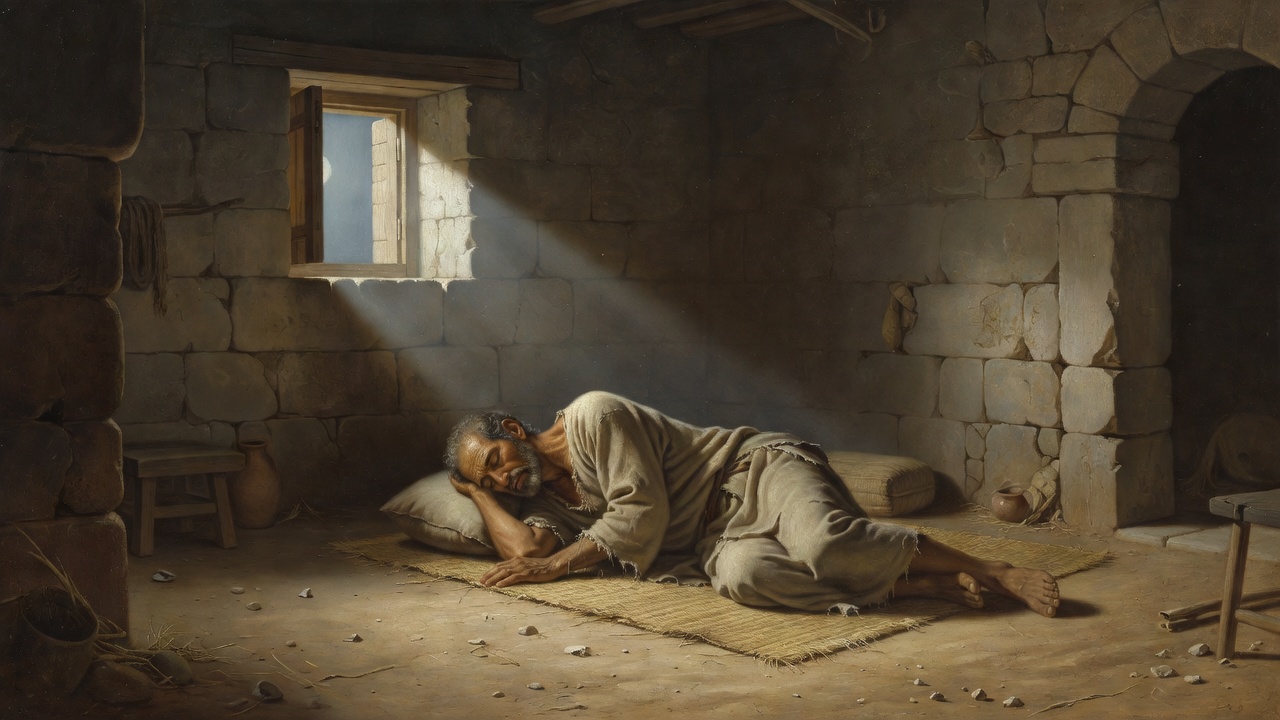
8If thou seest oppression of the poor, and justice and equity perverted in a province, be not alarmed at the matter. For over the high there is a higher, who watcheth, and there is one higher than they all. 9An advantage to a land in all respects is a king over cultivated ground. 10He that loveth silver shall not be satisfied with silver; and he that loveth riches shall have no profit from them. This also is vanity. 11When goods increase, they are increased that eat them; and what advantage hath the owner thereof, save the beholding of them with his eyes? 12Sweet is the sleep of a laboring man, whether he have eaten little or much; but the repletion of the rich will not suffer him to sleep. 13There is a sore evil which I have seen under the sun, — riches kept by the owner thereof to his hurt. 14For those riches perish by some calamity, and, if he have a son, there is nothing in his hand. 15As he came forth from his mother's womb naked, so shall he go away again, as he came, and shall take away nothing of his labor which he may carry in his hand. 16This is also a sore evil, that, in all points as he came, so shall he go. And what profit is there to him who toileth for wind? 17Also all his days he ate in darkness, and had much grief and anxiety and vexation. 18Behold, what I have seen is, that it is good and proper for one to eat and drink, and to enjoy the good of all his labor which he taketh under the sun all the days of his life, which God giveth him; for it is his portion. 19To whatever man also God hath given riches and wealth, and hath given him to enjoy them, and to take his portion, and to rejoice in his labor; this is the gift of God. 20For he will not much remember the days of his life; for God answereth him with the joy of his heart.
Did you know?
Reverence, Justice, and the Limits of Wealth
- The author cautions against hasty speech in worship, reminding worshippers that God is in heaven while mortals are on earth. Vows made to God were considered serious commitments; the text warns that delaying or failing to fulfill a vow is foolish, making it better not to make a vow at all.Sources: the Bible text itself
- When addressing injustice and the oppression of the poor within a province, the author points to layered government bureaucracy, where each official is watched by a higher authority. Despite this administrative hierarchy, all tiers, including the king, ultimately depend on the produce of the fields.Sources: the Bible text itself
- The chapter contrasts the restless sleeplessness of the wealthy with the sweet sleep of a common laborer, noting that the pursuit of riches brings no lasting satisfaction. True contentment comes when a person accepts their lot and enjoys food, drink, and honest labor as gifts from God.Sources: the Bible text itself
Notes written with AI assistance from open sources (Theographic Bible Metadata, CC BY-SA 4.0; Easton’s Bible Dictionary, public domain) and reviewed before publishing.
Credits and license for this translation
George Noyes Bible
The Holy Bible, translated into English by George Noyes (1869)
Public Domain
Language: English
Dialect: archaic British
Translation by: George Noyes
2019-10-24
Section headings adapted from the Berean Standard Bible (public domain); they are not part of this translation’s text.
Source: http://ebible.org/engnoy/ · eBible.org