Isaiah 5
Nyangumarta English Bible · Tap a verse to see its cross-references.
About this book
About Isaiah
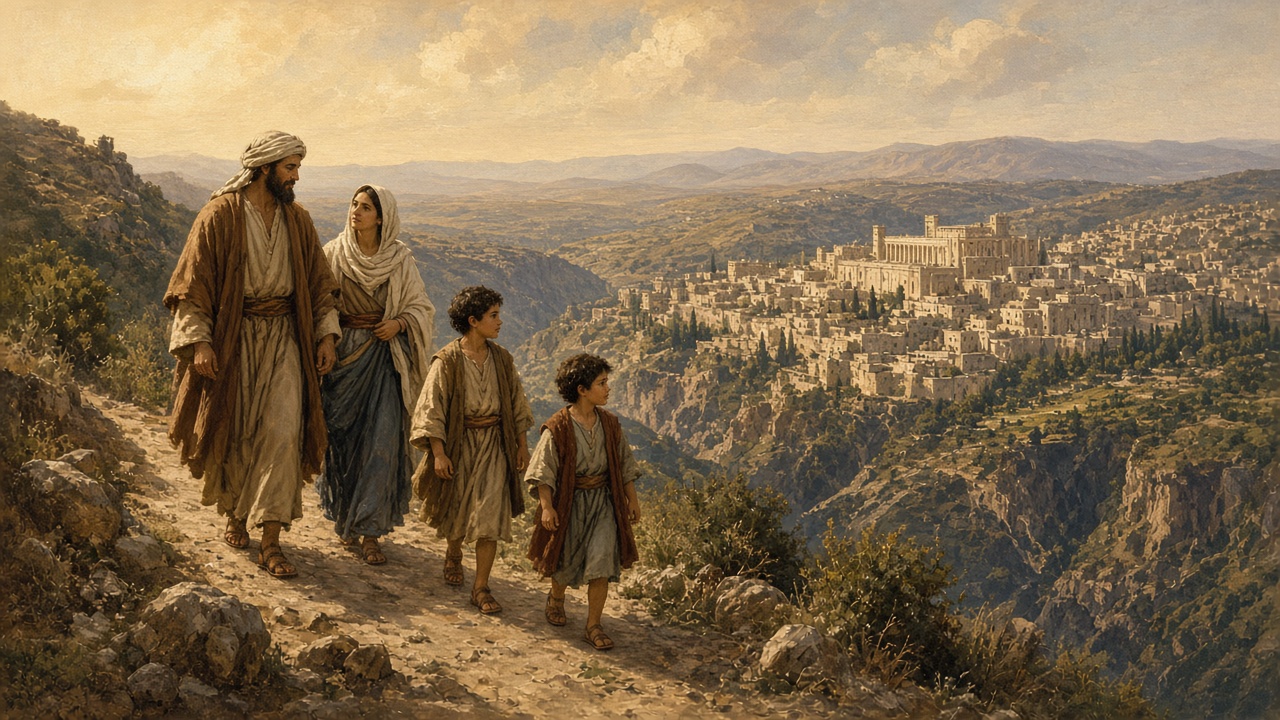
- Easton's Bible Dictionary (1897) attributes the book to Isaiah, son of Amoz, dating his ministry from 762 B.C., the fourth year before Uzziah's death, to 698 B.C., Hezekiah's last year, sixty-four years under Uzziah, Jotham, Ahaz, and Hezekiah, and says he may have outlived Hezekiah. Some critics, following a theory Easton traces to Koppe, assign chapters 40-66 to a later "deutero-Isaiah" near the end of the Babylonian captivity, and other passages to further unknown prophets; Easton notes that the Septuagint (about 250 B.C.) ascribes the whole book to Isaiah, and that the New Testament quotes disputed passages as his words.Sources: Easton: Isaiah, The Book of · Isaiah
- These prophecies were delivered during the reigns of kings of Judah, with Assyria the enemy in view in the earlier part of the book and Babylon in the later part. Isaiah ministered under Ahaz, who appealed to Tiglath-pileser of Assyria against Rezin, king of Damascus, and Pekah, king of Israel, and under Hezekiah, Ahaz's son. Easton's dictionary says Hezekiah reigned twenty-nine years (726-697 B.C.) and set himself to abolish idolatry in Judah; part of his reign is narrated in Isaiah 36-39.Sources: Easton: Isaiah, The Book of · Ahaz · Hezekiah
- Easton divides the book into three main parts: chapters 1-35, almost wholly prophetic, with Assyria as Israel's enemy and the Messiah presented as a mighty ruler and king; chapters 36-39, historical narratives from Hezekiah's time; and chapters 40-66, prophetic, with Babylon as the enemy and the Messiah described as a suffering victim, meek and lowly. He also groups the prophecies by reign: Uzziah (chapters 1-5), Jotham (6), Ahaz (7 through 14:28), the first half of Hezekiah's reign (14:28-35), and the second half (36-66).Sources: Easton: Isaiah, The Book of
- Isaiah's father, Amoz, was apparently a man of humble rank, and little is positively known of his life. His wife is called "the prophetess," either because she was endowed with the prophetic gift, like Deborah and Huldah, or simply because she was the prophet's wife, and he had two sons who bore symbolic names.Sources: Isaiah · Amoz
Notes written with AI assistance from open sources (Theographic Bible Metadata, CC BY-SA 4.0; Easton’s Bible Dictionary, public domain) and reviewed before publishing.
11You get up early in the morning to drink wine, then you keep on drinking during the night...You should be thinking about God, but you're not! You are ignorant of what he is doing. He says to you, “I will hit you hard, it's impossible for you to run away and hide.”
Did you know?
The Song of the Vineyard and the Six Woes
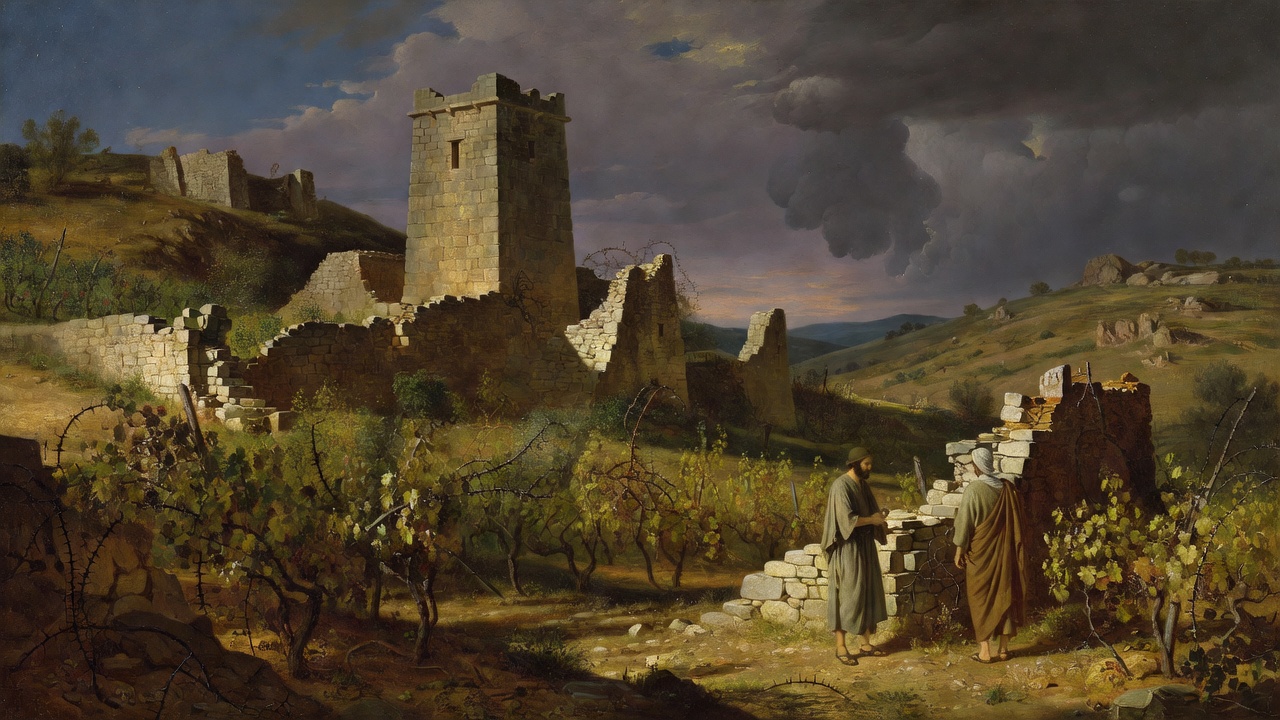
- The opening song in Isaiah 5 describes the elaborate labor of ancient Judean viticulture: clearing rocky hillsides of stones, building a protective stone watchtower, digging out a winepress in the bedrock, and planting prime vines surrounded by a protective hedge and wall. The poem turns into a legal parable where the vineyard represents the house of Israel and the people of Judah, from whom justice was expected instead of bloodshed.Sources: the Bible text itself
- The chapter delivers a series of six prophetic laments or woes, condemning specific social and moral abuses in Judah. These include wealthy landowners consolidating real estate by adding house to house and field to field, judges taking bribes to acquit the guilty while denying justice to the innocent, and leaders indulging in lavish feasting while ignoring divine instruction.Sources: the Bible text itself
- Isaiah's prophetic ministry in Jerusalem addressed the people of Judah over an extended period beginning in the mid-eighth century BC. The chapter concludes with a warning that the Lord would signal distant, disciplined foreign armies equipped with chariots, bows, and swift horses to execute judgment on the land.Sources: Jerusalem · Prophecies of Isaiah · the Bible text itself
Notes written with AI assistance from open sources (Theographic Bible Metadata, CC BY-SA 4.0; Easton’s Bible Dictionary, public domain) and reviewed before publishing.
Places in this chapter
Only places identified with high confidence are shown (90% or more according to the scholarly sources compiled by OpenBible). Period map: DARE (Digital Atlas of the Roman Empire), CC BY 4.0; modern map: © OpenStreetMap contributors; places: OpenBible.info (CC BY 4.0).
Credits and license for this translation
Nyangumarta English Bible
Portions of the Holy Bible in English, translated to be a companion to the Nyangumarta Bible
copyright © 1980-2010 Wycliffe Bible Translators, Inc.
Language: English
Bible translation copyright © 1980-2010 Wycliffe Bible Translators, Inc.
Reader Series (book XXC) copyright © 1996 Bible Society Australia. Bible overview (XXA) copyright © 1996 Mission Publications of Australia (PO Box 21, Lawson NSW 2783)
This translation is made available to you under the terms of the
Creative Commons Attribution-Noncommercial-No Derivatives license 4.0.
You may share and redistribute this Bible translation or extracts from it in any format, provided that:
You include the above copyright and source information.
You do not sell this work for a profit.
You do not change any of the words or punctuation of the Scriptures.
Pictures included with Scriptures and other documents on this site are licensed just for use with those Scriptures and documents.
For other uses, please contact the respective copyright owners.
2026-01-06
Section headings adapted from the Berean Standard Bible (public domain); they are not part of this translation’s text.
Source: http://ebible.org/engnna/ · eBible.org