Ephesians 5
Nyangumarta English Bible · Tap a verse to see its cross-references.
About this book
About Ephesians
- Easton's Bible Dictionary (1897) presents the Epistle to the Ephesians as written by Paul at Rome, about the same time as the letter to the Colossians, which it resembles in many points. Easton holds that it was written during Paul's first imprisonment, citing Ephesians 3:1, 4:1, and 6:20, and probably soon after Paul arrived there.Sources: Easton: Ephesians, Epistle to
- Ephesus was the capital of proconsular Asia, the western part of Asia Minor. It was colonized principally from Athens, and in Roman times it bore the title of the first and greatest metropolis of Asia. The city was distinguished for the Temple of Diana, her chief shrine, and for a theatre open to the sky, described as the largest in the world and able to hold fifty thousand spectators.Sources: Ephesus
- Easton recounts Paul's first, hurried visit to Ephesus, lasting three months, after which Apollos, Aquila, and Priscilla carried the work forward. On a second visit, early the following year, he remained three years, because he found the city to be the key to the western provinces of Asia Minor; from there, Easton says, the gospel spread almost throughout all Asia despite opposition and persecution. On his last journey toward Jerusalem he landed at Miletus, summoned the elders of the church from Ephesus, gave them a farewell charge, and expected not to see them again.Sources: Easton: Ephesians, Epistle to
- Easton presents the letter as arising not from any special circumstances, but from Paul's love for the church and his desire that they be fully instructed in the profound doctrines of the gospel. Unlike Colossians, which he calls mainly polemical and aimed at certain theosophic errors, he outlines a salutation, the blessings the gospel reveals and a prayer, the changed position of Gentile believers and Paul's calling to minister among the Gentiles, unity undisturbed by differing gifts, instructions for ordinary life, and a close with the image of spiritual warfare, the mission of Tychicus, and a farewell blessing.Sources: Easton: Ephesians, Epistle to
- Tychicus, an Asiatic Christian whom the letter calls a faithful minister in the Lord, accompanied Paul, together with Trophimus, on part of the journey from Macedonia to Jerusalem, and was later with Paul at Rome. From Rome Paul sent him to Ephesus, probably to build up and encourage the church, and Easton includes that mission in the letter's closing section.Sources: Tychicus · Easton: Ephesians, Epistle to
Notes written with AI assistance from open sources (Theographic Bible Metadata, CC BY-SA 4.0; Easton’s Bible Dictionary, public domain) and reviewed before publishing.
18Don't get drunk with wine, it will make you silly, you will do bad things without thinking. Better, give yourselves to the Holy Spirit, so that he can steer you in a proper way.
28Men truly look after their bodies. Truly in that way they should look after their wives. Whoever looks after his wife is looking after himself.
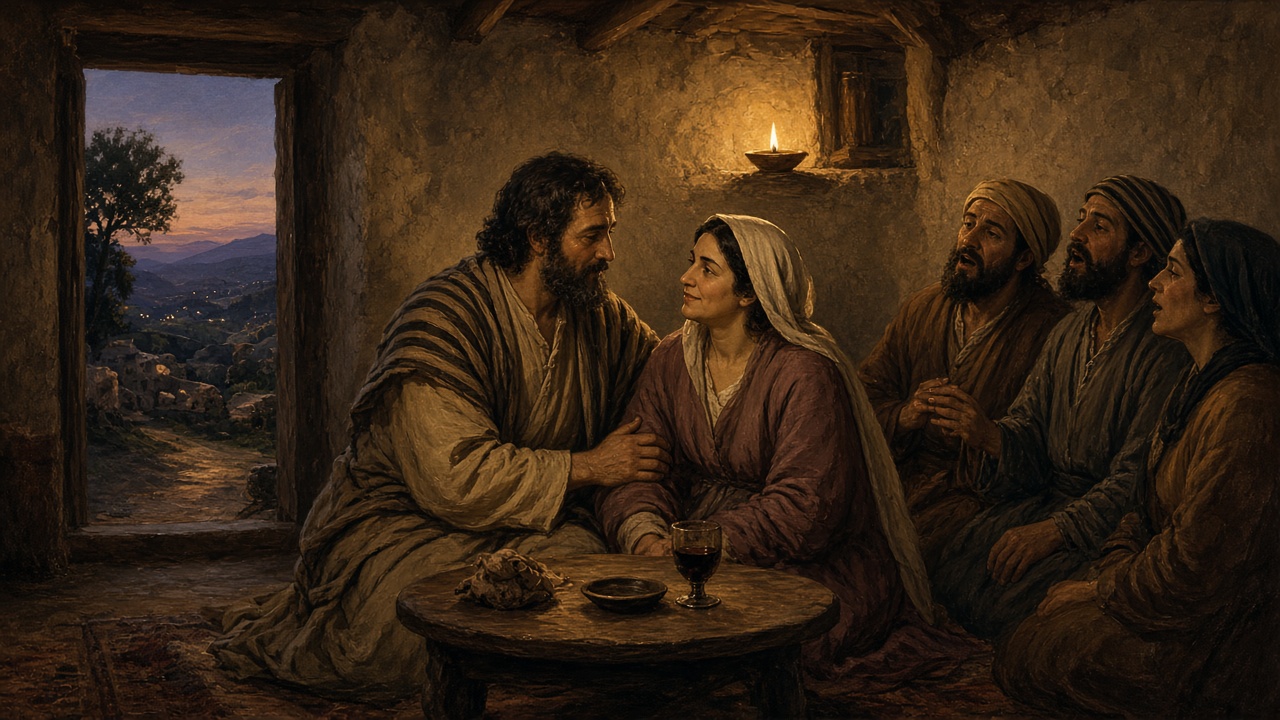
Did you know?
Love, light, and the household
- Ephesians 5 opens by calling readers to imitate God as beloved children and to walk in love, just as Christ loved them and gave himself up for them as a fragrant sacrificial offering to God.Sources: the Bible text itself
- The chapter says its readers were once darkness but are now light in the Lord, and that the fruit of the light is all goodness, righteousness, and truth. It also cites a saying that calls the sleeper to wake and rise from the dead, promising that Christ will shine on that person.Sources: the Bible text itself
- A call to submit to one another out of reverence for Christ introduces the instructions for wives and husbands. Husbands are told to love their wives as Christ loved the church and gave himself up for her, and the chapter calls the union of husband and wife a profound mystery concerning Christ and the church.Sources: the Bible text itself
Notes written with AI assistance from open sources (Theographic Bible Metadata, CC BY-SA 4.0; Easton’s Bible Dictionary, public domain) and reviewed before publishing.
Credits and license for this translation
Nyangumarta English Bible
Portions of the Holy Bible in English, translated to be a companion to the Nyangumarta Bible
copyright © 1980-2010 Wycliffe Bible Translators, Inc.
Language: English
Bible translation copyright © 1980-2010 Wycliffe Bible Translators, Inc.
Reader Series (book XXC) copyright © 1996 Bible Society Australia. Bible overview (XXA) copyright © 1996 Mission Publications of Australia (PO Box 21, Lawson NSW 2783)
This translation is made available to you under the terms of the
Creative Commons Attribution-Noncommercial-No Derivatives license 4.0.
You may share and redistribute this Bible translation or extracts from it in any format, provided that:
You include the above copyright and source information.
You do not sell this work for a profit.
You do not change any of the words or punctuation of the Scriptures.
Pictures included with Scriptures and other documents on this site are licensed just for use with those Scriptures and documents.
For other uses, please contact the respective copyright owners.
2026-01-06
Section headings adapted from the Berean Standard Bible (public domain); they are not part of this translation’s text.
Source: http://ebible.org/engnna/ · eBible.org