Leviticus 25
NET Bible · Tap a verse to see its cross-references.
1The Lord spoke to Moses at Mount Sinai: 2“Speak to the Israelites and tell them, ‘When you enter the land that I am giving you, the land must observe a Sabbath to the Lord. 3Six years you may sow your field, and six years you may prune your vineyard and gather the produce, 4but in the seventh year the land must have a Sabbath of complete rest – a Sabbath to the Lord. You must not sow your field or prune your vineyard. 5You must not gather in the aftergrowth of your harvest and you must not pick the grapes of your unpruned vines; the land must have a year of complete rest. 6You may have the Sabbath produce of the land to eat – you, your male servant, your female servant, your hired worker, the resident foreigner who stays with you, 7your cattle, and the wild animals that are in your land – all its produce will be for you to eat.
Regulations for the Jubilee Year of Release
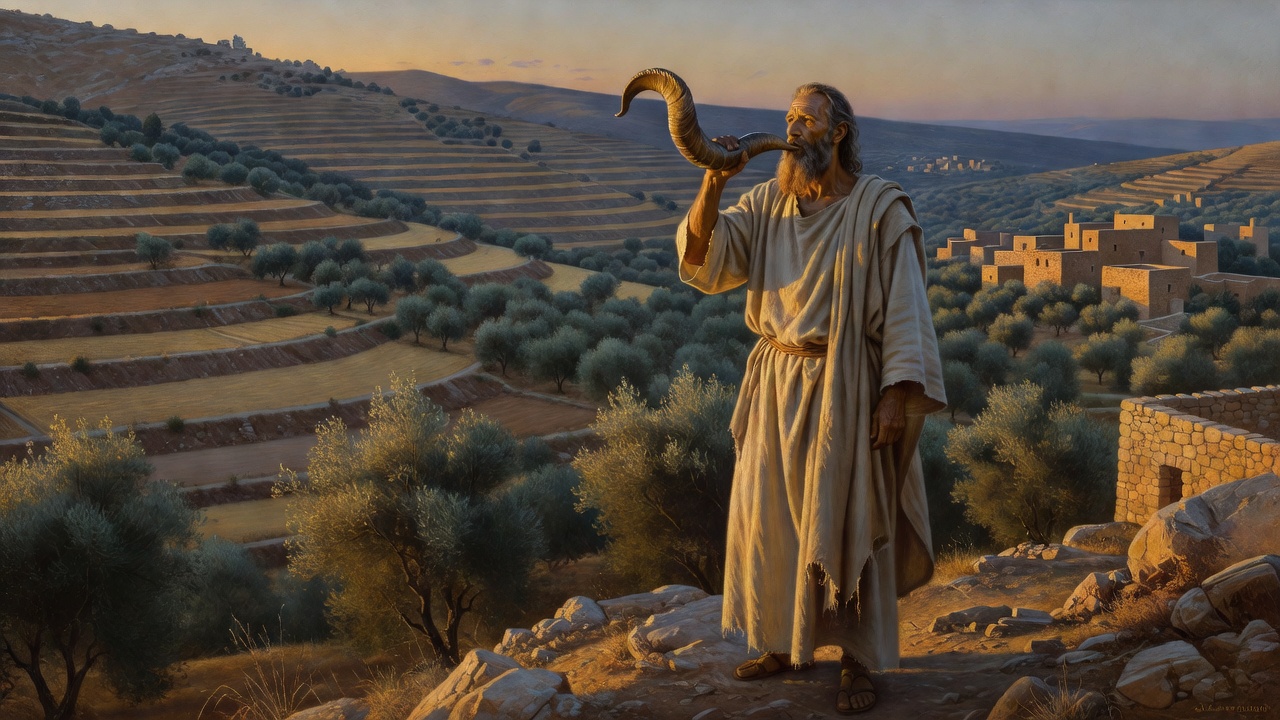
8“‘You must count off seven weeks of years, seven times seven years, and the days of the seven weeks of years will amount to forty-nine years. 9You must sound loud horn blasts – in the seventh month, on the tenth day of the month, on the Day of Atonement – you must sound the horn in your entire land. 10So you must consecrate the fiftieth year, and you must proclaim a release in the land for all its inhabitants. That year will be your jubilee; each one of you must return to his property and each one of you must return to his clan. 11That fiftieth year will be your jubilee; you must not sow the land, harvest its aftergrowth, or pick the grapes of its unpruned vines. 12Because that year is a jubilee, it will be holy to you – you may eat its produce from the field.
Release of Landed Property
13“‘In this year of jubilee you must each return to your property. 14If you make a sale to your fellow citizen or buy from your fellow citizen, no one is to wrong his brother. 15You may buy it from your fellow citizen according to the number of years since the last jubilee; he may sell it to you according to the years of produce that are left. 16The more years there are, the more you may make its purchase price, and the fewer years there are, the less you must make its purchase price, because he is only selling to you a number of years of produce. 17No one is to oppress his fellow citizen, but you must fear your God, because I am the Lord your God. 18You must obey my statutes and my regulations; you must be sure to keep them so that you may live securely in the land.
19“‘The land will give its fruit and you may eat until you are satisfied, and you may live securely in the land. 20If you say, ‘What will we eat in the seventh year if we do not sow and gather our produce?’ 21I will command my blessing for you in the sixth year so that it may yield the produce for three years, 22and you may sow the eighth year and eat from that sixth year’s produce – old produce. Until you bring in the ninth year’s produce, you may eat old produce. 23The land must not be sold without reclaim because the land belongs to me, for you are foreigners and residents with me. 24In all your landed property you must provide for the right of redemption of the land.
25“‘If your brother becomes impoverished and sells some of his property, his near redeemer is to come to you and redeem what his brother sold. 26If a man has no redeemer, but he prospers and gains enough for its redemption, 27he is to calculate the value of the years it was sold, refund the balance to the man to whom he had sold it, and return to his property. 28If he has not prospered enough to refund a balance to him, then what he sold will belong to the one who bought it until the jubilee year, but it must revert in the jubilee and the original owner may return to his property.
Release of Houses
29“‘If a man sells a residential house in a walled city, its right of redemption must extend until one full year from its sale; its right of redemption must extend to a full calendar year. 30If it is not redeemed before the full calendar year is ended, the house in the walled city will belong without reclaim to the one who bought it throughout his generations; it will not revert in the jubilee. 31The houses of villages, however, which have no wall surrounding them must be considered as the field of the land; they will have the right of redemption and must revert in the jubilee. 32As for the cities of the Levites, the houses in the cities which they possess, the Levites must have a perpetual right of redemption. 33Whatever someone among the Levites might redeem – the sale of a house which is his property in a city – must revert in the jubilee, because the houses of the cities of the Levites are their property in the midst of the Israelites. 34Moreover, the open field areas of their cities must not be sold, because that is their perpetual possession.
Debt and Slave Regulations
35“‘If your brother becomes impoverished and is indebted to you, you must support him; he must live with you like a foreign resident. 36Do not take interest or profit from him, but you must fear your God and your brother must live with you. 37You must not lend him your money at interest and you must not sell him food for profit. 38I am the Lord your God who brought you out from the land of Egypt to give you the land of Canaan – to be your God.
39“‘If your brother becomes impoverished with regard to you so that he sells himself to you, you must not subject him to slave service. 40He must be with you as a hired worker, as a resident foreigner; he must serve with you until the year of jubilee, 41but then he may go free, he and his children with him, and may return to his family and to the property of his ancestors. 42Since they are my servants whom I brought out from the land of Egypt, they must not be sold in a slave sale. 43You must not rule over him harshly, but you must fear your God.
44“‘As for your male and female slaves who may belong to you – you may buy male and female slaves from the nations all around you. 45Also you may buy slaves from the children of the foreigners who reside with you, and from their families that are with you, whom they have fathered in your land, they may become your property. 46You may give them as inheritance to your children after you to possess as property. You may enslave them perpetually. However, as for your brothers the Israelites, no man may rule over his brother harshly.
47“‘If a resident foreigner who is with you prospers and your brother becomes impoverished with regard to him so that he sells himself to a resident foreigner who is with you or to a member of a foreigner’s family, 48after he has sold himself he retains a right of redemption. One of his brothers may redeem him, 49or his uncle or his cousin may redeem him, or anyone of the rest of his blood relatives – his family – may redeem him, or if he prospers he may redeem himself. 50He must calculate with the one who bought him the number of years from the year he sold himself to him until the jubilee year, and the cost of his sale must correspond to the number of years, according to the rate of wages a hired worker would have earned while with him. 51If there are still many years, in keeping with them he must refund most of the cost of his purchase for his redemption, 52but if only a few years remain until the jubilee, he must calculate for himself in keeping with the remaining years and refund it for his redemption. 53He must be with the one who bought him like a yearly hired worker. The one who bought him must not rule over him harshly in your sight. 54If, however, he is not redeemed in these ways, he must go free in the jubilee year, he and his children with him, 55because the Israelites are my own servants; they are my servants whom I brought out from the land of Egypt. I am the Lord your God.
Did you know?
The Sabbath Year and the Year of Jubilee
- The law given at Mount Sinai established a seven-year agricultural cycle where the land lay fallow every seventh year, followed by a fiftieth Year of Jubilee after seven cycles of seven years. Commencing on the Day of Atonement with the blowing of a horn, the Jubilee proclaimed liberty, allowed the land to rest, and returned ancestral land to its original families.Sources: the Bible text itself · Mount Sinai
- Land could not be sold permanently because the Israelites were viewed as tenants and resident foreigners on land that belonged to God. Consequently, real estate transactions functioned as leases, with purchase prices calculated according to the number of harvests remaining until the next Jubilee.Sources: the Bible text itself
- The chapter includes protections for impoverished Israelites, forbidding the charging of interest on loans and prohibiting fellow Israelites from being held in permanent bondage. Because God had delivered them out of Egypt, any Israelite forced by debt into servitude was to be treated as a hired worker and released in the Jubilee.Sources: the Bible text itself · Egypt
Notes written with AI assistance from open sources (Theographic Bible Metadata, CC BY-SA 4.0; Easton’s Bible Dictionary, public domain) and reviewed before publishing.
Places in this chapter
Only places identified with high confidence are shown (90% or more according to the scholarly sources compiled by OpenBible). Period map: DARE (Digital Atlas of the Roman Empire), CC BY 4.0; modern map: © OpenStreetMap contributors; places: OpenBible.info (CC BY 4.0).
Credits and license for this translation
NET Bible
NET Bible®, New English Translation (NET)
copyright © 1996-2016 Biblical Studies Press, L. L. C.
Please see https://netbible.com/copyright/ for full NET Bible copyright and permissions information. You can also read the NET Bible at http://NETBible.org .
Language: English
Dialect (if applicable): American
Language in English: English
Translation by:
Please see https://netbible.com/copyright/ for full NET Bible copyright and permissions information. You can also read the NET Bible at http://NETBible.org .
The NET Bible (New English Translation) is a completely new translation of the Bible with 58,506 translators’ notes ! It was completed by more than 25 scholars – experts in the original biblical languages – who worked directly from the best currently available Hebrew, Aramaic, and Greek texts. Turn the pages and see the breadth of the translators’ notes, documenting their decisions and choices as they worked.
The translators’ notes make the original languages far more accessible, allowing you to look over the translator’s shoulder at the very process of translation. This level of documentation is a first for a Bible translation, making transparent the textual basis and the rationale for key renderings (including major interpretive options and alternative translations).
This unparalleled level of detail helps connect people to the Bible in the original languages in a way never before possible without years of study of Hebrew, Aramaic, and Greek. It unlocks the riches of the Bible’s truth from entirely new perspectives.
A donation is appreciated. Donate at Bible.org/donations_form so we can continue to provide our material for free for our 16,000+ articles on Bible.org and our world class Bible Study tool at lumina.bible.org .
2026-10-02
Source: http://ebible.org/engnet/ · eBible.org