Jeremiah 47
NET Bible · Tap a verse to see its cross-references.
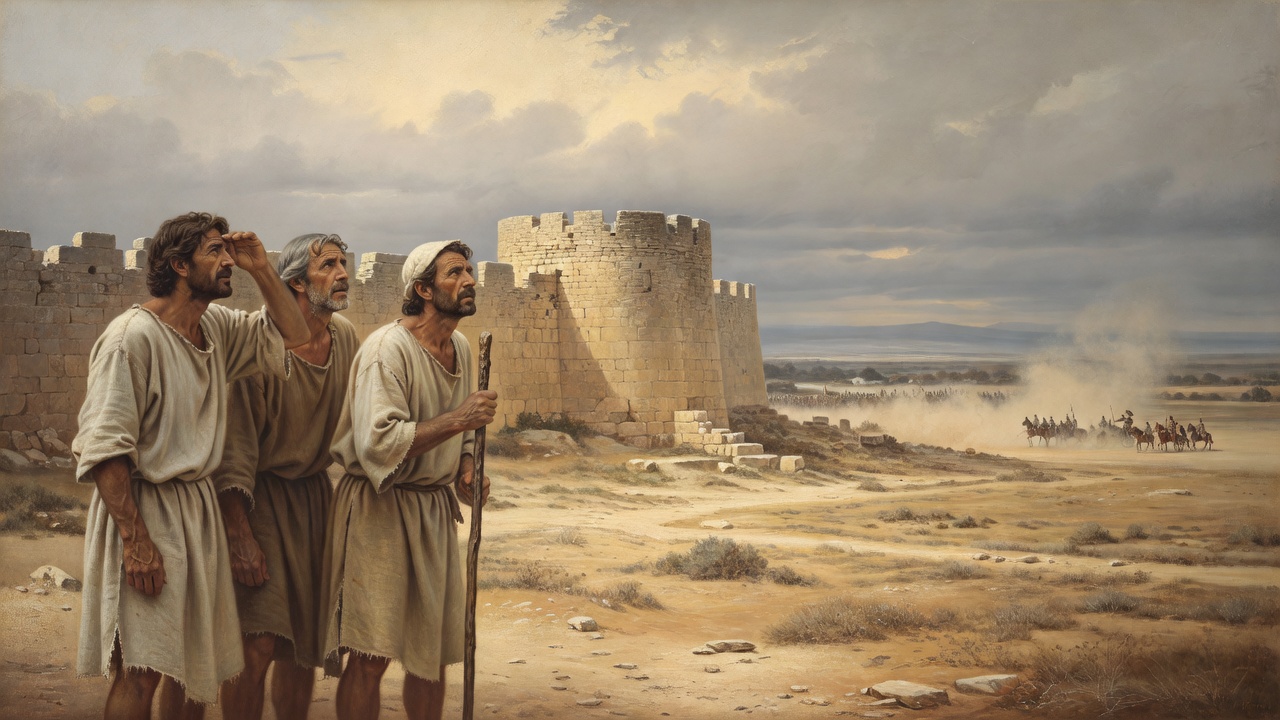
Judgment on the Philistines
1The Lord spoke to the prophet Jeremiah about the Philistines before Pharaoh attacked Gaza.
2“Look! Enemies are gathering in the north like water rising in a river.
They will be like an overflowing stream.
They will overwhelm the whole country and everything in it like a flood.
They will overwhelm the cities and their inhabitants.
People will cry out in alarm.
Everyone living in the country will cry out in pain.
3Fathers will hear the hoofbeats of the enemies’ horses,
the clatter of their chariots and the rumbling of their wheels.
They will not turn back to save their children
because they will be paralyzed with fear.
4For the time has come
to destroy all the Philistines.
The time has come to destroy all the help
that remains for Tyre
For I, the Lord, will destroy the Philistines,
that remnant that came from the island of Crete.
5The people of Gaza will shave their heads in mourning.
The people of Ashkelon will be struck dumb.
How long will you gash yourselves to show your sorrow,
you who remain of Philistia’s power?
6How long will you cry out, ‘Oh, sword of the Lord,
how long will it be before you stop killing?
Go back into your sheath!
Stay there and rest!’
7But how can it rest
when I, the Lord, have given it orders?
I have ordered it to attack
the people of Ashkelon and the seacoast.
Did you know?
Judgment on the Philistines
- Jeremiah refers to the Philistines as the remnant from the coasts of Caphtor. Biblical traditions identify Caphtor as the place of origin of the Philistines, a location widely associated by scholars with Crete or parts of the eastern Mediterranean coast.Sources: the Bible text itself · Caphtor
- The chapter directs its warnings against Gaza and Ashkelon, two of the five prominent Philistine cities along the Mediterranean coast. Both were ancient centers known for their strategic position and trade links connecting Egypt and the surrounding regions.Sources: the Bible text itself · Gaza · Ashkelon
- The prophecy notes that the coming destruction would cut off every remaining ally from Tyre and Sidon. These two major Phoenician ports to the north were key maritime centers whose interests were closely intertwined with the coastal region.Sources: the Bible text itself · Tyre · Sidon
Notes written with AI assistance from open sources (Theographic Bible Metadata, CC BY-SA 4.0; Easton’s Bible Dictionary, public domain) and reviewed before publishing.
Places in this chapter
- Gaza · Today: Tell Harube · 31.504, 34.464 · verses 1, 5
- Sidon · Today: Sandikli archaeological site in Sidon · 33.561, 35.372 · verse 4
- Tyre · 33.271, 35.196 · verse 4
- Ashkelon · Today: Tel Ashkelon · 31.664, 34.546 · verses 5, 7
- Great Sea · Today: Mediterranean Sea · 31.805, 34.170 · verse 5
- Philistia · 31.664, 34.546 · verse 5
Only places identified with high confidence are shown (90% or more according to the scholarly sources compiled by OpenBible). Period map: DARE (Digital Atlas of the Roman Empire), CC BY 4.0; modern map: © OpenStreetMap contributors; places: OpenBible.info (CC BY 4.0).
Credits and license for this translation
NET Bible
NET Bible®, New English Translation (NET)
copyright © 1996-2016 Biblical Studies Press, L. L. C.
Please see https://netbible.com/copyright/ for full NET Bible copyright and permissions information. You can also read the NET Bible at http://NETBible.org .
Language: English
Dialect (if applicable): American
Language in English: English
Translation by:
Please see https://netbible.com/copyright/ for full NET Bible copyright and permissions information. You can also read the NET Bible at http://NETBible.org .
The NET Bible (New English Translation) is a completely new translation of the Bible with 58,506 translators’ notes ! It was completed by more than 25 scholars – experts in the original biblical languages – who worked directly from the best currently available Hebrew, Aramaic, and Greek texts. Turn the pages and see the breadth of the translators’ notes, documenting their decisions and choices as they worked.
The translators’ notes make the original languages far more accessible, allowing you to look over the translator’s shoulder at the very process of translation. This level of documentation is a first for a Bible translation, making transparent the textual basis and the rationale for key renderings (including major interpretive options and alternative translations).
This unparalleled level of detail helps connect people to the Bible in the original languages in a way never before possible without years of study of Hebrew, Aramaic, and Greek. It unlocks the riches of the Bible’s truth from entirely new perspectives.
A donation is appreciated. Donate at Bible.org/donations_form so we can continue to provide our material for free for our 16,000+ articles on Bible.org and our world class Bible Study tool at lumina.bible.org .
2026-10-02
Section headings adapted from the Berean Standard Bible (public domain); they are not part of this translation’s text.
Source: http://ebible.org/engnet/ · eBible.org