Isaiah 37
NET Bible · Tap a verse to see its cross-references.
Isaiah’s Message of Deliverance
1When King Hezekiah heard this, he tore his clothes, put on sackcloth, and went to the Lord’s temple. 2Eliakim the palace supervisor, Shebna the scribe, and the leading priests, clothed in sackcloth, sent this message to the prophet Isaiah son of Amoz: 3“This is what Hezekiah says: ‘This is a day of distress, insults, and humiliation, as when a baby is ready to leave the birth canal, but the mother lacks the strength to push it through. 4Perhaps the Lord your God will hear all these things the chief adviser has spoken on behalf of his master, the king of Assyria, who sent him to taunt the living God. When the Lord your God hears, perhaps he will punish him for the things he has said. So pray for this remnant that remains.’”
5When King Hezekiah’s servants came to Isaiah, 6Isaiah said to them, “Tell your master this: ‘This is what the Lord says: “Don’t be afraid because of the things you have heard – these insults the king of Assyria’s servants have hurled against me. 7Look, I will take control of his mind; he will receive a report and return to his own land. I will cut him down with a sword in his own land.”’”
Sennacherib’s Blasphemous Letter
8When the chief adviser heard the king of Assyria had departed from Lachish, he left and went to Libnah, where the king was campaigning. 9The king heard that King Tirhakah of Ethiopia was marching out to fight him. He again sent messengers to Hezekiah, ordering them: 10“Tell King Hezekiah of Judah this: ‘Don’t let your God in whom you trust mislead you when he says, “Jerusalem will not be handed over to the king of Assyria.” 11Certainly you have heard how the kings of Assyria have annihilated all lands. Do you really think you will be rescued? 12Were the nations whom my predecessors destroyed – the nations of Gozan, Haran, Rezeph, and the people of Eden in Telassar – rescued by their gods? 13Where are the king of Hamath, the king of Arpad, and the kings of Lair, Sepharvaim, Hena, and Ivvah?’”
Hezekiah’s Prayer
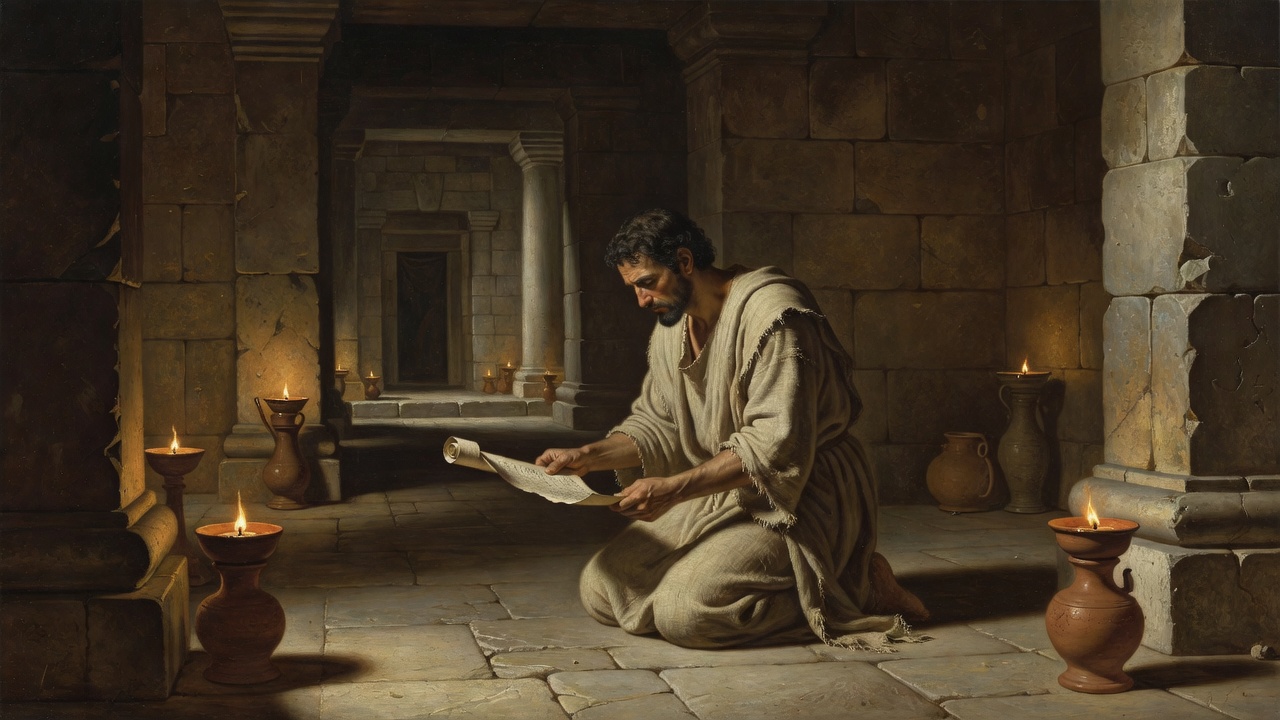
14Hezekiah took the letter from the messengers and read it. Then Hezekiah went up to the Lord’s temple and spread it out before the Lord. 15Hezekiah prayed before the Lord: 16“O Lord who commands armies, O God of Israel, who is enthroned on the cherubim! You alone are God over all the kingdoms of the earth. You made the sky and the earth. 17Pay attention, Lord, and hear! Open your eyes, Lord, and observe! Listen to this entire message Sennacherib sent and how he taunts the living God! 18It is true, Lord, that the kings of Assyria have destroyed all the nations and their lands. 19They have burned the gods of the nations, for they are not really gods, but only the product of human hands manufactured from wood and stone. That is why the Assyrians could destroy them. 20Now, O Lord our God, rescue us from his power, so all the kingdoms of the earth may know that you alone are the Lord.”
Sennacherib’s Fall Prophesied
21Isaiah son of Amoz sent this message to Hezekiah: “This is what the Lord God of Israel says: ‘Because you prayed to me concerning King Sennacherib of Assyria, 22this is what the Lord says about him:
“The virgin daughter Zion
despises you – she makes fun of you;
daughter Jerusalem
shakes her head after you.
23Whom have you taunted and hurled insults at?
At whom have you shouted
and looked so arrogantly?
At the Holy One of Israel!
24Through your messengers you taunted the sovereign master,
‘With my many chariots I climbed up
the high mountains,
the slopes of Lebanon.
I cut down its tall cedars
and its best evergreens.
I invaded its most remote regions,
its thickest woods.
25I dug wells
and drank water.
With the soles of my feet I dried up
all the rivers of Egypt.’
Certainly you must have heard!
Long ago I worked it out,
in ancient times I planned it,
and now I am bringing it to pass.
The plan is this:
Fortified cities will crash
into heaps of ruins.
27Their residents are powerless;
they are terrified and ashamed.
They are as short-lived as plants in the field
or green vegetation.
They are as short-lived as grass on the rooftops
when it is scorched by the east wind.
28I know where you live
and everything you do
and how you rage against me.
29Because you rage against me
and the uproar you create has reached my ears,
I will put my hook in your nose,
and my bridle between your lips,
and I will lead you back
the way you came.”
“This will be your reminder that I have spoken the truth: This year you will eat what grows wild, and next year what grows on its own. But the year after that you will plant seed and harvest crops; you will plant vines and consume their produce. 31Those who remain in Judah will take root in the ground and bear fruit.
32“For a remnant will leave Jerusalem;
survivors will come out of Mount Zion.
The intense devotion of the Lord who commands armies will accomplish this.
33So this is what the Lord says about the king of Assyria:
‘He will not enter this city,
nor will he shoot an arrow here.
He will not attack it with his shielded warriors,
nor will he build siege works against it.
34He will go back the way he came –
he will not enter this city,’ says the Lord.
35I will shield this city and rescue it for the sake of my reputation and because of my promise to David my servant.”’”
Jerusalem Delivered from the Assyrians
36The Lord’s messenger went out and killed 185,000 troops in the Assyrian camp. When they got up early the next morning, there were all the corpses! 37So King Sennacherib of Assyria broke camp and went on his way. He went home and stayed in Nineveh. 38One day, as he was worshiping in the temple of his god Nisroch, his sons Adrammelech and Sharezer struck him down with the sword. They ran away to the land of Ararat; his son Esarhaddon replaced him as king.
Did you know?
Hezekiah's Prayer and the Deliverance of Jerusalem
- When King Hezekiah received the threatening letter from the Assyrian king Sennacherib, he went up to the temple in Jerusalem and spread the document out before God in prayer. He emphasized that the deities of other conquered nations had fallen because they were merely human handiwork made of wood and stone, unlike the living God.Sources: the Bible text itself · Hezekiah
- The chapter mentions Tirhakah, king of Cush, who advanced to fight against Sennacherib. Cush and Egypt were unified under Ethiopian rulers during this period, presenting a substantial southern military power that contested Assyrian expansion.Sources: Tirhakah · Cush · the Bible text itself
- After the disaster that decimated his army outside Jerusalem, Sennacherib withdrew to his capital at Nineveh. While he was worshipping in the temple of his god Nisroch, his sons Adrammelech and Sharezer assassinated him.Sources: the Bible text itself · Sennacherib · Adrammelech
Notes written with AI assistance from open sources (Theographic Bible Metadata, CC BY-SA 4.0; Easton’s Bible Dictionary, public domain) and reviewed before publishing.
Places in this chapter
- Assyria · 36.359, 43.153 · verses 4, 6, 8, 10, 11, 18, 21, 33, 37, 38
- Jerusalem · 31.777, 35.234 · verses 8, 9, 10, 22, 32, 33
- Lachish · Today: Tell ed Duweir · 31.565, 34.849 · verse 8
- Cush · Today: Cush 1 · 16.935, 33.751 · verse 9
- Eden · Today: Beth-eden · 36.701, 38.087 · verse 12
- Haran · Today: Harran · 36.864, 39.033 · verse 12
- Hamath · Today: Hama · 35.136, 36.750 · verse 13
- Zion · Today: Jerusalem · 31.777, 35.234 · verse 22
- Lebanon · 33.540, 35.584 · verse 24
- Mount Carmel · 32.672, 35.023 · verse 24
- Egypt · 30.129, 31.308 · verse 25
- Mount Zion · 31.772, 35.229 · verse 32
- Nineveh · 36.359, 43.153 · verse 37
- Ararat · Today: Urartu · 39.703, 44.300 · verse 38
Only places identified with high confidence are shown (90% or more according to the scholarly sources compiled by OpenBible). Period map: DARE (Digital Atlas of the Roman Empire), CC BY 4.0; modern map: © OpenStreetMap contributors; places: OpenBible.info (CC BY 4.0).
Credits and license for this translation
NET Bible
NET Bible®, New English Translation (NET)
copyright © 1996-2016 Biblical Studies Press, L. L. C.
Please see https://netbible.com/copyright/ for full NET Bible copyright and permissions information. You can also read the NET Bible at http://NETBible.org .
Language: English
Dialect (if applicable): American
Language in English: English
Translation by:
Please see https://netbible.com/copyright/ for full NET Bible copyright and permissions information. You can also read the NET Bible at http://NETBible.org .
The NET Bible (New English Translation) is a completely new translation of the Bible with 58,506 translators’ notes ! It was completed by more than 25 scholars – experts in the original biblical languages – who worked directly from the best currently available Hebrew, Aramaic, and Greek texts. Turn the pages and see the breadth of the translators’ notes, documenting their decisions and choices as they worked.
The translators’ notes make the original languages far more accessible, allowing you to look over the translator’s shoulder at the very process of translation. This level of documentation is a first for a Bible translation, making transparent the textual basis and the rationale for key renderings (including major interpretive options and alternative translations).
This unparalleled level of detail helps connect people to the Bible in the original languages in a way never before possible without years of study of Hebrew, Aramaic, and Greek. It unlocks the riches of the Bible’s truth from entirely new perspectives.
A donation is appreciated. Donate at Bible.org/donations_form so we can continue to provide our material for free for our 16,000+ articles on Bible.org and our world class Bible Study tool at lumina.bible.org .
2026-10-02
Section headings adapted from the Berean Standard Bible (public domain); they are not part of this translation’s text.
Source: http://ebible.org/engnet/ · eBible.org