Isaiah 15
NET Bible · Tap a verse to see its cross-references.
The Burden against Moab
1Here is a message about Moab:
Indeed, in a night it is devastated,
Ar of Moab is destroyed!
Indeed, in a night it is devastated,
Kir of Moab is destroyed!
2They went up to the temple,
the people of Dibon went up to the high places to lament.
Because of what happened to Nebo and Medeba, Moab wails.
Every head is shaved bare,
every beard is trimmed off.
3In their streets they wear sackcloth;
on their roofs and in their town squares
all of them wail,
they fall down weeping.
4The people of Heshbon and Elealeh cry out,
their voices are heard as far away as Jahaz.
For this reason Moab’s soldiers shout in distress;
their courage wavers.
5My heart cries out because of Moab’s plight,
and for the fugitives stretched out as far as Zoar and Eglath Shelishiyah.
For they weep as they make their way up the ascent of Luhith;
they loudly lament their demise on the road to Horonaim.
6For the waters of Nimrim are gone;
the grass is dried up,
the vegetation has disappeared,
and there are no plants.
7For this reason what they have made and stored up,
they carry over the Stream of the Poplars.
8Indeed, the cries of distress echo throughout Moabite territory;
their wailing can be heard in Eglaim and Beer Elim.
9Indeed, the waters of Dimon are full of blood!
Indeed, I will heap even more trouble on Dimon.
A lion will attack the Moabite fugitives
and the people left in the land.
Did you know?
The Oracle Concerning Moab
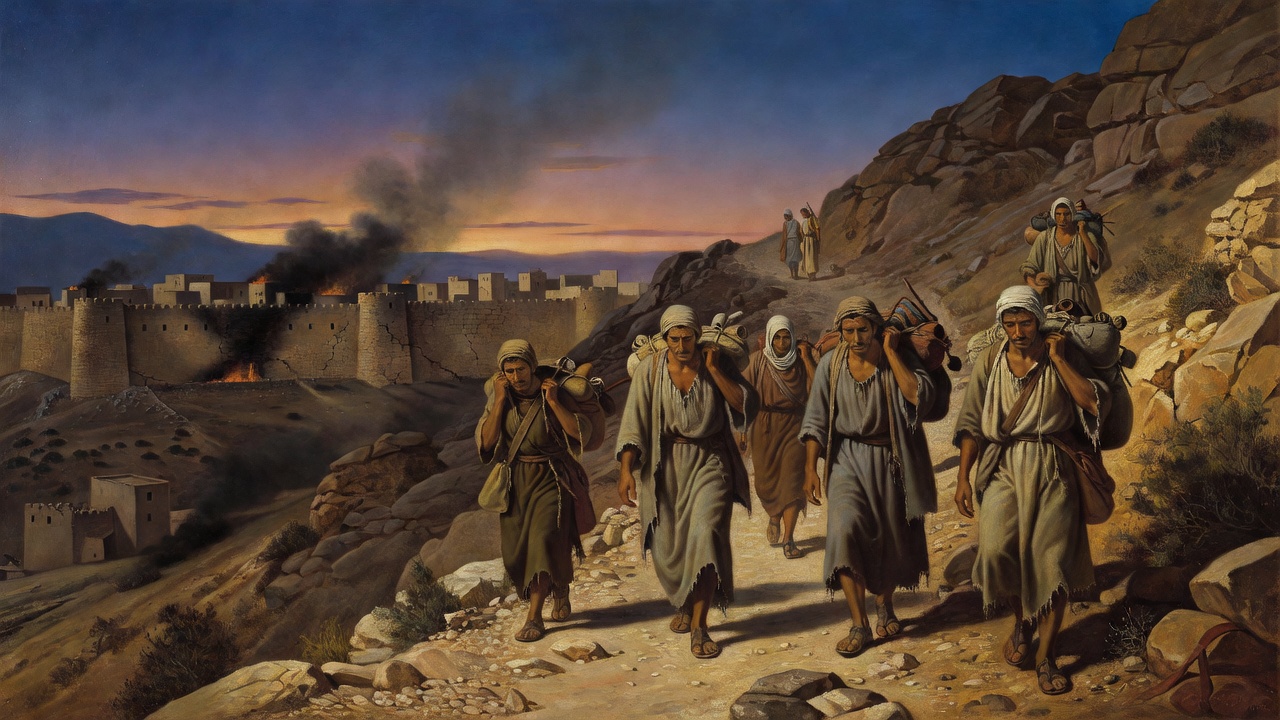
- Moab was a territory situated east of the Dead Sea and the Jordan River, containing ancient settlements such as Ar, Kir, and Medeba. In this chapter, the prophet laments the sudden overnight destruction and wailing throughout these Moabite towns and high places.Sources: Moab · Medeba · the Bible text itself
- The chapter depicts traditional ancient mourning rituals practiced across the region in times of catastrophe. As grief overtakes the land, the people of Moab shave their heads, cut off their beards, and put on sackcloth while weeping publicly in the squares and on flat rooftops.Sources: the Bible text itself
- The city of Dibon, situated north of the Arnon River and east of the Dead Sea, is also identified as Dimon in Isaiah 15:9. The oracle vividly portrays the severity of the invasion by describing the waters of Dimon filled with blood while surviving refugees flee.Sources: Dibon · the Bible text itself
Notes written with AI assistance from open sources (Theographic Bible Metadata, CC BY-SA 4.0; Easton’s Bible Dictionary, public domain) and reviewed before publishing.
Places in this chapter
- Moab · Today: Moab 1 · 31.181, 35.701 · verses 1, 2, 4, 5, 8, 9
- Dibon · Today: Tall Dhiban · 31.502, 35.777 · verse 2
- Medeba · Today: Madaba · 31.716, 35.795 · verse 2
Only places identified with high confidence are shown (90% or more according to the scholarly sources compiled by OpenBible). Period map: DARE (Digital Atlas of the Roman Empire), CC BY 4.0; modern map: © OpenStreetMap contributors; places: OpenBible.info (CC BY 4.0).
Credits and license for this translation
NET Bible
NET Bible®, New English Translation (NET)
copyright © 1996-2016 Biblical Studies Press, L. L. C.
Please see https://netbible.com/copyright/ for full NET Bible copyright and permissions information. You can also read the NET Bible at http://NETBible.org .
Language: English
Dialect (if applicable): American
Language in English: English
Translation by:
Please see https://netbible.com/copyright/ for full NET Bible copyright and permissions information. You can also read the NET Bible at http://NETBible.org .
The NET Bible (New English Translation) is a completely new translation of the Bible with 58,506 translators’ notes ! It was completed by more than 25 scholars – experts in the original biblical languages – who worked directly from the best currently available Hebrew, Aramaic, and Greek texts. Turn the pages and see the breadth of the translators’ notes, documenting their decisions and choices as they worked.
The translators’ notes make the original languages far more accessible, allowing you to look over the translator’s shoulder at the very process of translation. This level of documentation is a first for a Bible translation, making transparent the textual basis and the rationale for key renderings (including major interpretive options and alternative translations).
This unparalleled level of detail helps connect people to the Bible in the original languages in a way never before possible without years of study of Hebrew, Aramaic, and Greek. It unlocks the riches of the Bible’s truth from entirely new perspectives.
A donation is appreciated. Donate at Bible.org/donations_form so we can continue to provide our material for free for our 16,000+ articles on Bible.org and our world class Bible Study tool at lumina.bible.org .
2026-10-02
Section headings adapted from the Berean Standard Bible (public domain); they are not part of this translation’s text.
Source: http://ebible.org/engnet/ · eBible.org