Deuteronomy 23
NET Bible · Tap a verse to see its cross-references.
1A man with crushed or severed genitals may not enter the assembly of the Lord. 2A person of illegitimate birth may not enter the assembly of the Lord; to the tenth generation no one related to him may do so.
3An Ammonite or Moabite may not enter the assembly of the Lord; to the tenth generation none of their descendants shall ever do so, 4for they did not meet you with food and water on the way as you came from Egypt, and furthermore, they hired Balaam son of Beor of Pethor in Aram Naharaim to curse you. 5But the Lord your God refused to listen to Balaam and changed the curse to a blessing, for the Lord your God loves you. 6You must not seek peace and prosperity for them through all the ages to come. 7You must not hate an Edomite, for he is your relative; you must not hate an Egyptian, for you lived as a foreigner in his land. 8Children of the third generation born to them may enter the assembly of the Lord.
Purity in Personal Hygiene
9When you go out as an army against your enemies, guard yourselves against anything impure. 10If there is someone among you who is impure because of some nocturnal emission, he must leave the camp; he may not reenter it immediately. 11When evening arrives he must wash himself with water and then at sunset he may reenter the camp.
12You are to have a place outside the camp to serve as a latrine. 13You must have a spade among your other equipment and when you relieve yourself outside you must dig a hole with the spade and then turn and cover your excrement. 14For the Lord your God walks about in the middle of your camp to deliver you and defeat your enemies for you. Therefore your camp should be holy, so that he does not see anything indecent among you and turn away from you.
Purity in the Treatment of the Nonprivileged
15You must not return an escaped slave to his master when he has run away to you. 16Indeed, he may live among you in any place he chooses, in whichever of your villages he prefers; you must not oppress him.
Purity in Cultic Personnel
17There must never be a sacred prostitute among the young women of Israel nor a sacred male prostitute among the young men of Israel. 18You must never bring the pay of a female prostitute or the wage of a male prostitute into the temple of the Lord your God in fulfillment of any vow, for both of these are abhorrent to the Lord your God.
Respect for Others’ Property
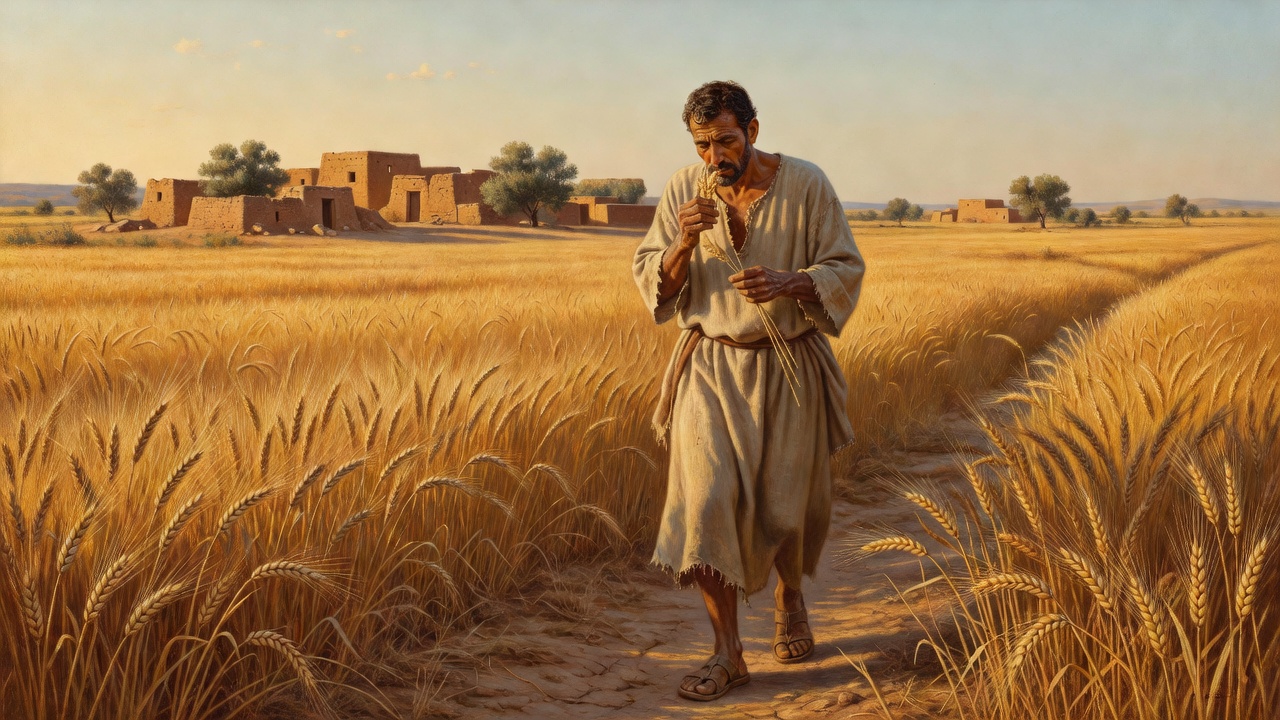
19You must not charge interest on a loan to your fellow Israelite, whether on money, food, or anything else that has been loaned with interest. 20You may lend with interest to a foreigner, but not to your fellow Israelite; if you keep this command the Lord your God will bless you in all you undertake in the land you are about to enter to possess. 21When you make a vow to the Lord your God you must not delay in fulfilling it, for otherwise he will surely hold you accountable as a sinner. 22If you refrain from making a vow, it will not be sinful. 23Whatever you vow, you must be careful to do what you have promised, such as what you have vowed to the Lord your God as a freewill offering. 24When you enter the vineyard of your neighbor you may eat as many grapes as you please, but you must not take away any in a container. 25When you go into the ripe grain fields of your neighbor you may pluck off the kernels with your hand, but you must not use a sickle on your neighbor’s ripe grain.
Did you know?
Community Purity and Social Laws
- Ammonites and Moabites were excluded from the assembly because they withheld food and water and hired Balaam son of Beor against Israel. Balaam came from Pethor in Aram-naharaim (Mesopotamia), a region between the Tigris and Euphrates rivers where Pethor is identified with the ancient site of Pitru.Sources: the Bible text itself · Balaam · Pethor · Mesopotamia
- In contrast to the exclusion of Ammon and Moab, Israelites were instructed not to despise Edomites, whom they regarded as kin, or Egyptians, among whom they had lived as foreigners. Descendants of the third generation from both groups were permitted to enter the assembly of the Lord.Sources: the Bible text itself · Egypt
- The chapter outlines distinct social and military protections, including granting refuge to runaway foreign slaves rather than returning them to their masters. It also permitted hungry travelers to eat grapes or pluck grain by hand in a neighbor's field, provided they did not gather surplus into containers or use a sickle.Sources: the Bible text itself
Notes written with AI assistance from open sources (Theographic Bible Metadata, CC BY-SA 4.0; Easton’s Bible Dictionary, public domain) and reviewed before publishing.
Places in this chapter
- Egypt · 30.129, 31.308 · verse 4
- Mesopotamia · Today: Aram-naharaim · 36.864, 39.033 · verse 4
- Pethor · Today: Til Barsip · 36.701, 38.087 · verse 4
Only places identified with high confidence are shown (90% or more according to the scholarly sources compiled by OpenBible). Period map: DARE (Digital Atlas of the Roman Empire), CC BY 4.0; modern map: © OpenStreetMap contributors; places: OpenBible.info (CC BY 4.0).
Credits and license for this translation
NET Bible
NET Bible®, New English Translation (NET)
copyright © 1996-2016 Biblical Studies Press, L. L. C.
Please see https://netbible.com/copyright/ for full NET Bible copyright and permissions information. You can also read the NET Bible at http://NETBible.org .
Language: English
Dialect (if applicable): American
Language in English: English
Translation by:
Please see https://netbible.com/copyright/ for full NET Bible copyright and permissions information. You can also read the NET Bible at http://NETBible.org .
The NET Bible (New English Translation) is a completely new translation of the Bible with 58,506 translators’ notes ! It was completed by more than 25 scholars – experts in the original biblical languages – who worked directly from the best currently available Hebrew, Aramaic, and Greek texts. Turn the pages and see the breadth of the translators’ notes, documenting their decisions and choices as they worked.
The translators’ notes make the original languages far more accessible, allowing you to look over the translator’s shoulder at the very process of translation. This level of documentation is a first for a Bible translation, making transparent the textual basis and the rationale for key renderings (including major interpretive options and alternative translations).
This unparalleled level of detail helps connect people to the Bible in the original languages in a way never before possible without years of study of Hebrew, Aramaic, and Greek. It unlocks the riches of the Bible’s truth from entirely new perspectives.
A donation is appreciated. Donate at Bible.org/donations_form so we can continue to provide our material for free for our 16,000+ articles on Bible.org and our world class Bible Study tool at lumina.bible.org .
2026-10-02
Source: http://ebible.org/engnet/ · eBible.org