Deuteronomy 16
NET Bible · Tap a verse to see its cross-references.
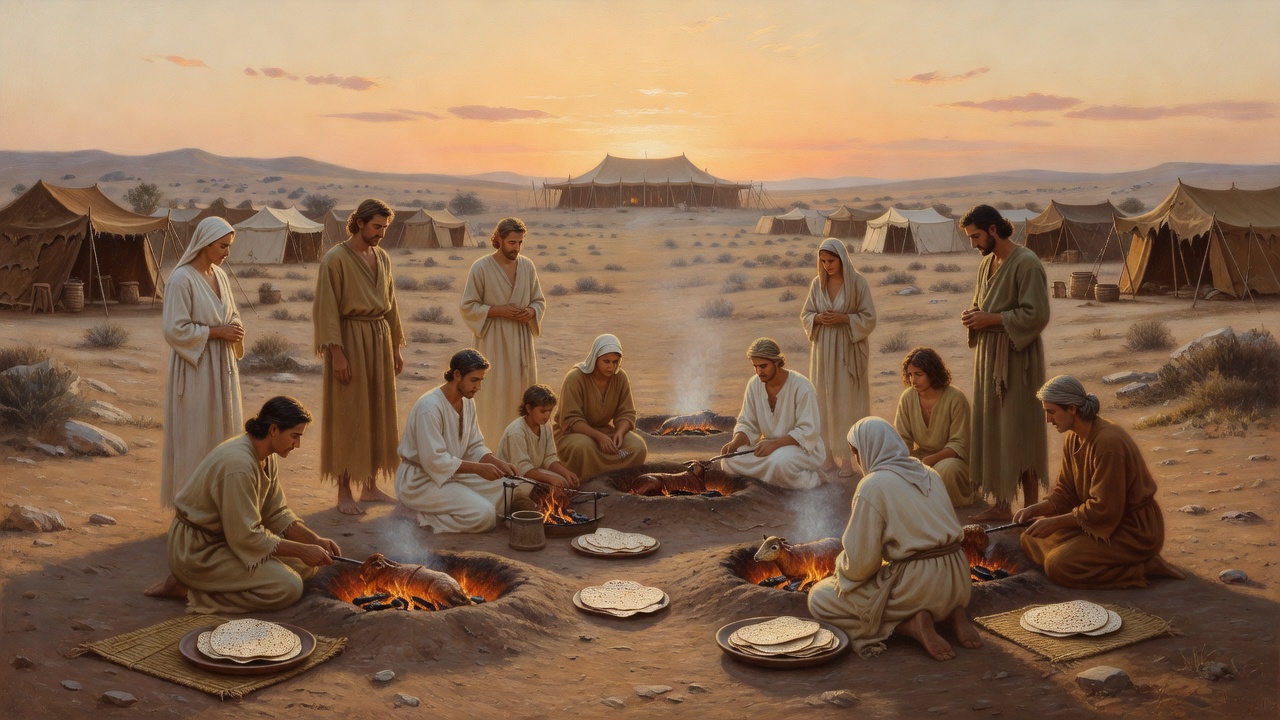
1Observe the month Abib and keep the Passover to the Lord your God, for in that month he brought you out of Egypt by night. 2You must sacrifice the Passover animal (from the flock or the herd) to the Lord your God in the place where he chooses to locate his name. 3You must not eat any yeast with it; for seven days you must eat bread made without yeast, symbolic of affliction, for you came out of Egypt hurriedly. You must do this so you will remember for the rest of your life the day you came out of the land of Egypt. 4There must not be a scrap of yeast within your land for seven days, nor can any of the meat you sacrifice on the evening of the first day remain until the next morning. 5You may not sacrifice the Passover in just any of your villages that the Lord your God is giving you, 6but you must sacrifice it in the evening in the place where he chooses to locate his name, at sunset, the time of day you came out of Egypt. 7You must cook and eat it in the place the Lord your God chooses; you may return the next morning to your tents. 8You must eat bread made without yeast for six days. The seventh day you are to hold an assembly for the Lord your God; you must not do any work on that day.
The Festival of Weeks
9You must count seven weeks; you must begin to count them from the time you begin to harvest the standing grain. 10Then you are to celebrate the Festival of Weeks before the Lord your God with the voluntary offering that you will bring, in proportion to how he has blessed you. 11You shall rejoice before him – you, your son, your daughter, your male and female slaves, the Levites in your villages, the resident foreigners, the orphans, and the widows among you – in the place where the Lord chooses to locate his name. 12Furthermore, remember that you were a slave in Egypt, and so be careful to observe these statutes.
The Festival of Temporary Shelters
13You must celebrate the Festival of Temporary Shelters for seven days, at the time of the grain and grape harvest. 14You are to rejoice in your festival, you, your son, your daughter, your male and female slaves, the Levites, the resident foreigners, the orphans, and the widows who are in your villages. 15You are to celebrate the festival seven days before the Lord your God in the place he chooses, for he will bless you in all your productivity and in whatever you do; so you will indeed rejoice! 16Three times a year all your males must appear before the Lord your God in the place he chooses for the Festival of Unleavened Bread, the Festival of Weeks, and the Festival of Temporary Shelters; and they must not appear before him empty-handed. 17Every one of you must give as you are able, according to the blessing of the Lord your God that he has given you.
Provision for Justice
18You must appoint judges and civil servants for each tribe in all your villages that the Lord your God is giving you, and they must judge the people fairly. 19You must not pervert justice or show favor. Do not take a bribe, for bribes blind the eyes of the wise and distort the words of the righteous. 20You must pursue justice alone so that you may live and inherit the land the Lord your God is giving you.
Examples of Legal Cases
21You must not plant any kind of tree as a sacred Asherah pole near the altar of the Lord your God which you build for yourself. 22You must not erect a sacred pillar, a thing the Lord your God detests.
Did you know?
Appointed Feasts and Righteous Justice
- Deuteronomy mandates three annual pilgrimage festivals—the Feast of Unleavened Bread (Passover), the Feast of Weeks, and the Feast of Tabernacles. For these occasions, the men of Israel were required to travel and appear before God not in their local towns, but at the specific central location chosen as a dwelling for His Name.Sources: the Bible text itself
- The celebrations of the Feast of Weeks and the Feast of Tabernacles explicitly included vulnerable members of society, such as servants, Levites, foreigners, orphans, and widows. These communal rejoicings were tied to the memory of Israel's liberation from slavery in Egypt.Sources: the Bible text itself
- In addition to religious assemblies, the text commands the appointment of local judges and officials across every town. They were forbidden from taking bribes or showing partiality, establishing the standard to pursue justice alone throughout the land.Sources: the Bible text itself
Notes written with AI assistance from open sources (Theographic Bible Metadata, CC BY-SA 4.0; Easton’s Bible Dictionary, public domain) and reviewed before publishing.
Places in this chapter
Only places identified with high confidence are shown (90% or more according to the scholarly sources compiled by OpenBible). Period map: DARE (Digital Atlas of the Roman Empire), CC BY 4.0; modern map: © OpenStreetMap contributors; places: OpenBible.info (CC BY 4.0).
Credits and license for this translation
NET Bible
NET Bible®, New English Translation (NET)
copyright © 1996-2016 Biblical Studies Press, L. L. C.
Please see https://netbible.com/copyright/ for full NET Bible copyright and permissions information. You can also read the NET Bible at http://NETBible.org .
Language: English
Dialect (if applicable): American
Language in English: English
Translation by:
Please see https://netbible.com/copyright/ for full NET Bible copyright and permissions information. You can also read the NET Bible at http://NETBible.org .
The NET Bible (New English Translation) is a completely new translation of the Bible with 58,506 translators’ notes ! It was completed by more than 25 scholars – experts in the original biblical languages – who worked directly from the best currently available Hebrew, Aramaic, and Greek texts. Turn the pages and see the breadth of the translators’ notes, documenting their decisions and choices as they worked.
The translators’ notes make the original languages far more accessible, allowing you to look over the translator’s shoulder at the very process of translation. This level of documentation is a first for a Bible translation, making transparent the textual basis and the rationale for key renderings (including major interpretive options and alternative translations).
This unparalleled level of detail helps connect people to the Bible in the original languages in a way never before possible without years of study of Hebrew, Aramaic, and Greek. It unlocks the riches of the Bible’s truth from entirely new perspectives.
A donation is appreciated. Donate at Bible.org/donations_form so we can continue to provide our material for free for our 16,000+ articles on Bible.org and our world class Bible Study tool at lumina.bible.org .
2026-10-02
Source: http://ebible.org/engnet/ · eBible.org