2 Samuel 11
NET Bible · Tap a verse to see its cross-references.
David and Bathsheba
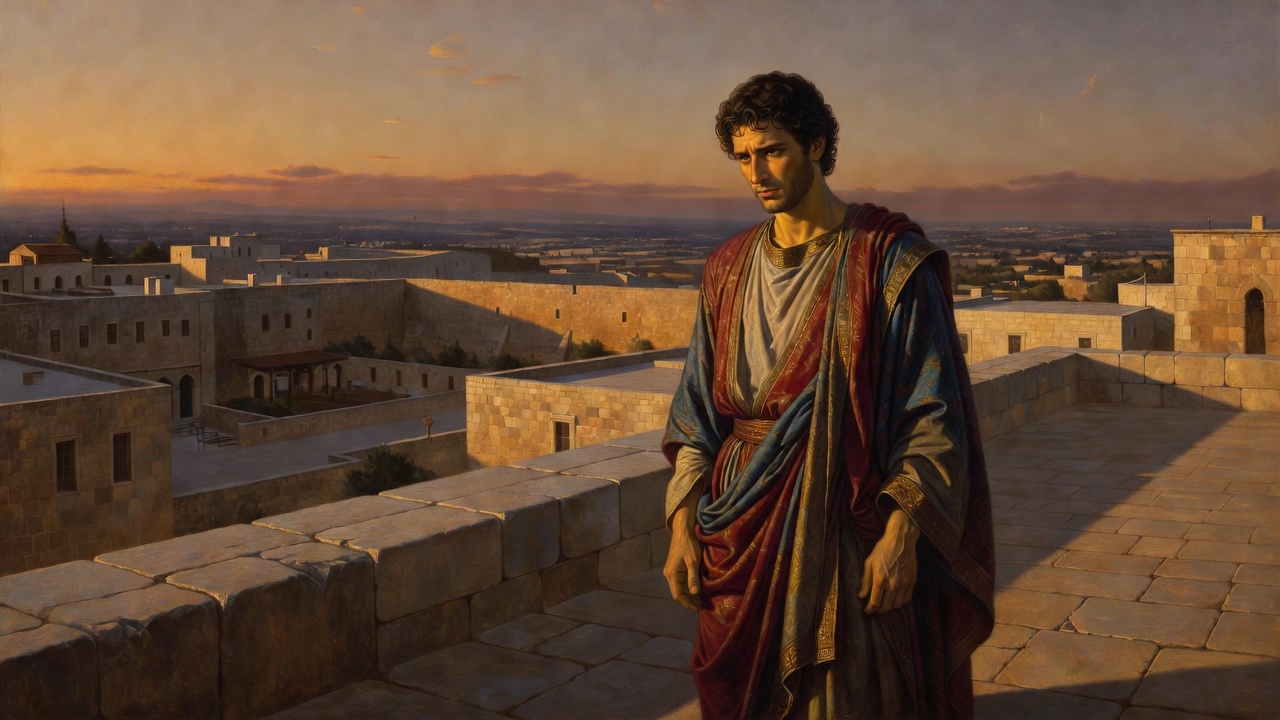
1In the spring of the year, at the time when kings normally conduct wars, David sent out Joab with his officers and the entire Israelite army. They defeated the Ammonites and besieged Rabbah. But David stayed behind in Jerusalem. 2One evening David got up from his bed and walked around on the roof of his palace. From the roof he saw a woman bathing. Now this woman was very attractive. 3So David sent someone to inquire about the woman. The messenger said, “Isn’t this Bathsheba, the daughter of Eliam, the wife of Uriah the Hittite?”
4David sent some messengers to get her. She came to him and he had sexual relations with her. (Now at that time she was in the process of purifying herself from her menstrual uncleanness.) Then she returned to her home. 5The woman conceived and then sent word to David saying, “I’m pregnant.”
6So David sent a message to Joab that said, “Send me Uriah the Hittite.” So Joab sent Uriah to David. 7When Uriah came to him, David asked about how Joab and the army were doing and how the campaign was going. 8Then David said to Uriah, “Go down to your home and relax.” When Uriah left the palace, the king sent a gift to him. 9But Uriah stayed at the door of the palace with all the servants of his lord. He did not go down to his house.
10So they informed David, “Uriah has not gone down to his house.” So David said to Uriah, “Haven’t you just arrived from a journey? Why haven’t you gone down to your house?” 11Uriah replied to David, “The ark and Israel and Judah reside in temporary shelters, and my lord Joab and my lord’s soldiers are camping in the open field. Should I go to my house to eat and drink and have marital relations with my wife? As surely as you are alive, I will not do this thing!” 12So David said to Uriah, “Stay here another day. Tomorrow I will send you back.” So Uriah stayed in Jerusalem both that day and the following one. 13Then David summoned him. He ate and drank with him, and got him drunk. But in the evening he went out to sleep on his bed with the servants of his lord; he did not go down to his own house.
David Arranges Uriah’s Death
14In the morning David wrote a letter to Joab and sent it with Uriah. 15In the letter he wrote: “Station Uriah in the thick of the battle and then withdraw from him so he will be cut down and killed.”
16So as Joab kept watch on the city, he stationed Uriah at the place where he knew the best enemy soldiers were. 17When the men of the city came out and fought with Joab, some of David’s soldiers fell in battle. Uriah the Hittite also died.
18Then Joab sent a full battle report to David. 19He instructed the messenger as follows: “When you finish giving the battle report to the king, 20if the king becomes angry and asks you, ‘Why did you go so close to the city to fight? Didn’t you realize they would shoot from the wall? 21Who struck down Abimelech the son of Jerub-Besheth? Didn’t a woman throw an upper millstone down on him from the wall so that he died in Thebez? Why did you go so close to the wall?’ just say to him, ‘Your servant Uriah the Hittite is also dead.’”
22So the messenger departed. When he arrived, he informed David of all the news that Joab had sent with him. 23The messenger said to David, “The men overpowered us and attacked us in the field. But we forced them to retreat all the way to the door of the city gate. 24Then the archers shot at your servants from the wall and some of the king’s soldiers died. Your servant Uriah the Hittite is also dead.” 25David said to the messenger, “Tell Joab, ‘Don’t let this thing upset you. There is no way to anticipate whom the sword will cut down. Press the battle against the city and conquer it.’ Encourage him with these words.”
David Marries Bathsheba
26When Uriah’s wife heard that her husband Uriah was dead, she mourned for him. 27When the time of mourning passed, David had her brought to his palace. She became his wife and she bore him a son. But what David had done upset the Lord.
Did you know?
David, Bathsheba, and Uriah
- Uriah is identified as a Hittite and was counted among David's elite warriors, the "mighty men." When recalled to Jerusalem from the front line, he refused to enjoy the comfort of his home out of solidarity with his fellow soldiers and the Ark of the Covenant, which were dwelling in tents in the open field.Sources: the Bible text itself · Uriah
- The siege of Rabbah, the chief city of the Ammonites east of the Jordan River, provides the background for this chapter. While spring was the customary time for kings to march out to battle, David remained behind in Jerusalem and entrusted the military campaign to his commander Joab.Sources: the Bible text itself · Rabbah · Joab
- When instructing his messenger about casualties near the city walls, Joab cited the tactical precedent of Abimelech's death at Thebez, where a woman killed him by dropping a millstone from a tower wall. The biblical narrative refers to Abimelech's father Gideon by the name Jerubbesheth.Sources: the Bible text itself · Jerubbesheth · Thebez
Notes written with AI assistance from open sources (Theographic Bible Metadata, CC BY-SA 4.0; Easton’s Bible Dictionary, public domain) and reviewed before publishing.
Places in this chapter
- Ammon · 31.955, 35.934 · verse 1
- Jerusalem · 31.777, 35.234 · verses 1, 12, 22
- Rabbah · Today: Amman · 31.955, 35.934 · verse 1
Only places identified with high confidence are shown (90% or more according to the scholarly sources compiled by OpenBible). Period map: DARE (Digital Atlas of the Roman Empire), CC BY 4.0; modern map: © OpenStreetMap contributors; places: OpenBible.info (CC BY 4.0).
Credits and license for this translation
NET Bible
NET Bible®, New English Translation (NET)
copyright © 1996-2016 Biblical Studies Press, L. L. C.
Please see https://netbible.com/copyright/ for full NET Bible copyright and permissions information. You can also read the NET Bible at http://NETBible.org .
Language: English
Dialect (if applicable): American
Language in English: English
Translation by:
Please see https://netbible.com/copyright/ for full NET Bible copyright and permissions information. You can also read the NET Bible at http://NETBible.org .
The NET Bible (New English Translation) is a completely new translation of the Bible with 58,506 translators’ notes ! It was completed by more than 25 scholars – experts in the original biblical languages – who worked directly from the best currently available Hebrew, Aramaic, and Greek texts. Turn the pages and see the breadth of the translators’ notes, documenting their decisions and choices as they worked.
The translators’ notes make the original languages far more accessible, allowing you to look over the translator’s shoulder at the very process of translation. This level of documentation is a first for a Bible translation, making transparent the textual basis and the rationale for key renderings (including major interpretive options and alternative translations).
This unparalleled level of detail helps connect people to the Bible in the original languages in a way never before possible without years of study of Hebrew, Aramaic, and Greek. It unlocks the riches of the Bible’s truth from entirely new perspectives.
A donation is appreciated. Donate at Bible.org/donations_form so we can continue to provide our material for free for our 16,000+ articles on Bible.org and our world class Bible Study tool at lumina.bible.org .
2026-10-02
Section headings adapted from the Berean Standard Bible (public domain); they are not part of this translation’s text.
Source: http://ebible.org/engnet/ · eBible.org