1 Chronicles 23
NET Bible · Tap a verse to see its cross-references.
The Divisions of the Levites
1When David was old and approaching the end of his life, he made his son Solomon king over Israel.
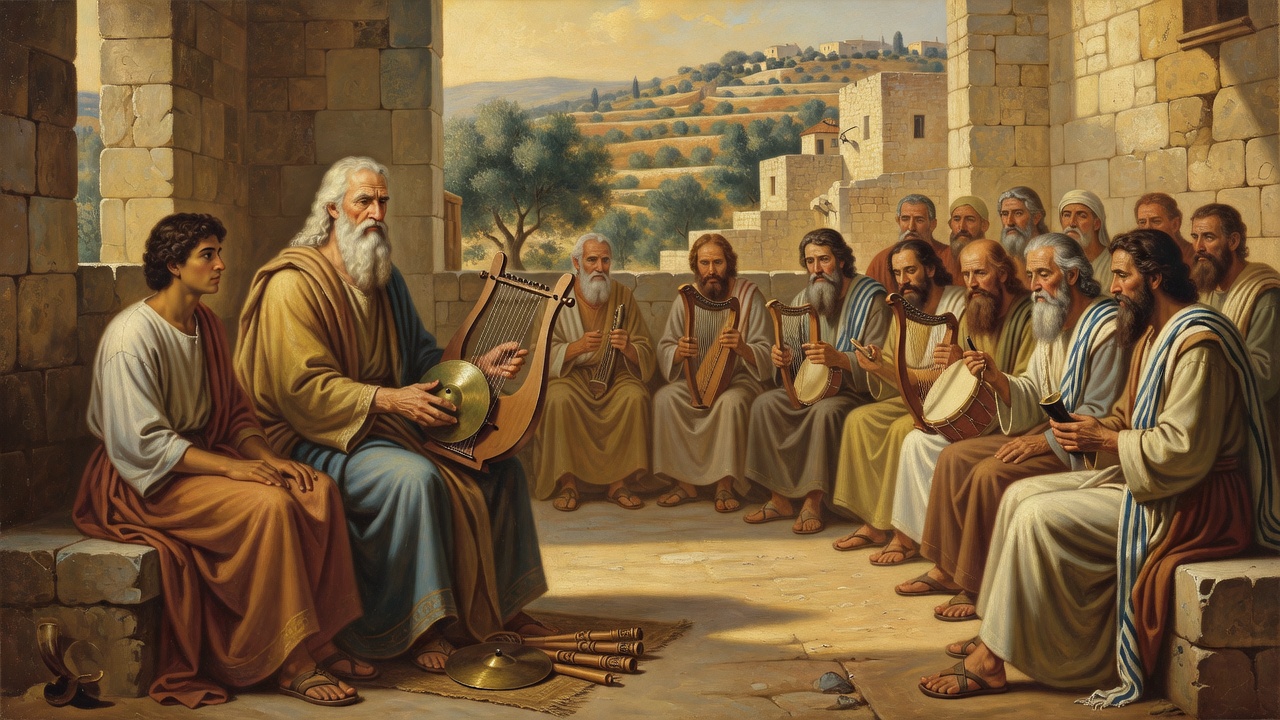
2David assembled all the leaders of Israel, along with the priests and the Levites. 3The Levites who were thirty years old and up were counted; there were 38,000 men. 4David said, “Of these, 24,000 are to direct the work of the Lord’s temple; 6,000 are to be officials and judges; 54,000 are to be gatekeepers; and 4,000 are to praise the Lord with the instruments I supplied for worship.” 6David divided them into groups corresponding to the sons of Levi: Gershon, Kohath, and Merari.
The Gershonites
7The Gershonites included Ladan and Shimei.
8The sons of Ladan:
Jehiel the oldest, Zetham, and Joel – three in all.
9The sons of Shimei:
Shelomoth, Haziel, and Haran – three in all.
These were the leaders of the family of Ladan.
10The sons of Shimei:
Jahath, Zina, Jeush, and Beriah. These were Shimei’s sons – four in all. 11Jahath was the oldest and Zizah the second oldest. Jeush and Beriah did not have many sons, so they were considered one family with one responsibility.
The Kohathites
12The sons of Kohath:
Amram, Izhar, Hebron, and Uzziel – four in all.
13The sons of Amram:
Aaron and Moses.
Aaron and his descendants were chosen on a permanent basis to consecrate the most holy items, to offer sacrifices before the Lord, to serve him, and to praise his name. 14The descendants of Moses the man of God were considered Levites.
15The sons of Moses:
Gershom and Eliezer.
16The son of Gershom:
Shebuel the oldest.
17The son of Eliezer was Rehabiah, the oldest. Eliezer had no other sons, but Rehabiah had many descendants.
18The son of Izhar:
Shelomith the oldest.
19The sons of Hebron:
Jeriah the oldest, Amariah the second, Jahaziel the third, and Jekameam the fourth.
20The sons of Uzziel:
Micah the oldest, and Isshiah the second.
The Merarites
21The sons of Merari:
Mahli and Mushi.
The sons of Mahli:
Eleazar and Kish.
22Eleazar died without having sons; he had only daughters. The sons of Kish, their cousins, married them.
23The sons of Mushi:
Mahli, Eder, and Jeremoth – three in all.
Levite Duties Revised
24These were the descendants of Levi according to their families, that is, the leaders of families as counted and individually listed who carried out assigned tasks in the Lord’s temple and were twenty years old and up. 25For David said, “The Lord God of Israel has given his people rest and has permanently settled in Jerusalem. 26So the Levites no longer need to carry the tabernacle or any of the items used in its service.” 27According to David’s final instructions, the Levites twenty years old and up were counted.
28Their job was to help Aaron’s descendants in the service of the Lord’s temple. They were to take care of the courtyards, the rooms, ceremonial purification of all holy items, and other jobs related to the service of God’s temple. 29They also took care of the bread that is displayed, the flour for offerings, the unleavened wafers, the round cakes, the mixing, and all the measuring. 30They also stood in a designated place every morning and offered thanks and praise to the Lord. They also did this in the evening 31and whenever burnt sacrifices were offered to the Lord on the Sabbath and at new moon festivals and assemblies. A designated number were to serve before the Lord regularly in accordance with regulations. 32They were in charge of the meeting tent and the holy place, and helped their relatives, the descendants of Aaron, in the service of the Lord’s temple.
Did you know?
David Organizes the Levites
- A census counted 38,000 Levites aged thirty and above in Israel. David organized them into distinct roles: 24,000 to oversee the sanctuary's work, 6,000 as officials and judges, 4,000 as gatekeepers, and 4,000 as musicians praising the LORD with specially made instruments.Sources: the Bible text itself
- Because God had granted rest and chosen Jerusalem as a permanent dwelling place, the Levites no longer needed to transport the tabernacle and its furnishings. David therefore updated their duties to assisting Aaron's priestly line with temple offerings, maintenance, and daily morning and evening praise, lowering the entry age to twenty.Sources: the Bible text itself · Jerusalem
- Although both Aaron and Moses were sons of Amram from the lineage of Kohath, their descendants held different roles. Aaron and his descendants were set apart perpetually for the priesthood to burn incense and bless in the LORD's name, while the sons of Moses were counted among the general Levite clans.Sources: the Bible text itself · Aaron · Moses
Notes written with AI assistance from open sources (Theographic Bible Metadata, CC BY-SA 4.0; Easton’s Bible Dictionary, public domain) and reviewed before publishing.
Places in this chapter
- Jerusalem · 31.777, 35.234 · verse 25
Only places identified with high confidence are shown (90% or more according to the scholarly sources compiled by OpenBible). Period map: DARE (Digital Atlas of the Roman Empire), CC BY 4.0; modern map: © OpenStreetMap contributors; places: OpenBible.info (CC BY 4.0).
Credits and license for this translation
NET Bible
NET Bible®, New English Translation (NET)
copyright © 1996-2016 Biblical Studies Press, L. L. C.
Please see https://netbible.com/copyright/ for full NET Bible copyright and permissions information. You can also read the NET Bible at http://NETBible.org .
Language: English
Dialect (if applicable): American
Language in English: English
Translation by:
Please see https://netbible.com/copyright/ for full NET Bible copyright and permissions information. You can also read the NET Bible at http://NETBible.org .
The NET Bible (New English Translation) is a completely new translation of the Bible with 58,506 translators’ notes ! It was completed by more than 25 scholars – experts in the original biblical languages – who worked directly from the best currently available Hebrew, Aramaic, and Greek texts. Turn the pages and see the breadth of the translators’ notes, documenting their decisions and choices as they worked.
The translators’ notes make the original languages far more accessible, allowing you to look over the translator’s shoulder at the very process of translation. This level of documentation is a first for a Bible translation, making transparent the textual basis and the rationale for key renderings (including major interpretive options and alternative translations).
This unparalleled level of detail helps connect people to the Bible in the original languages in a way never before possible without years of study of Hebrew, Aramaic, and Greek. It unlocks the riches of the Bible’s truth from entirely new perspectives.
A donation is appreciated. Donate at Bible.org/donations_form so we can continue to provide our material for free for our 16,000+ articles on Bible.org and our world class Bible Study tool at lumina.bible.org .
2026-10-02
Section headings adapted from the Berean Standard Bible (public domain); they are not part of this translation’s text.
Source: http://ebible.org/engnet/ · eBible.org