Psalms 42
Updated Brenton English Septuagint · Tap a verse to see its cross-references.
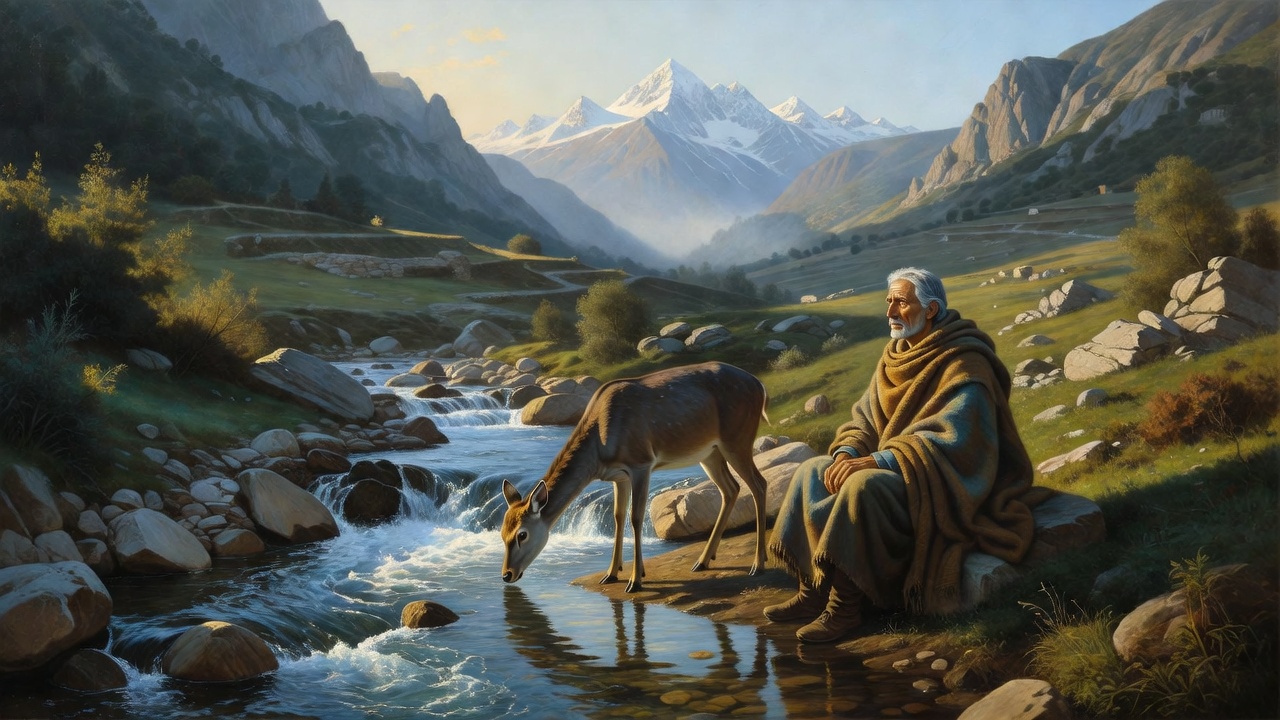
As the Deer Pants for the Water
1A Psalm of David.
Judge me, O God, and plead my cause, against an ungodly nation:
Deliver me from the unjust and crafty man.
2For thou, O God, art my strength: wherefore hast thou cast me off?
And why do I go sad of countenance, while the enemy oppresses me?
3Send forth thy light and thy truth:
They have led me, and brought me to thy holy mountain,
And to thy tabernacles.
4And I will go in to the altar of God,
To God who gladdens my youth:
I will give thanks to thee on the harp, O God, my God.
5Wherefore art thou very sad, O my soul? and wherefore dost thou trouble me?
Hope in God; for I will give thanks to him,
Who is the health of my countenance, and my God.
Did you know?
Thirsting for God Far from Home
- The psalm is introduced as a song of the sons of Korah, a Levitical family descended from the Levite Korah who took part in temple music and worship.Sources: the Bible text itself · Korah (Levite)
- The speaker longs for God from the northern borderlands, mentioning the Jordan, Mount Hermon, and Mount Mizar. Hermon is a towering range with multiple peaks reaching over 9,000 feet, while Mizar (meaning 'smallness') represents a lesser neighboring summit.Sources: the Bible text itself · Hermon · Hill Mizar
- The poem uses vivid water metaphors, moving from a thirsty deer longing for mountain streams to roaring waterfalls and crashing waves that symbolize overwhelming emotional distress.Sources: the Bible text itself
Notes written with AI assistance from open sources (Theographic Bible Metadata, CC BY-SA 4.0; Easton’s Bible Dictionary, public domain) and reviewed before publishing.
Places in this chapter
Only places identified with high confidence are shown (90% or more according to the scholarly sources compiled by OpenBible). Period map: DARE (Digital Atlas of the Roman Empire), CC BY 4.0; modern map: © OpenStreetMap contributors; places: OpenBible.info (CC BY 4.0).
Credits and license for this translation
Updated Brenton English Septuagint
Spelling and formatting update of the Brenton English Septuagint with Apocrypha
Public Domain
Language: English
Dialect: Mixed
Translation by: Sir Lancelot C. L. Brenton
Contributor: Adam Boyd
Original work was by Sir Lancelot C. L. Brenton in 1851.
CC0 Public Domain dedication on language updates by Adam Boyd in 2020.
2026-02-18
Section headings adapted from the Berean Standard Bible (public domain); they are not part of this translation’s text.
Source: http://ebible.org/englxxup/ · eBible.org