Psalms 15
Updated Brenton English Septuagint · Tap a verse to see its cross-references.
Who May Dwell on Your Holy Mountain?
1A writing of David.
Keep me, O Lord;
For I have hoped in thee.
2I said to the Lord, Thou art my Lord;
For thou hast no need of my goodness.
3On behalf of the saints that are in his land,
He has magnified all his pleasure in them.
4Their weaknesses have been multiplied;
Afterward they hastened.
I will by no means assemble their bloody meetings,
Neither will I make mention of their names with my lips.
5The Lord is the portion of mine inheritance and of my cup:
Thou art he that restores my inheritance to me.
6The lines have fallen to me in the best places,
Yea, I have a most excellent heritage.
7I will bless the Lord who has instructed me;
My reins too have chastened me even till night.
8I foresaw the Lord always before my face;
For he is on my right hand, that I should not be moved.
9Therefore my heart rejoiced
And my tongue exulted;
Moreover also my flesh shall rest in hope:
10Because thou wilt not leave my soul in hell,
Neither wilt thou suffer thine Holy One to see corruption.
11Thou hast made known to me the ways of life;
Thou wilt fill me with joy with thy countenance:
At thy right hand there are delights forever.
Did you know?
Dwelling in God's Presence
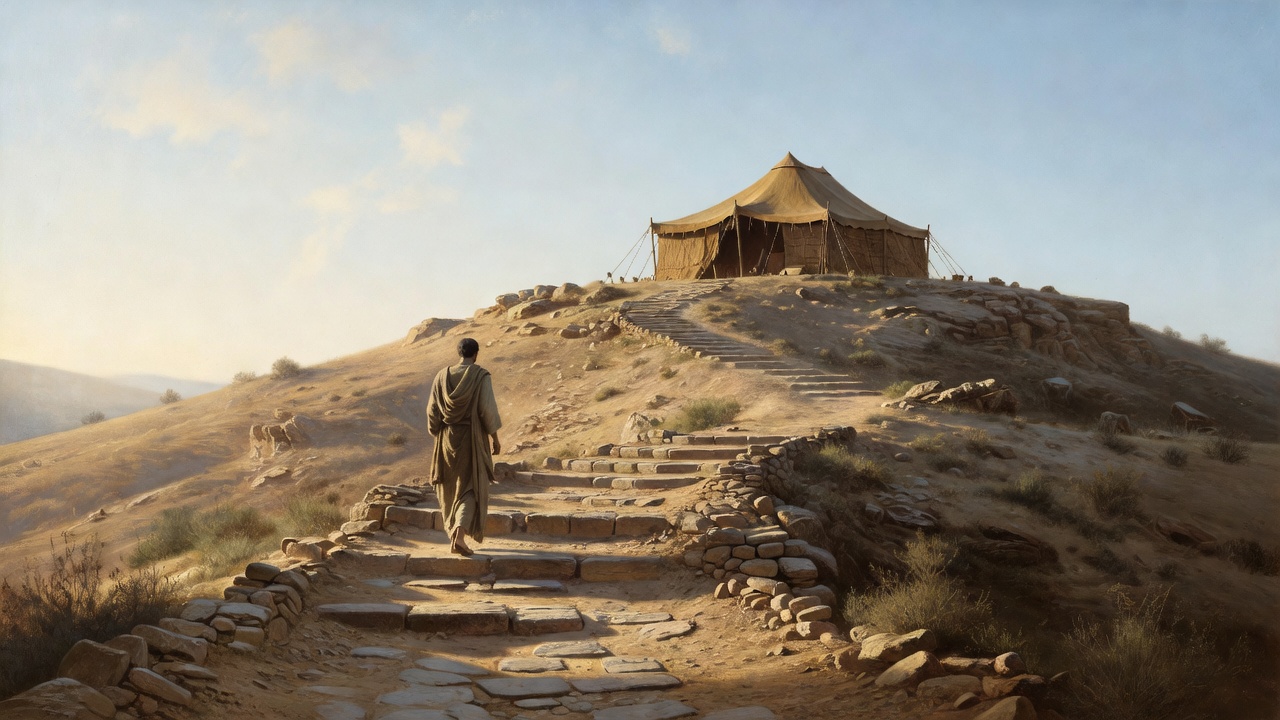
- Psalm 15 is framed around an opening question asking who is permitted to abide in the Lord's sacred tent and dwell on His holy mountain.Sources: the Bible text itself
- Rather than focusing on ritual offerings, the psalm outlines qualifications based on ethical integrity, truthful speech, keeping costly oaths, and financial justice such as rejecting bribes and lending without interest.Sources: the Bible text itself
Notes written with AI assistance from open sources (Theographic Bible Metadata, CC BY-SA 4.0; Easton’s Bible Dictionary, public domain) and reviewed before publishing.
Credits and license for this translation
Updated Brenton English Septuagint
Spelling and formatting update of the Brenton English Septuagint with Apocrypha
Public Domain
Language: English
Dialect: Mixed
Translation by: Sir Lancelot C. L. Brenton
Contributor: Adam Boyd
Original work was by Sir Lancelot C. L. Brenton in 1851.
CC0 Public Domain dedication on language updates by Adam Boyd in 2020.
2026-02-18
Section headings adapted from the Berean Standard Bible (public domain); they are not part of this translation’s text.
Source: http://ebible.org/englxxup/ · eBible.org