Psalms 100
Updated Brenton English Septuagint · Tap a verse to see its cross-references.
Make a Joyful Noise
1A Psalm of David.
I will sing to thee, O Lord, of mercy and judgment;
I will sing a psalm, 2and I will be wise in a blameless way. When wilt thou come to me?
I walked in the innocence of my heart, in the midst of my house.
3I have not set before mine eyes any unlawful thing;
I have hated transgressors.
4A perverse heart has not cloven to me;
I have not known an evil man, forasmuch as he turns away from me.
5Him that privily speaks against his neighbor, him have I driven from me:
He that is proud in look and insatiable in heart—with him I have not eaten.
6Mine eyes shall be upon the faithful of the land, that they may dwell with me:
He that walked in a perfect way, the same ministered to me.
7The proud doer dwelt not in the midst of my house;
The unjust speaker prospered not in my sight.
8Early did I slay all the sinners of the land,
That I might destroy out of the city of the Lord all that work iniquity.
Did you know?
Psalm 100: A Song of Praise and Thanksgiving
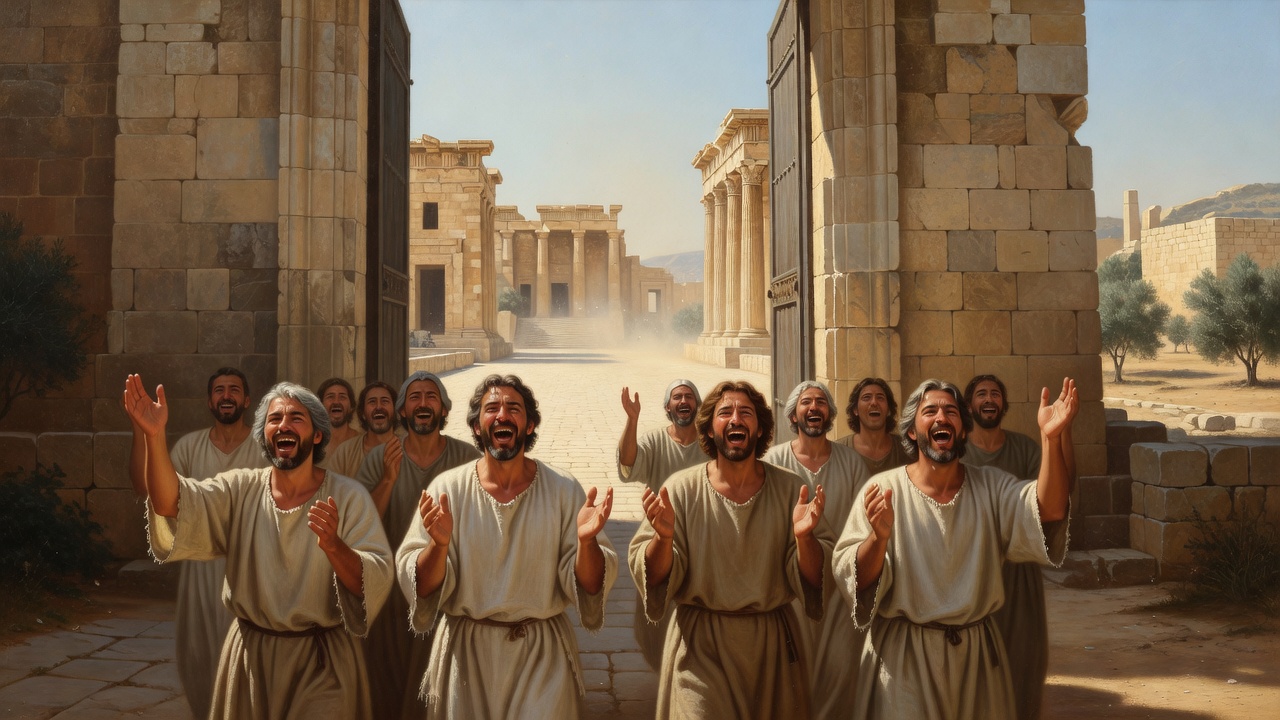
- Psalm 100 is specifically designated as a psalm of thanksgiving, calling on not just Israel but all the earth to serve God with gladness and sing joyful songs.Sources: the Bible text itself
- The psalm uses sanctuary imagery, inviting worshippers to enter through the gates and into the courts with praise, acknowledging God as their Creator and themselves as the sheep of His pasture.Sources: the Bible text itself
- The basis for the psalm's celebration is rooted in God's essential character: His goodness, His enduring loving devotion, and His faithfulness across all generations.Sources: the Bible text itself
Notes written with AI assistance from open sources (Theographic Bible Metadata, CC BY-SA 4.0; Easton’s Bible Dictionary, public domain) and reviewed before publishing.
Credits and license for this translation
Updated Brenton English Septuagint
Spelling and formatting update of the Brenton English Septuagint with Apocrypha
Public Domain
Language: English
Dialect: Mixed
Translation by: Sir Lancelot C. L. Brenton
Contributor: Adam Boyd
Original work was by Sir Lancelot C. L. Brenton in 1851.
CC0 Public Domain dedication on language updates by Adam Boyd in 2020.
2026-02-18
Section headings adapted from the Berean Standard Bible (public domain); they are not part of this translation’s text.
Source: http://ebible.org/englxxup/ · eBible.org