Job 18
Updated Brenton English Septuagint · Tap a verse to see its cross-references.
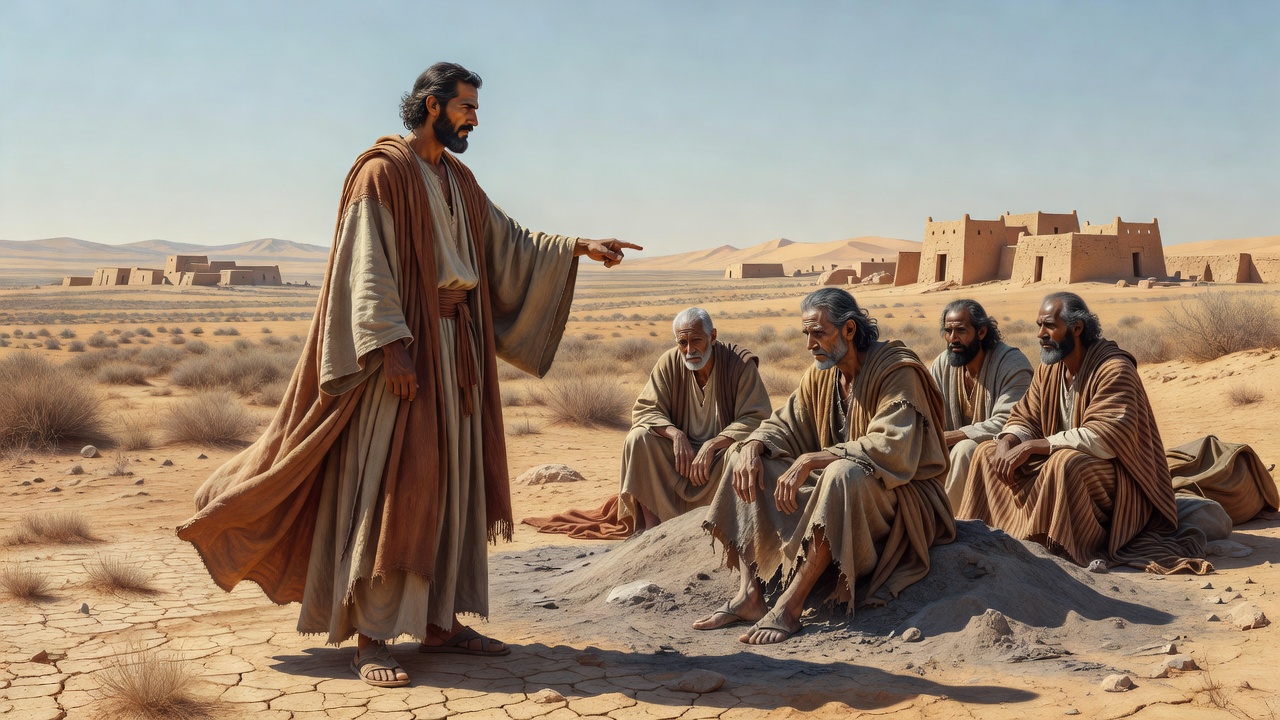
Bildad: God Punishes the Wicked
1Then Bildad the Shuhite answered and said,
2How long wilt thou continue?
Forbear, that we also may speak.
3For wherefore have we been silent before thee like brutes?
4Anger has possessed thee:
For what if thou shouldest die; would the earth under heaven be desolate?
Or shall the mountains be overthrown from their foundations?
5But the light of the ungodly shall be quenched,
And their flame shall not go up.
6His light shall be darkness in his habitation,
And his lamp shall be put out with him.
7Let the meanest of men spoil his goods,
And let his counsel deceive him.
8His foot also has been caught in a snare,
And let it be entangled in a net.
9And let snares come upon him:
He shall strengthen those that thirst for his destruction.
10His snare is hidden in the earth,
And that which shall take him is by the path.
11Let pains destroy him round about,
And let many enemies come about him,
12Vex him with distressing hunger:
And a signal destruction has been prepared for him.
13Let the soles of his feet be devoured:
And death shall consume his beauty.
14And let health be utterly banished from his tabernacle,
And let distress seize upon him with a charge from the king.
15It shall dwell in his tabernacle in his night:
His excellency shall be sown with brimstone.
16His roots shall be dried up from beneath,
And his crop shall fall away from above.
17Let his memorial perish out of the earth,
And his name shall be publicly cast out.
18Let one drive him from light into darkness.
19He shall not be known among his people,
Nor his house preserved on the earth.
20But strangers shall dwell in his possessions:
The last groaned for him,
And wonder seized the first.
21These are the houses of the unrighteous,
And this is the place of them that know not the Lord.
Did you know?
Bildad's Second Speech on the Fate of the Wicked
- Bildad is identified as a Shuhite, a designation traditionally linked to Shuah, a region in Arabia associated with the descendants of Abraham and Keturah. In this second speech to Job, Bildad maintains a stern and severe tone as he rebukes Job and insists on the certain doom of the ungodly.Sources: Bildad · the Bible text itself
- To describe the destruction awaiting the wicked, Bildad draws heavily on ancient hunting imagery. He depicts their downfall through metaphors of hidden nooses, concealed ground snares, and sweeping nets that trap the wanderer.Sources: the Bible text itself
Notes written with AI assistance from open sources (Theographic Bible Metadata, CC BY-SA 4.0; Easton’s Bible Dictionary, public domain) and reviewed before publishing.
Credits and license for this translation
Updated Brenton English Septuagint
Spelling and formatting update of the Brenton English Septuagint with Apocrypha
Public Domain
Language: English
Dialect: Mixed
Translation by: Sir Lancelot C. L. Brenton
Contributor: Adam Boyd
Original work was by Sir Lancelot C. L. Brenton in 1851.
CC0 Public Domain dedication on language updates by Adam Boyd in 2020.
2026-02-18
Section headings adapted from the Berean Standard Bible (public domain); they are not part of this translation’s text.
Source: http://ebible.org/englxxup/ · eBible.org