Isaiah 50
Updated Brenton English Septuagint · Tap a verse to see its cross-references.
Israel’s Sin
1Thus saith the Lord, Of what kind is your mother’s bill of divorcement, by which I put her away? or to which debtor have I sold you? Behold, ye are sold for your sins, and for your iniquities have I put your mother away. 2Why did I come, and there was no man? why did I call, and there was none to hearken? Is not my hand strong to redeem? or can I not deliver? behold, by my rebuke I will dry up the sea, and make rivers a wilderness; and their fish shall be dried up because there is no water, and shall die for thirst. 3I will clothe the sky with darkness, and will make its covering as sackcloth.
The Servant’s Obedience
4The Lord even God gives me the tongue of instruction, to know when it is fit to speak a word: he has appointed for me early, he has given me an ear to hear: 5and the instruction of the Lord, even the Lord, opens mine ears, and I do not disobey, nor dispute. 6I gave my back to scourges, and my cheeks to blows; and I turned not away my face from the shame of spitting: 7but the Lord God became my helper; therefore I was not ashamed, but I set my face as a solid rock; and I know that I shall never be ashamed, 8for he that has justified me draws near; who is he that pleads with me? let him stand up against me at the same time: yea, who is he that pleads with me? let him draw nigh to me. 9Behold, the Lord, the Lord, will help me; who will hurt me? behold, all ye shall wax old as a garment, and a moth shall devour you.
10Who is among you that fears the Lord? let him hearken to the voice of his servant: ye that walk in darkness, and have no light, trust in the name of the Lord, and stay upon God. 11Behold, ye all kindle a fire, and feed a flame: walk in the light of your fire, and in the flame which ye have kindled. This has happened to you for my sake; ye shall lie down in sorrow.
Did you know?
The Obedient Servant and Divine Vindication
- In ancient Near Eastern legal custom, a husband issued a certificate of divorce to formalize a separation, and impoverished debtors might sell their children into servitude. In Isaiah 50:1, God uses these legal metaphors to demonstrate that Israel was not abandoned due to a divine debt or permanent annulment of the covenant, but went into exile because of its own transgressions.Sources: the Bible text itself
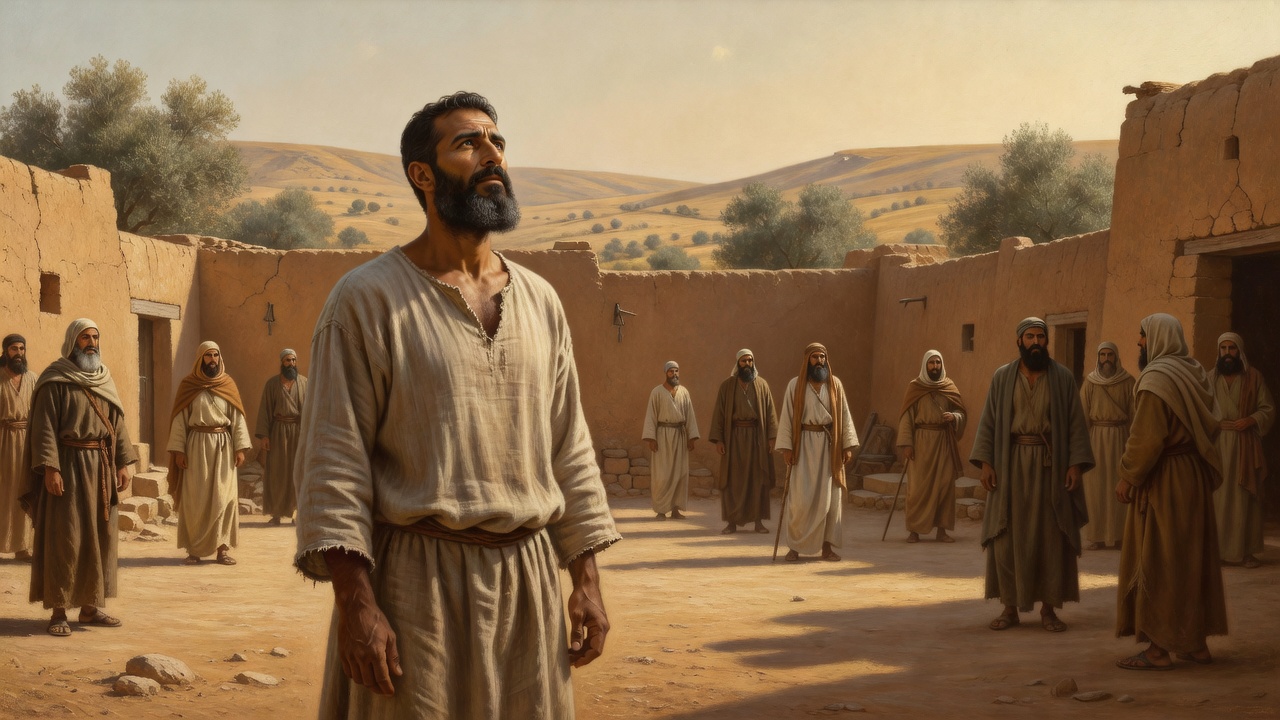
- The speaker in Isaiah 50:4–7 portrays the posture of an attentive disciple who willingly endures physical maltreatment, including beatings, the plucking of his beard, and being spat upon. Setting one's face 'like flint' is a vivid idiom signifying resolute determination and steadfast trust in God despite public shame and hostility.Sources: the Bible text itself
Notes written with AI assistance from open sources (Theographic Bible Metadata, CC BY-SA 4.0; Easton’s Bible Dictionary, public domain) and reviewed before publishing.
Credits and license for this translation
Updated Brenton English Septuagint
Spelling and formatting update of the Brenton English Septuagint with Apocrypha
Public Domain
Language: English
Dialect: Mixed
Translation by: Sir Lancelot C. L. Brenton
Contributor: Adam Boyd
Original work was by Sir Lancelot C. L. Brenton in 1851.
CC0 Public Domain dedication on language updates by Adam Boyd in 2020.
2026-02-18
Section headings adapted from the Berean Standard Bible (public domain); they are not part of this translation’s text.
Source: http://ebible.org/englxxup/ · eBible.org