Ecclesiastes 9
Updated Brenton English Septuagint · Tap a verse to see its cross-references.
Death Comes to Good and Bad
1I saw that the righteous, and the wise,
And their works, are in the hand of God:
Yea, there is no man that knows either love or hatred,
Though all are before their face.
2Vanity is in all:
There is one event to the righteous, and to the wicked;
To the good, and to the bad;
Both to the pure, and to the impure;
Both to him that sacrifices, and to him that sacrifices not:
As is the good, so is the sinner:
As is the swearer, even so is he that fears an oath.
3There is this evil in all that is done under the sun,
That there is one event to all:
Yea, the heart of the sons of men is filled with evil,
And madness is in their heart during their life,
And after that they go to the dead.
4For who is he that has fellowship with all the living?
There is hope of him:
For a living dog is better than a dead lion.
5For the living will know that they shall die:
But the dead know nothing,
And there is no longer any reward to them;
For their memory is lost.
6Also their love, and their hatred,
And their envy, have now perished;
Yea, there is no portion for them anymore forever
In all that is done under the sun.
Enjoy Your Portion in This Life
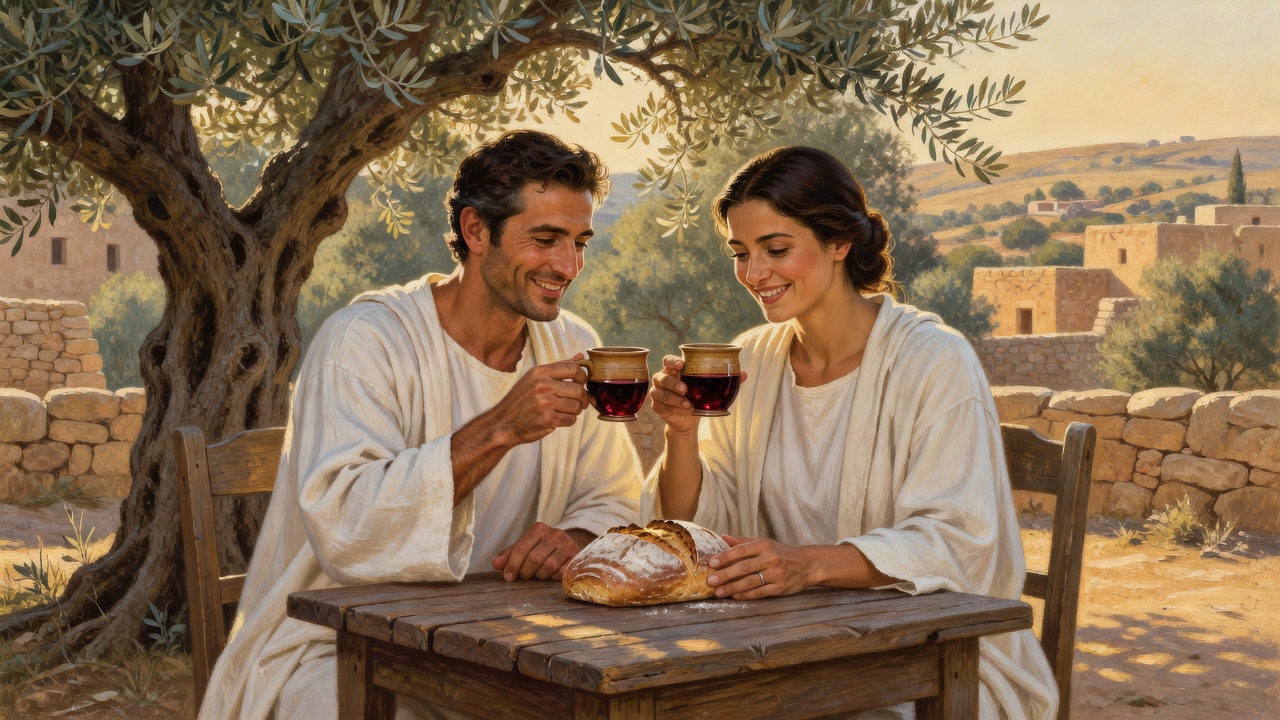
7Go, eat thy bread with mirth,
And drink thy wine with a joyful heart;
For now God has favorably accepted thy works.
8Let thy garments be always white;
And let not oil be wanting on thy head.
9And see life with the wife whom thou lovest
All the days of the life of thy vanity,
Which are given thee under the sun:
For that is thy portion in thy life,
And in thy labor wherein thou laborest under the sun.
10Whatsoever thy hand shall find to do,
Do with all thy might;
For there is no work, nor device, nor knowledge,
Nor wisdom, in Hades whither thou goest.
11I returned, and saw under the sun,
That the race is not to the swift,
Nor the battle to the strong,
Nor yet bread to the wise,
Nor yet wealth to men of understanding,
Nor yet favor to men of knowledge;
For time and chance will happen to them all.
12For surely man also knows not his time:
As fish that are taken in an evil net,
And as birds that are caught in a snare;
Even thus the sons of men are snared at an evil time,
When it falls suddenly upon them.
Wisdom Is Better than Strength
13This I also saw to be wisdom under the sun,
And it is great before me:
14Suppose there were a little city, and few men in it;
And there should come against it a great king, and surround it,
And build great mounds against it;
15And should find in it a poor wise man,
And he should save the city through his wisdom:
Yet no man would remember that poor man.
16And I said, Wisdom is better than power:
Yet the wisdom of the poor man is set at nought,
And his words not listened to.
17The words of the wise are heard in quiet
More than the cry of them that rule in folly.
18Wisdom is better than weapons of war:
And one sinner will destroy much good.
Did you know?
A Common Destiny and the Value of Life
- The author counsels celebrating everyday life through customary ancient expressions of joy and honor: eating bread, drinking wine, wearing white garments, and anointing the head with oil.Sources: the Bible text itself
- The passage refers to Sheol as the realm of the dead, describing it as a state where work, planning, knowledge, and wisdom cease, which underscores the urgency to live actively while alive.Sources: the Bible text itself
- Ancient siege warfare is illustrated through the account of a mighty king building large siege ramps against a small city, only for a poor wise man to deliver it through wisdom rather than military force.Sources: the Bible text itself
Notes written with AI assistance from open sources (Theographic Bible Metadata, CC BY-SA 4.0; Easton’s Bible Dictionary, public domain) and reviewed before publishing.
Credits and license for this translation
Updated Brenton English Septuagint
Spelling and formatting update of the Brenton English Septuagint with Apocrypha
Public Domain
Language: English
Dialect: Mixed
Translation by: Sir Lancelot C. L. Brenton
Contributor: Adam Boyd
Original work was by Sir Lancelot C. L. Brenton in 1851.
CC0 Public Domain dedication on language updates by Adam Boyd in 2020.
2026-02-18
Section headings adapted from the Berean Standard Bible (public domain); they are not part of this translation’s text.
Source: http://ebible.org/englxxup/ · eBible.org